Can AI Predict a US Recession Before It Happens?
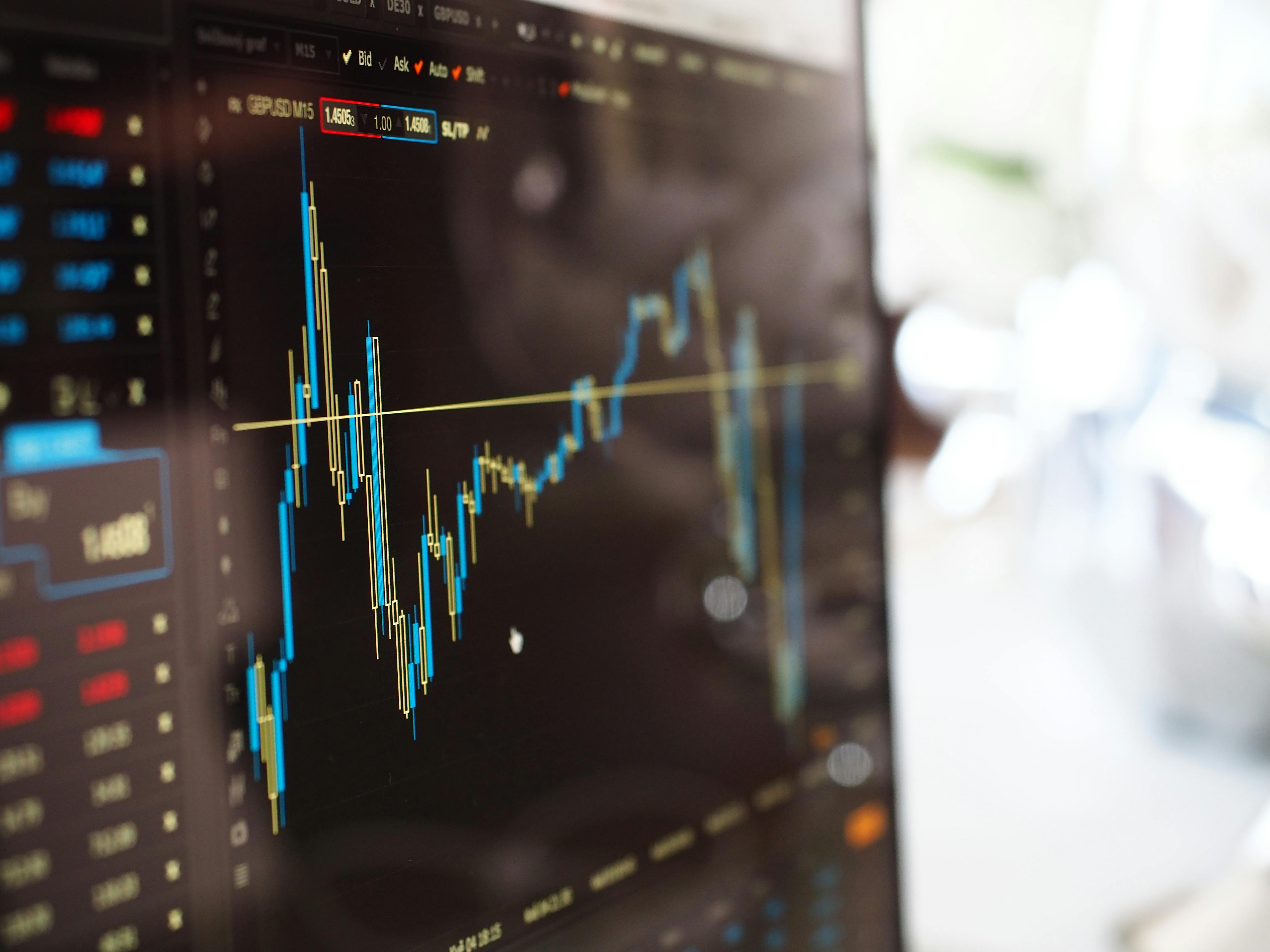
AI can help predict a US recession earlier than traditional analysis by continuously scanning Federal Reserve data for well-established warning signals, such as yield curve inversions, rising jobless claims, and slowing housing starts, and flagging when several of these indicators align. It cannot guarantee a recession call with certainty, but it dramatically shortens the time it takes to notice when historical warning patterns are re-forming in real time.
This question has taken on new urgency following the launch of tools like us-macro-mcp on PyPI, which gives AI assistants direct, live access to FRED's inflation, employment, growth, and recession-signal datasets. Instead of relying on quarterly outlook reports from banks, anyone with access to an AI assistant connected to this kind of tool can ask, in plain language, whether current data resembles the run-up to past US recessions, and get an evidence-based answer within seconds.
The timing matters because 2026 has presented one of the more ambiguous macro pictures in years: inflation has moderated but stayed sticky in services, the Fed has held rates cautiously high for longer than many expected, and labor market cracks are appearing in hiring data even as unemployment stays low. In this kind of mixed environment, the ability to quickly and objectively check multiple recession indicators at once, rather than relying on any single headline, is genuinely valuable for households and investors alike.
Concept Explanation
Recession prediction has traditionally relied on a small set of well-tested indicators: the inverted yield curve, where short-term Treasury yields exceed long-term ones; the Sahm Rule, which flags a recession when the three-month average unemployment rate rises 0.5 percentage points above its low from the prior year; and leading indicators like building permits and manufacturing new orders. Economists have used these for decades because they have historically preceded most US downturns.
AI-based recession prediction does not invent new indicators so much as it automates the process of tracking and cross-referencing these established ones continuously, pulling live figures from FRED and comparing them against every prior US recession on record. This turns what used to be a periodic, manual check performed by economists into an always-on monitoring process that can alert users the moment a meaningful threshold is crossed.
Why It Matters Now
The Fed's current policy stance makes recession-timing unusually consequential. After an aggressive hiking cycle to tame post-pandemic inflation, the central bank has been trying to engineer a soft landing, and markets are hypersensitive to any data suggesting that balance has tipped toward contraction. A recession call that is early by even a few months can materially change how investors position portfolios, how companies plan hiring, and how households manage debt. AI tools that continuously scan for these shifts help close the gap between data availability and awareness of what it implies.
This matters globally as well, since a US recession historically drags down growth in export-dependent economies across Europe and Asia and tends to trigger capital flight from emerging markets. Central banks from Frankfurt to Mumbai monitor US recession probability closely for exactly this reason, and AI tools that make this monitoring faster and more accessible are increasingly used not just by American investors but by international analysts managing cross-border currency and bond exposure.
How AI Is Transforming This Area
The biggest transformation is speed. Where a research analyst might update a recession-probability model monthly after new data arrives, an AI system connected to live FRED feeds can recalculate that probability the moment new employment or housing data is released, and explain in plain language which specific indicator moved and why it matters. This turns recession forecasting from a periodic report into a continuously updated signal.
AI is also improving how these signals are communicated. Historically, recession indicators like yield curve spreads were discussed in technical terms that were inaccessible to non-specialists. AI assistants now translate these into plain explanations, telling a user, for example, that short-term rates exceeding long-term rates has preceded most US recessions since the 1960s but has also produced false signals, giving important nuance that raw data alone does not convey.
At the same time, AI models are beginning to weigh multiple weak signals together rather than relying on any single indicator, using pattern-matching across dozens of FRED series simultaneously. This multi-factor approach can reduce the false-positive problem that has historically plagued single-indicator recession calls, such as the yield curve inversions of 2019 and 2022 that did not immediately precede a recession.
Real-World Global Examples
In the US, several fintech research teams have built AI dashboards that combine the Sahm Rule, yield curve data, and jobless claims into a single composite recession-risk score updated daily using FRED feeds, giving retail investors a tool that used to be the exclusive domain of Wall Street economists. These dashboards gained particular attention in 2025 when rising continuing jobless claims prompted debate over whether the labor market was cooling faster than headline numbers suggested.
In Europe, the ECB has referenced AI-assisted monitoring of US recession indicators in internal briefings, given how closely eurozone export growth tracks American consumer demand. In Asia, Japanese and Indian financial institutions have adopted similar AI tools to model how a potential US downturn would transmit through currency markets, since a US recession typically strengthens the dollar in the short term before triggering broader risk-off flows that hit emerging market assets hardest.
Crypto markets have also become a testing ground for AI recession signals, as digital asset prices have shown growing sensitivity to US macro data since 2023. Several crypto trading platforms now integrate AI-driven recession-probability scores directly into risk dashboards, since a rising recession signal has historically preceded reduced risk appetite and outflows from volatile assets like Bitcoin and altcoins.
Practical Financial Tips
Investors should treat AI-generated recession probabilities as one input among several, not a definitive forecast. A useful practice is checking whether an AI tool's recession signal is based on multiple converging indicators, such as yield curve inversion plus rising jobless claims, rather than a single data point, since multi-factor signals have historically been more reliable than isolated ones.
Households can use these AI-driven insights practically by reviewing emergency savings and variable-rate debt exposure when recession-risk scores rise meaningfully, rather than waiting for an official recession announcement, which often comes only after the downturn has already begun. Platforms like rupiya.ai increasingly incorporate this kind of early-warning framing into personal finance guidance, helping users adjust savings and spending buffers proactively.
It is also worth remembering that AI recession models are trained on historical patterns, which means structural shifts in the economy, such as changes in labor market composition or unprecedented fiscal policy, can reduce their reliability. Cross-checking AI-generated signals against a basic understanding of what is driving them remains a smarter approach than treating any single score as gospel.
Future Outlook
As AI tools connected to datasets like FRED become more sophisticated, expect recession-prediction models to incorporate a wider range of alternative data, including real-time consumer spending patterns, satellite-based retail traffic estimates, and job posting trends scraped from hiring platforms, alongside traditional indicators. This would give AI-based recession models a richer, faster-updating picture than the monthly government releases they currently depend on most heavily.
Over the next few years, the more meaningful shift may be toward personalized recession-risk scoring, where AI tools do not just estimate national recession probability but translate that into specific guidance for an individual's job sector, debt profile, and investment mix. A recession signal means something very different for someone in a cyclical industry with variable-rate debt than for someone in a defensive sector with a fixed mortgage, and future AI tools are likely to reflect that distinction.
Accuracy of AI Predictions
It is important to be honest about the limits of AI recession prediction. The underlying indicators AI systems track, like the yield curve, have a strong historical track record but are not infallible; both 2019 and 2022 produced yield curve inversions that did not lead to an immediate, classic recession, illustrating that AI models inherit the same false-positive risk as the human economists who first identified these signals decades ago.
What AI genuinely improves is not the underlying predictive power of these indicators but the speed and consistency with which they are monitored and communicated. An AI system will never miss a data release or forget to cross-reference a new jobless claims number against the yield curve, which reduces the risk of a human analyst overlooking an emerging pattern amid competing priorities, even if it cannot fundamentally solve the inherent uncertainty of economic forecasting itself.