How Does AI Impact Financial Strategies Amid Inflation and Market Volatility?
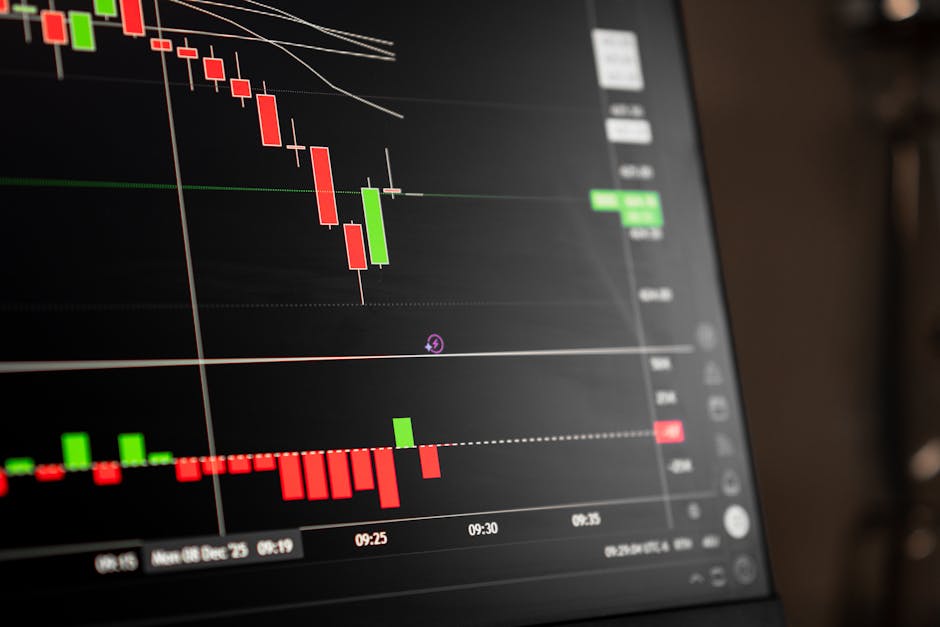
AI is profoundly impacting financial strategies by providing advanced analytics, predictive insights, and automation tools that help navigate inflationary pressures and market volatility. Financial institutions and individual investors alike are leveraging AI to optimize asset allocation, risk management, and dynamic pricing.
In times of inflation and interest rate fluctuations, AI-driven models process vast data streams to forecast economic trends more accurately than traditional methods. This improves responsiveness to market shifts and enables proactive decision-making to protect wealth and capitalize on emerging opportunities.
Overall, AI’s capacity to integrate complex variables and rapidly simulate scenarios creates a paradigm shift in financial planning, investment strategies, and fintech service delivery, enhancing resilience during economic uncertainty.
Concept Explanation
AI in finance refers to the use of machine learning algorithms, natural language processing, and big data analytics to automate and improve financial services, including investment forecasting, credit analysis, fraud detection, and personalized financial advice.
During inflationary periods and volatile markets, AI models analyze historical and real-time economic data such as central bank rate changes, consumer trends, and geopolitical events to generate risk-adjusted investment and trading strategies.
By leveraging alternative data sources like social media sentiment and supply chain indicators, AI improves forecast accuracy, enabling faster reactions to macroeconomic shifts that impact portfolio performance and corporate finance.
Financial institutions increasingly embed AI in portfolio management tools, allowing for dynamic asset rebalancing and personalized risk profiling adjusted to inflation expectations and recession probabilities.
Why It Matters Now
Global inflation has surged in the aftermath of disrupted supply chains and expansive fiscal policies, pushing central banks into aggressive rate hikes. This environment elevates market volatility and complicates traditional financial forecasting.
Investors must quantify and hedge inflation risk, balance growth and value assets, and account for rising borrowing costs, making AI tools crucial for making sense of multifactor economic data swiftly.
With recession risks rising, AI-supported scenario planning helps financial managers stress-test portfolios against different downturn frameworks, enabling better capital preservation strategies.
Additionally, AI's role in fintech innovation underpins digital banking, credit underwriting, and customer engagement systems adapting to these economic stresses, demonstrating broad-reaching importance.
How AI Is Transforming This Area
AI is transforming inflation and volatility management through predictive analytics that enable financial actors to anticipate interest rate impacts and consumer behavior changes, optimizing asset allocations accordingly.
It accelerates fraud detection and automated compliance, which are critical as cyber risks increase during economic unrest, safeguarding fintech platforms and their users.
AI-powered robo-advisors provide retail investors with personalized strategies that dynamically adjust portfolios based on shifting economic conditions, democratizing access to sophisticated financial planning.
In trading, AI algorithms execute high-frequency trades calibrated to real-time data, mitigating risks of sudden market swings and capitalizing on short-lived arbitrage opportunities.
Real-World Global Examples
The Federal Reserve employs AI models to analyze economic indicators and inflationary pressures, helping guide monetary policy decisions critical to global markets.
European banks, such as Deutsche Bank and BNP Paribas, integrate AI into credit risk assessments to adjust loan pricing in response to ECB interest rate hikes, managing portfolio risks.
In India, fintech startups use AI to offer credit scoring solutions that make microloans affordable despite inflation, using alternative data to evaluate borrower reliability beyond traditional metrics.
On the crypto front, AI-driven sentiment analysis guides crypto hedge funds operating on platforms like rupiya.ai, identifying market trends to navigate extreme volatility and speculative bubbles.
Practical Financial Tips
Financial professionals should invest in AI-powered analytical tools that provide real-time data processing and economic scenario forecasting to anticipate inflationary trends.
For individual investors, leveraging robo-advisors with AI capabilities can optimize portfolio diversification strategies tailored to inflation risk and market volatility tolerance.
Adopting AI-enabled fintech apps that track personal spending patterns under inflationary conditions can improve budgeting accuracy and financial resilience.
Businesses should deploy AI in supply chain and pricing management to maintain competitive positioning and cushion impacts from fluctuating input costs due to inflation.
Future Outlook
AI’s role in financial strategy will deepen as machine learning models grow more sophisticated and datasets expand in scope and granularity. This trend will empower more precise inflation forecasting and volatility management tools.
Anticipated regulatory frameworks will also shape AI adoption, balancing innovation with ethical concerns and operational transparency.
Financial ecosystems integrating AI will drive new fintech innovations such as decentralized finance (DeFi) solutions that automatically hedge inflation risks and respond to global economic fluctuations in real time.
Consequently, individuals and institutions embracing AI fintech solutions will be better positioned to weather economic uncertainties characterizing the mid-2020s and beyond.
Risks and Limitations of AI in Financial Strategy
Despite its benefits, AI carries risks such as model biases, overfitting to historical data, and opacity in decision-making which can lead to erroneous forecasts or unfair financial outcomes.
Algorithmic trading exacerbates market volatility by accelerating sell-offs during stress periods, potentially amplifying economic shocks rather than mitigating them.
Cybersecurity threats increase as AI systems become targets for manipulation or data breaches, requiring robust safeguards and continuous oversight.
Moreover, reliance on AI may reduce human judgment in contexts where nuanced understanding of macroeconomic fundamentals remains essential, necessitating balanced human-AI collaboration.
Frequently Asked Questions
How can AI help manage inflation risk?
AI analyzes diverse economic data to forecast inflation trends and recommend asset allocation adjustments to protect investments.
Is AI replacing human financial advisors?
AI complements human advisors by providing data-driven insights but does not entirely replace the need for human judgment.
Can AI predict stock market volatility accurately?
AI improves volatility predictions using historical and real-time data, but uncertainties remain due to unforeseen events.
What are the limitations of AI in finance?
Limitations include data biases, lack of transparency, cybersecurity risks, and potential overreliance reducing human oversight.