How Does AI Impact Stock Market Volatility Amid Inflation and Recession Risks?
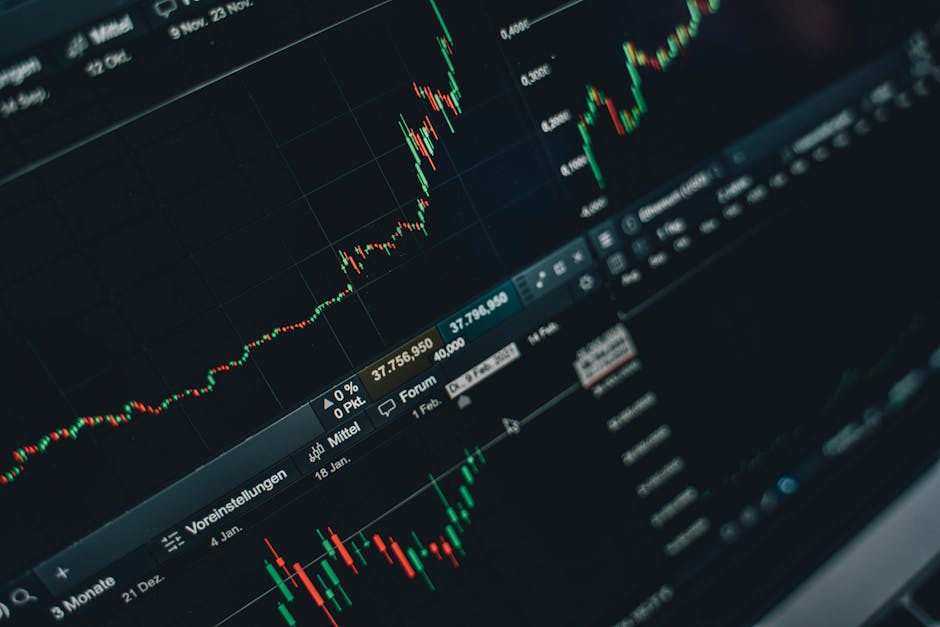
AI has a profound impact on stock market volatility, especially during periods of inflation and looming recession risks. By analyzing large volumes of real-time data and economic indicators, AI models provide predictive insights that help investors and institutions navigate uncertain market conditions more effectively.
In times when central banks like the Fed and ECB adjust interest rates to combat inflation, markets often experience disruptive price swings. AI-powered trading algorithms and risk management tools adapt quickly to this volatility, enabling more strategic decision-making to capitalize on or mitigate sudden market shifts.
Moreover, AI’s role extends beyond traditional equity markets to crypto and digital assets, where volatility tends to be even more pronounced. By leveraging machine learning, financial platforms can forecast potential downturns, optimize asset allocation, and offer personalized advice tailored to an investor’s risk tolerance.
Concept Explanation: AI and Its Mechanisms in Influence Stock Markets
AI uses machine learning, natural language processing, and neural networks to process vast datasets—ranging from price histories, corporate earnings, geopolitical events to economic forecasts. These technologies detect patterns and correlations humans might miss, quantifying volatility metrics and predicting market trajectories.
Algorithmic trading powered by AI executes thousands of trades per second based on pre-programmed criteria, which can amplify short-term price movements but also introduce stability through precise, data-backed decisions.
Additionally, sentiment analysis on news and social media allows AI to assess market moods and anticipate reactions to inflation announcements or policy changes, integrating qualitative data into quantitative models.
Incorporating macroeconomic variables like interest rates, AI forecasts how inflationary pressures will affect corporate valuations and investor behavior, influencing stock price fluctuations.
Why It Matters Now During Inflationary and Recessionary Trends
Currently, the global economy faces persistent inflation, prompting aggressive rate hikes from central banks to cool demand. These actions create heightened uncertainty and frequent market swings, posing significant challenges to investors aiming to protect portfolios.
AI’s capacity to rapidly interpret economic signals and adjust hedging strategies is crucial in this environment. Investors who effectively harness AI tools can better time entries and exits, expend less effort monitoring markets manually, and reduce losses during downturns.
Further complicating the scenario, recession fears escalate risk aversion, leading to liquidity crunches and volatility spikes. AI’s predictive capabilities provide an edge in reallocating assets to defensive sectors or alternative investments, preserving wealth amid turbulence.
The fragility of crypto markets, heavily influenced by macroeconomic sentiment and regulatory changes, also benefits from AI’s enhanced forecasting, allowing traders to anticipate and mitigate extreme fluctuations.
How AI Is Transforming Volatility Management in Investments
AI enhances volatility management through several avenues, such as improving risk modeling accuracy with real-time data inputs from markets worldwide. This allows portfolio managers to implement dynamic asset allocation strategies responsive to inflation or recession signals.
Machine learning models identify emerging correlations between disparate asset classes and potential market shocks earlier than traditional approaches, enabling preemptive risk mitigation.
Automated trading systems reduce human emotional biases, such as panic selling during volatile phases, by adhering to predefined strategies that optimize returns while limiting downside exposure.
Platforms like rupiya.ai and other AI fintech tools democratize access to sophisticated volatility analytics, allowing retail investors to apply institutional-grade techniques when navigating complex financial landscapes.
Real-World Global Examples of AI Tackling Market Volatility
In the US, AI-powered hedge funds such as Renaissance Technologies and Two Sigma employ advanced algorithms to manage volatility amid Fed rate changes and inflation data releases, often outperforming traditional funds in turbulent markets.
European asset managers utilize AI to adjust portfolios in response to ECB’s monetary tightening, balancing equity and bond exposures to maintain stability during economic slowdowns.
Asian markets, influenced by the RBI’s monetary policies, leverage AI to detect early signals of inflation pressures affecting emerging market stocks, helping fund managers reposition assets proactively.
In the crypto space, platforms use AI-driven sentiment analysis during regulatory announcements to manage volatility, offering traders tools to hedge positions effectively amid rapid price swings.
Practical Financial Tips for Investors Using AI Tools in Volatile Markets
Investors should integrate AI-powered analytics to receive timely alerts on volatility changes linked to inflation or recession signals. This proactive approach aids in adjusting investments before losses accumulate.
Diversifying portfolios using AI-guided insights into asset correlations can reduce exposure to sectors most sensitive to interest rate hikes, such as real estate or consumer discretionary.
Utilizing robo-advisors backed by AI, which continuously rebalance portfolios aligned with evolving macroeconomic trends, helps maintain optimal risk-return profiles.
Regularly updating one’s knowledge of AI fintech innovations like those from rupiya.ai enables retail investors to adopt cutting-edge tools and strategies, enhancing resilience through volatile cycles.
Future Outlook: AI’s Expanding Role in Global Market Stability
The future will see deeper integration of AI in market surveillance and automated policy response systems, reducing volatility by allowing earlier detection of systemic risks.
Advancements in AI explainability and transparency will build greater trust among investors, regulators, and asset managers, encouraging adoption even during uncertain inflationary periods.
AI will play a vital role in managing cross-market contagion effects, helping global investors navigate interconnected risks amplified by geopolitical tensions and changing financial regulations.
The symbiosis between AI and cloud-native infrastructure, built on stable operating systems like Linux 7.1-rc7, will elevate the scalability and robustness of volatility management solutions, democratizing access to sophisticated financial insights worldwide.
Can AI Predict Future Market Crashes in Inflationary Economies?
AI shows promise in forecasting market crashes by analyzing complex datasets and detecting early warning signs such as liquidity shortages and credit market stresses that precede downturns.
However, predicting exact timing remains challenging due to unpredictable human behaviors and black swan events. AI models improve over time but must be supplemented with expert judgment and macroeconomic understanding.
In inflationary environments, AI helps investors prepare through scenario simulations and stress testing, rather than offering absolute predictions, reducing exposure to systemic risks effectively.
Collaboration between AI research labs, financial institutions, and technology providers like rupiya.ai will accelerate progress in predictive accuracy and real-time application of these models.
Frequently Asked Questions
What role does AI play in stock market volatility?
AI analyzes vast financial data to identify patterns, enabling better prediction and management of market volatility.
Can AI help investors during inflation and recession periods?
Yes, AI tools support dynamic portfolio adjustments and risk management to navigate changing economic conditions.
How do AI trading algorithms affect market stability?
They increase trade efficiency but may amplify short-term fluctuations; however, they also reduce human emotional biases.
Is AI capable of predicting financial crashes accurately?
AI can provide early warning signals but cannot precisely predict timing due to complex market dynamics.