How Does AI Impact Stock Market Volatility and Investment Strategies?
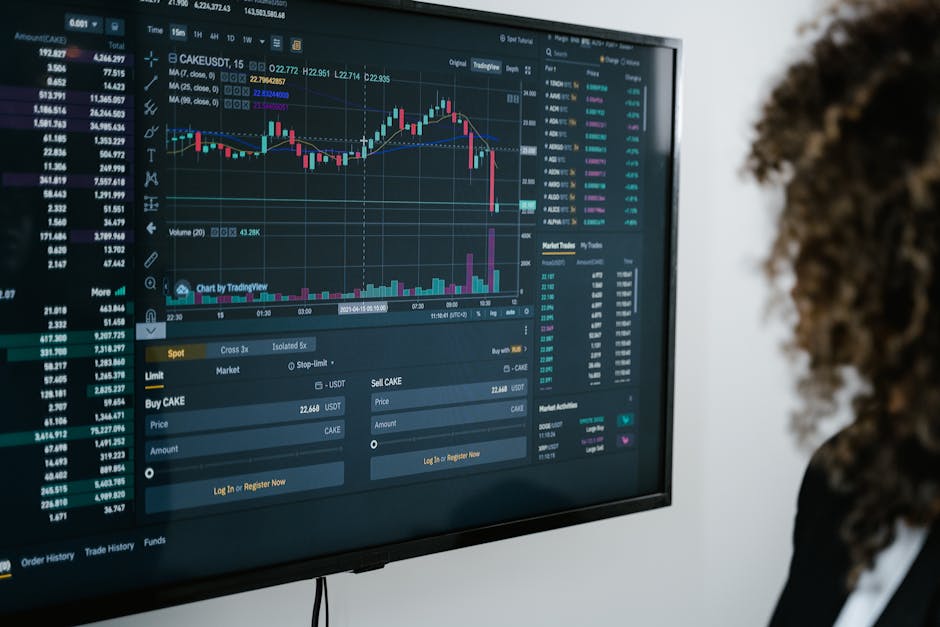
AI is increasingly influencing stock market volatility and transforming investment strategies by providing sophisticated tools to analyze data, predict trends, and manage risks. By harnessing machine learning and algorithmic models, investors can better navigate complex markets marked by inflationary pressures, central bank interest rate adjustments, and looming recession concerns.
With rising global uncertainties and rapid technological advances, AI-driven financial analytics are becoming indispensable in crafting resilient investment portfolios. This article answers how AI impacts stock market volatility and equips investors to seize opportunities while minimizing downside risks.
It also explores the role of AI-powered fintech solutions in personalizing investment decisions, integrating digital assets, and responding dynamically to macroeconomic shifts across regions including the US, Europe, and Asia.
What Is AI’s Role in Stock Market Volatility?
Stock market volatility refers to price fluctuations within a given period, often driven by economic data releases, geopolitical events, and investor sentiment. AI plays a pivotal role by analyzing vast amounts of historical and real-time data to forecast volatility patterns with greater accuracy than traditional models.
Machine learning algorithms identify correlations and market signals that human analysis may miss. For instance, sentiment analysis of social media, news feeds, and earnings reports helps predict sudden price swings, allowing traders to react swiftly and adjust positions accordingly.
Furthermore, AI facilitates automated trading strategies that can execute rapid buy or sell orders in volatile scenarios, thus increasing market efficiency but also introducing new dynamics to volatility patterns themselves.
Why Is This Impact Critical Amid Current Global Economic Trends?
In 2024, inflation remains an unpredictable factor globally, with central banks like the Federal Reserve, ECB, and RBI balancing rate hikes to control price pressures while avoiding economic slowdowns. These monetary policies directly affect market sentiment and volatility levels.
AI’s ability to rapidly digest economic indicators and central bank communications helps investors anticipate market moves linked to interest rate decisions. This capability is invaluable when global crises or recession fears amplify volatility, as seen with recent geopolitical tensions impacting supply chains and energy prices.
Investors increasingly rely on AI-driven tools to decode these complex signals and realign portfolios in real-time to protect wealth and uncover growth sectors, including emerging AI-enabled companies like SpaceX, which influence broad market narratives.
How Does AI Impact Investment Strategies Across Markets?
AI improves investment strategies by enabling predictive analytics that transform raw market data into actionable insights. Portfolio managers utilize AI to optimize asset allocation, dynamically rebalance holdings, and integrate alternative assets such as cryptocurrencies and tokenized securities.
Algorithmic trading powered by AI reduces human biases and enhances execution speed, crucial in volatile environments. In personal finance, robo-advisors offer tailored investment recommendations based on individual risk profiles, market conditions, and long-term goals.
Regions such as Europe embrace AI to meet stringent ESG (Environmental, Social, Governance) investment criteria, while Asian markets leverage AI-driven fintech adoption to facilitate retail investor participation, further democratizing access to diverse financial products.
Real-World Global Examples of AI Managing Volatility
US hedge funds like Two Sigma and Renaissance Technologies epitomize AI’s transformative role in volatility management by employing machine learning models to forecast market fluctuations and automate trades with remarkable consistency.
In Europe, firms utilize AI for scenario analysis and stress testing portfolios under various inflation and rate hike scenarios mandated by regulators. Asian fintech leaders in Hong Kong and Singapore integrate AI-powered sentiment analytics to interpret market signals, benefiting both institutional and retail investors.
Moreover, decentralized finance (DeFi) platforms employing AI oracles provide predictive insights on cryptocurrency volatility, offering investment products that hedge digital asset risks amid traditional market uncertainties.
Practical Financial Tips for Investors Leveraging AI
Investors should utilize AI-powered platforms such as rupiya.ai for real-time market insights, volatility forecasting, and portfolio optimization to maintain agility amid fast-moving markets. Emphasizing diversification across asset classes and geographies reduces vulnerability to region-specific shocks.
Using robo-advisors to monitor risk-adjusted returns and employing AI-driven alert systems for key economic events can enhance proactive decision making. Integrating digital assets cautiously and employing systematic investment plans aligned with AI forecasts help balance growth and risk.
Finally, continuous education on AI’s evolving role in finance enables investors to adapt strategies promptly as technologies and market conditions evolve.
Future Outlook: AI’s Expanding Influence on Volatility and Investment
AI's presence in financial markets will deepen, with advances in natural language processing, quantum computing, and real-time data integration enhancing predictive accuracy and strategy automation. This evolution will equip investors with better tools to weather inflation volatility, interest rate shifts, and recession risks.
Regulatory frameworks are expected to evolve to encompass AI algorithm transparency and risk mitigation, fostering safer environments. Meanwhile, emerging markets will increasingly adopt AI fintech, increasing global investment flows and market interconnectedness.
As the SpaceX IPO illustrates, successful integration of AI in high-growth sectors will drive market innovation, liquidity, and volatility patterns, marking a transformative decade for investment strategies worldwide.
Is AI Replacing Human Traders? A Balanced Perspective
Despite AI’s growing capabilities, human judgment remains essential in interpreting complex economic environments, ethical considerations, and strategic decisions. AI excels in data processing and pattern recognition but lacks contextual intuition.
Hybrid models combining human expertise with AI algorithms yield the best outcomes, where traders use AI insights to inform but not replace their discretionary decisions. This collaboration enhances risk management and innovation in asset management firms globally.
Moreover, regulatory and trust factors necessitate human oversight to ensure accountable use of AI, maintaining market integrity despite increased technological automation.
Frequently Asked Questions
What is AI’s role in reducing stock market volatility?
AI predicts volatility patterns by analyzing large datasets and market signals, enabling investors to adjust strategies proactively and reduce adverse impacts.
Can AI-driven investment tools outperform traditional methods?
Yes, AI tools can process complex data faster and identify trends invisible to humans, often enhancing performance and risk management.
How does inflation influence AI-based trading strategies?
Inflation affects market dynamics; AI incorporates inflation data to adjust predictions and optimize trading around interest rate changes.
Is AI replacing human stock traders completely?
No, AI supports human traders by providing data-driven insights, but human judgment remains critical in complex decision-making.