Can AI Predict Market Volatility and Guide Investment Decisions Amid Recession Risks?
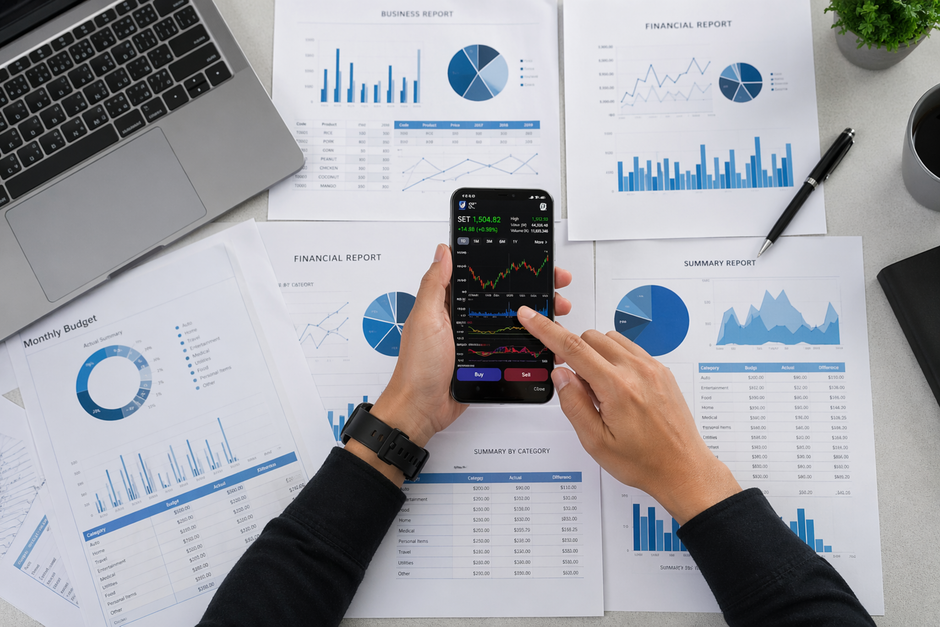
AI technologies are now capable of predicting stock market volatility and providing early warning signals for recession risks, thereby significantly enhancing the precision and timeliness of investment decisions. By processing vast volumes of financial data, economic indicators, and market sentiment, AI systems deliver nuanced insights into market dynamics that traditional analysis might miss.
This predictive capability matters now more than ever due to heightened global economic uncertainties prompted by inflation spikes, aggressive interest rate hikes by central banks worldwide, and ongoing geopolitical tensions. Investors and asset managers are increasingly relying on AI-driven analytics to navigate volatile markets and optimize portfolio allocations.
This blog explores how AI predicts market volatility and recession risks, why this is crucial in today's economic environment, the technological mechanisms behind these capabilities, practical examples from global markets, actionable investment tips, future outlooks, and regulatory challenges associated with applying AI in financial forecasting.
Concept Explanation
Market volatility refers to the rate and magnitude of price fluctuations in financial markets, often influenced by economic events, investor behavior, and geopolitical developments. Predicting volatility helps investors anticipate risk levels and adjust strategies accordingly.
Recession risk prediction involves forecasting periods of economic contraction that typically lead to reduced corporate earnings and increased market instability. Early detection is critical for protecting assets and capturing value in downturns.
AI leverages machine learning models, natural language processing, and alternative data sources such as social media trends, satellite imagery, and payments data to predict these metrics with increasing accuracy. These models adapt dynamically, improving forecasting robustness compared to static statistical methods.
By integrating multiple data points across macroeconomic, financial, and behavioral domains, AI provides forward-looking volatility forecasts and recession probabilities crucial for proactive investment management.
Why It Matters Now
The present economic cycle is marked by persistent inflation pressures—like the U.S. Consumer Price Index rising steadily—and corresponding aggressive monetary tightening from bodies such as the Federal Reserve, ECB, and RBI. This confluence increases uncertainty and the likelihood of recessionary events.
Traditional forecasting models often fail to capture sudden shifts in investor sentiment or geopolitical shocks. AI’s nuanced, real-time data processing capabilities present an opportunity to better anticipate market downturns before they fully materialize.
Given the increasing stakes for investors managing equity, bond, and digital asset portfolios amid market volatility, AI-driven predictive tools become essential for risk mitigation, asset allocation, and strategy optimization.
Moreover, AI models can respond to emerging phenomena like crypto market correlations and fintech platform dynamics that influence traditional markets, providing a holistic view of systemic risk.
How AI Is Transforming This Area
AI transforms market volatility and recession risk prediction by employing deep learning algorithms that detect nonlinear patterns and complex interactions within massive, diverse datasets unavailable to conventional models.
Natural language processing on news, earnings calls, and social media gauges real-time sentiment, while anomaly detection algorithms flag unusual trading behaviors. This real-time synthesis allows investors to anticipate volatility spikes with higher confidence.
Additionally, AI-driven scenario analysis and stress testing simulate how portfolios might react under various economic downturn scenarios, enabling informed contingency planning.
The integration of AI with traditional econometrics and fintech platforms enhances both the speed and depth of financial market insights, ultimately improving decision quality and agility.
Real-World Global Examples
U.S. hedge funds such as Two Sigma and Renaissance Technologies apply AI-driven volatility models daily, integrating macroeconomic data alongside asset price movements to optimize equity positioning amid Fed rate hikes.
European banks like UBS and Deutsche Bank incorporate AI in their risk departments to predict market stress situations influenced by ECB policies and regional inflation dynamics, enabling proactive client advisory.
Asia-Pacific fintech startups use AI algorithms to forecast market sentiment and recession probabilities, tailoring robo-advisory services in markets as diverse as India and Japan where RBI and BOJ policy shifts affect investor confidence.
In the crypto space, platforms like Coin Metrics and Glassnode deploy AI models to anticipate volatility spikes, helping traders navigate digital asset price swings by analyzing on-chain data and external economic indicators.
Practical Financial Tips
Investors should utilize AI-powered market prediction tools such as those available from rupiya.ai to stay informed about potential volatility surges and economic downturns, allowing timely portfolio adjustments.
Diversification remains a key strategy, with AI recommending optimal asset mixes under varying scenarios. Investors can allocate capital efficiently across equities, bonds, and alternative assets, including crypto.
Regularly monitor AI forecast outputs but supplement them with human qualitative analysis, considering geopolitical events and central bank communications that may not be fully quantifiable by AI alone.
Lastly, remain flexible in response to AI-driven insights, such as adjusting investment horizons or employing hedging strategies to protect against predicted downswings.
Future Outlook
AI’s predictive accuracy and adoption in financial markets will continue to improve as more proprietary data becomes accessible and models incorporate reinforcement learning techniques.
Integration of AI with blockchain data and internet of things (IoT) signals promises richer datasets for even earlier detection of economic stress and market turning points.
Investor reliance on AI-driven volatility and recession predictions will increase, driving demand for transparent, explainable AI models compliant with evolving global financial regulations.
However, balancing AI predictions with human judgment will remain essential to manage black swan events and model limitations effectively.
Regulatory Challenges in 2026
As AI forecasting tools become more prevalent, regulatory bodies worldwide including the SEC, ESMA, and the RBI are focusing on governance frameworks ensuring transparency, accountability, and consumer protection from algorithmic risks.
Compliance with data privacy laws such as GDPR in Europe and CCPA in the U.S. adds complexities in AI model development due to restrictions on data usage and cross-border transfers.
Financial institutions integrating AI must demonstrate robustness against model bias, provide audit trails, and adhere to explainability standards to gain approval from regulators and maintain investor trust.
Hence, collaboration between AI developers, financial firms, and regulators will shape the responsible use of AI for market prediction moving forward.
Frequently Asked Questions
Can AI reliably predict stock market volatility?
AI improves volatility predictions by analyzing vast data in real time, but it cannot guarantee absolute accuracy due to market complexity.
How does AI help anticipate recession risks?
AI models analyze economic indicators and sentiment data to identify early warning signs of economic downturns.
Are AI market predictions better than traditional methods?
AI often outperforms traditional models by detecting complex patterns but should be used alongside human expertise.
What regulatory issues affect AI use in financial forecasting?
Key issues include data privacy, algorithm transparency, bias mitigation, and compliance with financial regulations.