How AI is Revolutionizing Investment Strategies Amid Stock Market Volatility
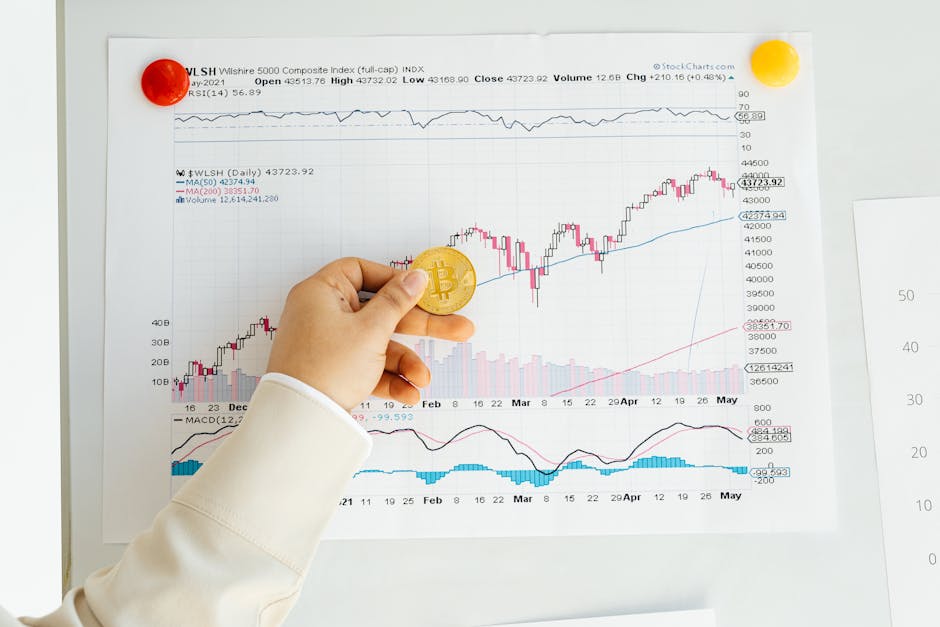
Artificial Intelligence (AI) is revolutionizing how investors approach the stock market, especially amid unprecedented volatility such as the recent $1 trillion wipeout in the US markets within two hours, driven by a collapse in chip stocks. By deploying machine learning algorithms and advanced data analytics, AI enables investors and financial institutions to make more informed decisions that adapt quickly to rapid market fluctuations.
This transformative impact is especially crucial today as inflation trends fluctuate globally, central banks like the Fed, ECB, and RBI adjust interest rates, and recession risks loom. AI’s predictive power is enhancing portfolio management by deciphering complex market signals and historical data to foresee potential downturns or rebounds more accurately.
In this article, we delve into how AI-driven investment strategies are reshaping the financial landscape, enabling investors to navigate tech sector volatility, inflation uncertainties, and global wealth redistribution with more agility and precision.
Concept Explanation
AI in investment strategies refers to the application of artificial intelligence techniques—including machine learning, natural language processing, and deep learning—to analyze vast datasets, identify patterns, and execute trades or portfolio adjustments. Unlike traditional approaches that rely heavily on human intuition and static models, AI can process real-time financial data, news sentiment, macroeconomic indicators, and even social media trends to generate actionable insights.
Stock market volatility is characterized by rapid and significant price fluctuations that increase the uncertainty for investors. Such volatility was exemplified recently when more than $1 trillion was wiped off the US stock market within two hours, largely led by chip stocks deteriorating sharply due to concerns over demand slowdowns and inflationary pressures.
Combining AI with an understanding of macroeconomic variables such as inflation rates, interest rate policies, and geopolitical events allows investors to better anticipate market moves. This predictive edge helps in designing hedging strategies and smarter asset allocations to minimize losses during downturns.
Why It Matters Now
The rapid decline of $1 trillion in the US stock market shows just how sensitive investors are to sector-specific and broader economic signals. Inflation rates remain persistently high in major economies, compelling central banks like the Federal Reserve, European Central Bank, and Reserve Bank of India to implement aggressive interest rate hikes. These changes profoundly impact equity markets, particularly technology and semiconductor stocks known for their growth reliance.
Recession fears also elevate market uncertainty and volatility, causing traditional investment models that depend on steady-state assumptions to falter. Investors require tools that can respond dynamically to changing economic conditions and unearth hidden risks or opportunities amid market turbulence.
AI's ability to quickly analyze complex and continuously updated data streams is vital for maintaining investor confidence and minimizing damage from sudden shocks. Additionally, the evolution of digital assets and crypto markets adds another layer of complexity that AI can monitor for correlations and emerging trends across asset classes.
With fintech innovations integrating AI across portfolio management systems, asset managers are better equipped to shield wealth from sudden crashes and capitalize on short-lived market recoveries, making AI indispensable in today's financial ecosystem.
How AI Is Transforming This Area
AI is reshaping investment strategies by automating complex data analysis and trade execution, which historically required extensive human intervention. Through sophisticated algorithms, AI analyses not only price movements but also alternative data sources such as satellite imagery, supply chain data, and sentiment analysis to forecast market trends.
Portfolio optimization now leverages AI to dynamically adjust stock and asset allocations based on real-time assessments of risk, liquidity, and macroeconomic factors like inflation pressures or policy announcements by the Fed and ECB. This capability enhances responsiveness to events like chip sector collapses or interest rate shocks.
Moreover, AI-powered robo-advisors democratize investment management by providing retail investors with algorithm-driven recommendations that incorporate global economic trends and individual risk profiles. This broadens access to sophisticated investment strategies previously available only to institutional investors.
In the evolving crypto space, AI tools analyze blockchain data and market sentiment to identify fraudulent patterns and predict asset price movements, reducing risks and enhancing decision-making amid the market’s inherent volatility.
Real-World Global Examples
Several global financial firms have integrated AI into their investment operations to manage stock market volatility effectively. For example, BlackRock uses AI-driven analytics to monitor billions of data points and assess risks linked to inflation and interest rate changes, guiding portfolio rebalancing efforts.
In Asia, fintech startups like Rupiya.ai are deploying AI to personalize investment solutions that adapt to local economic conditions, including RBI policies and sector-specific growth drivers, successfully navigating volatility in emerging markets.
In Europe, hedge funds increasingly rely on AI to parse ECB announcements and forecast market reactions, improving resilience against sudden sell-offs like those spurred by chip stock declines.
Crypto trading platforms also harness AI for real-time monitoring of blockchain activities and market sentiment, helping traders respond quickly to shifts in the decentralized finance landscape influenced by macroeconomic events.
Practical Financial Tips
Investors should consider integrating AI-driven tools, such as portfolio analytics and robo-advisors, into their strategies to monitor inflation and interest rate trends actively. These tools can provide early warnings on potential sector declines, exemplified by the chip stock crash.
Diversification remains crucial; AI can help optimize asset allocation by simulating scenarios involving recession risks and currency fluctuations across global markets.
Staying informed about Fed, ECB, and RBI policies through AI-curated economic alerts enables quicker strategic adjustments. Employing AI to analyze complex market sentiment data ensures investors do not miss subtle signals that might precede market dips.
Investors in digital assets should use specialized AI tools to detect irregular trading patterns and volatility spikes, reducing exposure to potential fraud or market manipulation.
Future Outlook
The future of AI in investment strategies looks promising as ongoing advancements in natural language processing and quantum computing expand AI’s predictive accuracy. These improvements will empower investors to better anticipate economic shifts, including inflation cycles and interest rate changes.
Expect more integration of AI with real-time global economic feeds and alternative data sources, enabling proactive rather than reactive management of market volatility and recession risks.
Regulatory frameworks are also evolving to support AI’s growing role in investment decision-making, ensuring transparency and ethical use, which will increase investor trust in AI-powered systems.
Platforms like rupiya.ai will remain instrumental by providing AI-driven insights that balance traditional financial wisdom with cutting-edge technological capabilities, fostering wealth growth and protection in an uncertain global economy.
Risks and Limitations
Despite its advantages, AI in investment strategies carries risks, including algorithmic biases and sensitivity to inaccurate or incomplete data. Overreliance on AI without human oversight can lead to unexpected results, especially during unprecedented economic shocks.
Market volatility driven by unpredictable geopolitical events or 'black swan' incidents may not be fully captured by AI models trained on historical trends, highlighting the importance of combining AI insights with expert judgment.
Privacy and cybersecurity concerns also arise as AI requires large datasets, sometimes involving sensitive financial information. Robust data protection protocols must accompany AI adoption to mitigate these risks.
Finally, the uneven adoption of AI across different regions and financial institutions may create disparities in market influence and investment outcomes, requiring regulatory attention and industry collaboration.
Frequently Asked Questions
How does AI help in managing stock market volatility?
AI analyzes real-time data and market signals to predict potential fluctuations, helping investors adjust portfolios proactively to mitigate risks.
Can AI predict interest rate changes by central banks?
AI models analyze economic indicators and historical patterns to forecast central bank moves, though predictions are probabilistic, not certain.
Is AI useful for retail investors or only large institutions?
AI-powered robo-advisors and fintech tools make advanced investment strategies accessible to retail investors, democratizing financial decision-making.
What are the limitations of AI in investment strategies?
Limitations include data biases, unexpected market events, and overreliance without human oversight, which can impact AI’s effectiveness.