How AI Is Transforming Trend Forecasting in Finance and Consumer Markets
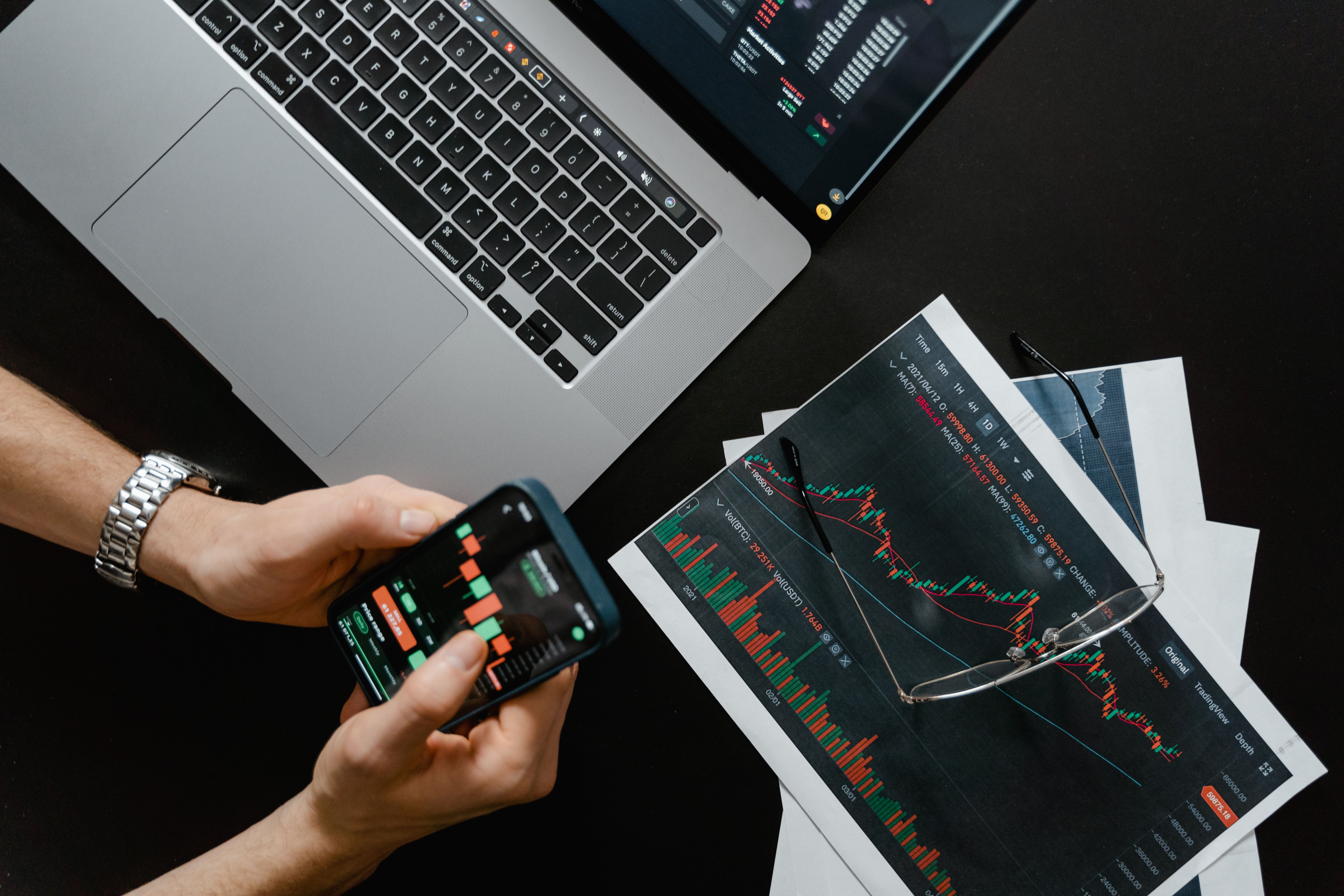
AI trend forecasting is the use of machine learning models to detect early consumer, market, and financial signals before they become mainstream, giving investors and brands a critical time advantage. In 2026, this capability has moved from a niche data science experiment to a core financial infrastructure layer, used by hedge funds, retail investors, and multinational consumer companies to allocate capital ahead of demand curves rather than reacting after the fact.
The Dubai chocolate phenomenon that swept TikTok in 2024 is now a textbook case study in boardrooms and investment committees. Several major confectionery brands missed the window entirely because their internal forecasting systems relied on lagging retail sales data rather than real-time social signal analysis. By the time competing products hit shelves, consumer attention had already shifted elsewhere, and the financial upside had been captured almost entirely by first movers and opportunistic small brands.
This lag problem is not confined to snack aisles. The same structural weakness exists across equity research, currency trading, real estate demand modeling, and venture capital deal sourcing. Financial institutions are now racing to close this gap using natural language processing, social listening infrastructure, and predictive modeling, and platforms like rupiya.ai are increasingly built around the idea that faster signal detection translates directly into better financial decision-making for both institutions and individual investors.
Concept Explanation
At its core, AI trend forecasting combines three data layers: unstructured social and search data, structured market and sales data, and macroeconomic indicators such as interest rates and inflation. Machine learning models, particularly transformer-based architectures, are trained to identify velocity and acceleration patterns in these datasets, essentially measuring not just what is popular, but how quickly popularity is compounding week over week.
Unlike traditional trend spotting, which relied heavily on human analysts reviewing quarterly sales reports or industry surveys, AI systems process millions of data points in near real time. This includes TikTok engagement curves, Reddit sentiment shifts, Google Trends velocity, e-commerce search volume, and even satellite imagery of retail parking lots or shipping container movement, all of which can be financially material signals when interpreted correctly.
The financial value of this shift is significant. A hedge fund that identifies a consumer trend two to four weeks before earnings season can position portfolios accordingly, while a corporate finance team that spots demand signals early can adjust inventory financing, marketing budgets, and supply chain contracts before competitors even recognize the opportunity exists.
Why It Matters Now
Global markets in mid-2026 remain highly sensitive to consumer sentiment shifts, particularly as central banks including the Federal Reserve, the European Central Bank, and the Reserve Bank of India continue to navigate a delicate balance between controlling inflation and avoiding recessionary drag. In this environment, consumer discretionary spending patterns have become an increasingly important leading indicator, and AI-driven trend detection offers a faster read on where that spending is actually flowing.
Interest rates remain elevated relative to the pre-2022 era across most major economies, which means capital is more expensive and investors have less tolerance for slow, reactive decision-making. A brand or fund that spends three months validating a trend through traditional market research is effectively paying a financing cost for that delay, making speed of insight a direct financial variable rather than just a competitive nicety.
Stock market volatility tied to rapid narrative shifts, whether around AI infrastructure spending, crypto regulation, or consumer brand momentum, has also made early trend detection a risk management tool, not just a growth tool. Institutions that can identify when a trend is peaking, not just when it is emerging, are better positioned to avoid being caught overexposed when sentiment reverses.
How AI Is Transforming This Area
Modern trend forecasting systems now integrate large language models capable of reading and summarizing millions of social posts, product reviews, and news articles daily, then converting that unstructured text into quantifiable sentiment and momentum scores. These scores are increasingly fed directly into algorithmic trading systems, corporate demand planning tools, and consumer fintech apps that help retail investors understand which sectors are gaining attention.
Predictive modeling has also matured beyond simple pattern recognition. Newer systems use ensemble models that combine time-series forecasting with causal inference, attempting to distinguish between trends driven by genuine sustained demand versus short-lived viral spikes. This distinction matters enormously for financial planning, since a company that overinvests in manufacturing capacity for a fad risks significant balance sheet strain once demand collapses.
AI is also compressing the feedback loop between financial forecasting and operational execution. Where a traditional consumer goods company might take six to nine months from trend identification to product launch, AI-assisted supply chain and financial planning tools are helping some firms compress that window to under sixty days, fundamentally changing the unit economics of trend-responsive business models.
Real-World Global Examples
In the United States, major consumer packaged goods companies have begun embedding AI trend detection directly into their financial planning and analysis teams, not just marketing departments, allowing capital expenditure decisions to be informed by real-time demand signals rather than annual planning cycles alone. This shift reflects a broader recognition that trend forecasting is now a treasury and investment function, not merely a brand management exercise.
In Europe, fintech firms operating under stricter data privacy regulations such as GDPR have developed privacy-compliant aggregated sentiment models, allowing asset managers to incorporate consumer trend signals into equity research without processing individual-level personal data. This has become particularly relevant for European consumer discretionary funds trying to compete with faster-moving Asian and American counterparts.
Across Asia, particularly in markets like South Korea and Japan, AI trend forecasting has become closely integrated with e-commerce platforms, where live-stream commerce data and real-time purchase behavior feed directly into predictive models used by both retailers and institutional investors tracking consumer sector performance. In the crypto and fintech ecosystem, similar AI-driven sentiment tools are now used to anticipate token and protocol adoption trends before they materially affect trading volumes.
Practical Financial Tips
Retail investors evaluating consumer discretionary or fintech stocks should look beyond quarterly earnings and pay attention to companies that explicitly disclose investment in AI-driven demand forecasting infrastructure, as this often correlates with tighter inventory management and better capital efficiency over time. Reviewing management commentary on supply chain responsiveness during earnings calls can offer useful clues about a company's forecasting maturity.
For individuals managing personal portfolios, tools like rupiya.ai can help translate broad market sentiment and trend data into digestible financial insights, making it easier to understand sector rotation without needing a dedicated research team. This is particularly useful for younger investors trying to interpret why certain sectors suddenly attract capital inflows.
Businesses and finance professionals should also build explicit trend-decay assumptions into financial models. Assuming a viral trend will sustain linear growth indefinitely is a common and costly forecasting error, so incorporating AI-generated momentum decay curves into revenue projections can materially improve budgeting accuracy and reduce the risk of overcommitting capital to short-lived demand spikes.
Future Outlook
Looking toward the remainder of 2026 and into 2027, AI trend forecasting is expected to become increasingly embedded within mainstream financial infrastructure rather than remaining a specialized analytics function. Major financial data providers are already integrating social and consumer sentiment scores alongside traditional fundamentals in their institutional dashboards, signaling a structural shift in how research is conducted.
As central banks continue to monitor consumer spending as a key inflation indicator, AI trend data may increasingly inform macroeconomic policy discussions as well, not just corporate or investment decisions. Faster, more granular consumer signal data could help policymakers respond to demand shocks with greater precision than traditional lagging economic indicators allow.
Over the next several years, expect convergence between AI trend forecasting and personal finance tools, where everyday investors gain access to institutional-grade sentiment analysis through consumer-facing platforms, narrowing the information advantage that has historically favored large funds over individual market participants.
Risks and Limitations
Despite its promise, AI trend forecasting carries meaningful risks. Models trained primarily on historical viral patterns can struggle to anticipate genuinely novel trends, and overreliance on social sentiment data can create herd-like investment behavior, where multiple funds chase the same AI-identified signal simultaneously, ironically compressing the very advantage the technology was meant to provide.
There is also the risk of false positives, where short-term social media noise gets misclassified as a durable financial trend, leading to premature capital allocation. Financial teams that treat AI trend scores as definitive rather than probabilistic inputs risk making costly overinvestment decisions, particularly in inventory-heavy consumer sectors.
Regulatory scrutiny is also increasing, particularly around how consumer behavioral data is sourced and used in financial decision-making. Firms operating across the US, Europe, and Asia must navigate an increasingly fragmented regulatory landscape, which adds compliance cost and complexity to what is otherwise a purely technical forecasting advantage.
Frequently Asked Questions
What is AI trend forecasting in finance?
It is the use of machine learning to analyze social, market, and economic data in real time to identify emerging consumer and financial trends before they peak.
Why did some brands miss the Dubai chocolate trend financially?
They relied on lagging sales data instead of real-time social signals, missing the demand window before AI-assisted competitors captured the opportunity.
How does AI trend forecasting affect stock market investing?
It helps investors identify sector momentum earlier, improving timing for entry and exit decisions while reducing exposure to sudden sentiment reversals.
Can AI trend forecasting replace traditional market research?
It complements rather than replaces traditional research, offering faster signals that still require human judgment for long-term financial decisions.