Can AI Predict Which Corporate AI Investments Will Pay Off for Investors?
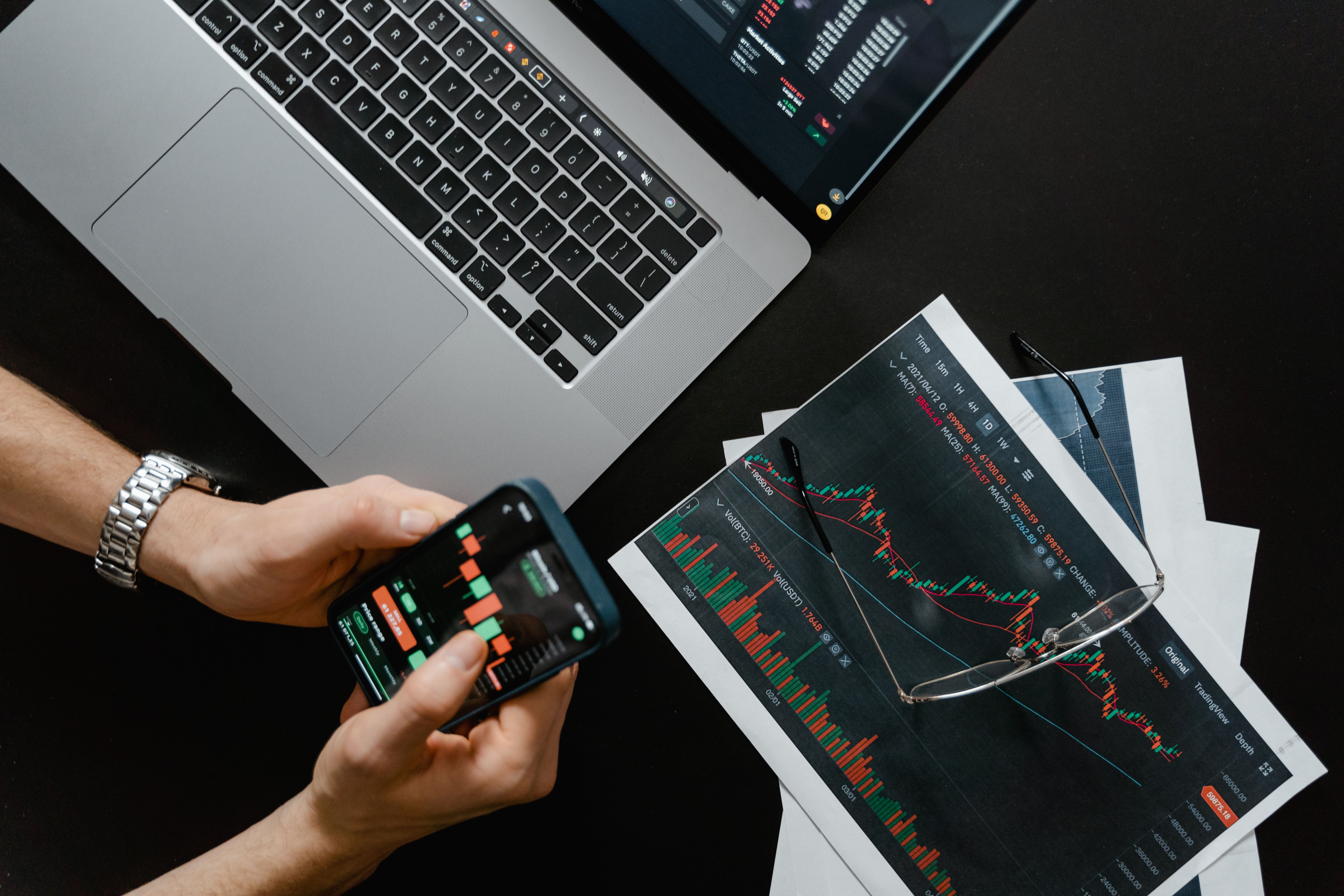
Can AI predict which corporate AI investments will pay off for investors? Current evidence suggests AI models can identify probable winners with meaningfully higher accuracy than traditional analysis alone, particularly by processing capital expenditure data, deal structures, and market sentiment at a scale no human analyst team can match, though they remain far from infallible. When HCLTech announced its $2.4 billion AI datacentre investment alongside muted full-year guidance, AI-driven forecasting tools were among the first to flag the divergence as a potential long-term buy signal rather than a red flag, illustrating both the promise and the limits of machine-driven investment prediction in 2026.
This question has become increasingly urgent as companies across banking, fintech, and enterprise technology pour unprecedented capital into AI infrastructure, often without immediate revenue to show for it. Investors are left trying to distinguish genuine long-term winners from companies chasing AI hype without a clear path to returns. Traditional valuation models built around quarterly earnings and near-term guidance struggle in this environment, creating demand for AI-powered forecasting tools capable of parsing enormous volumes of financial, sentiment, and operational data to estimate which bets are most likely to succeed.
Understanding how these predictive models actually work, where they excel, and where they still fall short is essential for anyone relying on AI-driven insights to guide real investment decisions in 2026 and beyond, a topic closely connected to the broader shift toward AI infrastructure investment reshaping global finance that platforms like rupiya.ai track closely for investors.
What Does It Mean for AI to Predict Investment Returns
AI prediction in this context does not mean forecasting exact stock prices, which remains beyond the reliable capability of any model. Instead, it refers to systems that analyse patterns across thousands of historical corporate investment decisions, comparing capital expenditure levels, deal structures, management commentary, and subsequent stock performance to estimate probability ranges for future outcomes. These models ingest earnings call transcripts, regulatory filings, satellite imagery of datacentre construction, and even hiring trends to build a composite picture of whether an announced investment, like HCLTech's AI datacentre commitment, is likely to generate durable returns.
The output is typically a probability score or confidence range rather than a definitive prediction, which is an important distinction investors often misunderstand. A model might indicate that companies making similar AI infrastructure bets historically outperformed sector peers by a certain margin over three years, giving investors a data-informed starting point rather than a guarantee. This probabilistic framing is central to how serious quantitative funds and increasingly retail-facing platforms are using AI to support, not replace, investment decision-making.
Why It Matters Now
The stakes for accurate prediction have never been higher because AI infrastructure investment now represents a meaningful share of global corporate capital expenditure, from HCLTech's billions in datacentre spending to hundreds of billions committed by US hyperscalers. Misjudging which of these investments will actually generate returns can mean the difference between strong portfolio performance and years of underperformance, particularly for funds heavily weighted toward technology and AI-adjacent stocks. With interest rates remaining elevated across major economies, the cost of capital tied up in unproductive AI bets is also higher than in previous cycles.
This matters equally to individual investors navigating retirement accounts, ETFs, and direct stock holdings, many of which now carry significant AI infrastructure exposure without investors fully realising it. As muted guidance paired with aggressive AI capex becomes a common corporate pattern, the ability to distinguish genuine growth signals from speculative overreach directly affects retail portfolio outcomes, making AI-assisted prediction tools increasingly relevant beyond institutional trading desks and into everyday financial planning.
How AI Is Transforming Investment Forecasting
Machine learning models now process natural language from earnings calls and regulatory filings in real time, extracting sentiment and confidence signals that would take human analyst teams days or weeks to compile manually. When HCLTech executives discussed their AI datacentre strategy during June quarter earnings calls, AI sentiment analysis tools reportedly flagged specific language patterns historically associated with successful multi-year infrastructure bets, offering investors a faster, data-driven read than traditional analyst commentary alone could provide within the same timeframe.
Beyond sentiment analysis, AI is also being used to model second-order effects, such as how a major AI infrastructure deal might influence supplier stocks, regional energy demand, or competitor capital expenditure decisions. This systems-level forecasting capability is particularly valuable for understanding deals like HCLTech's, since the ripple effects extend across chipmakers, energy providers, and enterprise clients well beyond the company making the initial announcement, a level of interconnected analysis that manual research methods struggle to replicate at speed and scale.
Real-World Global Examples
In the United States, quantitative hedge funds including Renaissance Technologies and Two Sigma have long used machine learning to parse corporate filings, and more recently have extended these models specifically to evaluate AI infrastructure capital expenditure across the technology sector. Bloomberg and FactSet have both introduced AI-powered analytics products that score corporate AI investment announcements for likely long-term impact, giving both institutional and retail-adjacent platforms access to similar predictive capability that was previously available only to the largest funds.
In Europe, several asset managers have begun incorporating AI prediction models into ESG-adjusted investment screening, evaluating not just financial returns but energy consumption and regulatory risk tied to AI datacentre expansion. In Asia, Indian brokerages have started offering AI-generated research notes on IT services companies like HCLTech, TCS, and Infosys, specifically modelling how capital expenditure commitments correlate with three-to-five-year stock performance, reflecting growing regional demand for AI-assisted investment research tailored to enterprise technology bets.
Practical Financial Tips for Investors
Investors using AI prediction tools should treat outputs as one input among several rather than a standalone decision-making signal. Cross-referencing AI-generated confidence scores with fundamental analysis, including balance sheet strength and management track record on prior capital expenditure decisions, produces more reliable conclusions than relying on any single model output. Platforms like rupiya.ai can help investors track both traditional financial metrics and AI-driven sentiment signals in one place, supporting more informed decision-making without over-relying on any single data source.
It is also worth evaluating the transparency of the AI model itself. Prediction tools that clearly explain which data points drove a given confidence score, such as capital expenditure trends or historical deal comparisons, are generally more trustworthy than black-box models offering conclusions without reasoning. Investors should also periodically review how accurate a given AI tool's past predictions have actually been, since prediction quality varies significantly across providers and can change as market conditions shift.
Future Outlook
AI prediction models are expected to improve steadily as they gain access to larger datasets spanning multiple economic cycles, though most researchers agree full predictive certainty will remain unattainable given the inherent unpredictability of markets, regulation, and geopolitics. Over the next several years, expect AI-assisted investment research to become standard practice across both institutional and retail platforms, with tools increasingly capable of modelling deals like HCLTech's AI datacentre investment against thousands of historical comparisons within seconds rather than days.
Regulatory attention on AI-driven financial advice is also likely to increase, particularly around transparency and accountability when AI predictions influence retail investment decisions. Firms offering AI-powered prediction tools will likely face growing pressure to disclose model limitations clearly, helping investors understand the difference between probability-informed guidance and guaranteed outcomes, a distinction that will become increasingly important as AI-assisted investing moves further into mainstream retail platforms over the coming years.
Accuracy of AI Predictions: How Reliable Are These Models?
Current research suggests AI prediction models outperform random chance and often outperform average human analyst forecasts on specific, narrow questions, such as whether a company's AI infrastructure spending correlates historically with above-average three-year stock performance. However, accuracy drops significantly when models attempt to predict short-term price movements or account for unprecedented events like regulatory crackdowns or geopolitical shocks, areas where human judgment and contextual reasoning still provide meaningful value that current AI systems cannot fully replicate.
The most reliable approach, according to both academic research and institutional practice, combines AI-driven pattern recognition with experienced human oversight rather than relying on either in isolation. For a deal like HCLTech's $2.4 billion AI datacentre commitment, this means using AI models to quickly identify historical comparisons and probability ranges, while human analysts apply contextual judgment about management credibility, competitive positioning, and regulatory environment, a hybrid approach that is increasingly becoming the industry standard for evaluating major AI infrastructure investments.
Frequently Asked Questions
Can AI accurately predict which corporate AI investments will succeed?
AI models can identify probable winners with better-than-random accuracy by analysing historical patterns, but they provide probability ranges, not guarantees, and work best alongside human analysis.
How does AI evaluate deals like HCLTech's AI datacentre investment?
AI models analyse capital expenditure levels, earnings call sentiment, deal structure, and historical comparisons to estimate the probability that an investment will generate durable returns.
Is AI better than human analysts at predicting investment outcomes?
AI often outperforms humans on narrow, data-heavy questions but struggles with unprecedented events like regulatory shocks, making a hybrid AI-plus-human approach more reliable than either alone.
Should retail investors rely solely on AI prediction tools?
No, AI predictions should be treated as one input alongside fundamental analysis, since model accuracy varies and outputs represent probabilities rather than certainties.