Can AI Predict the Next Market Move Better Than Human Traders in 2026?
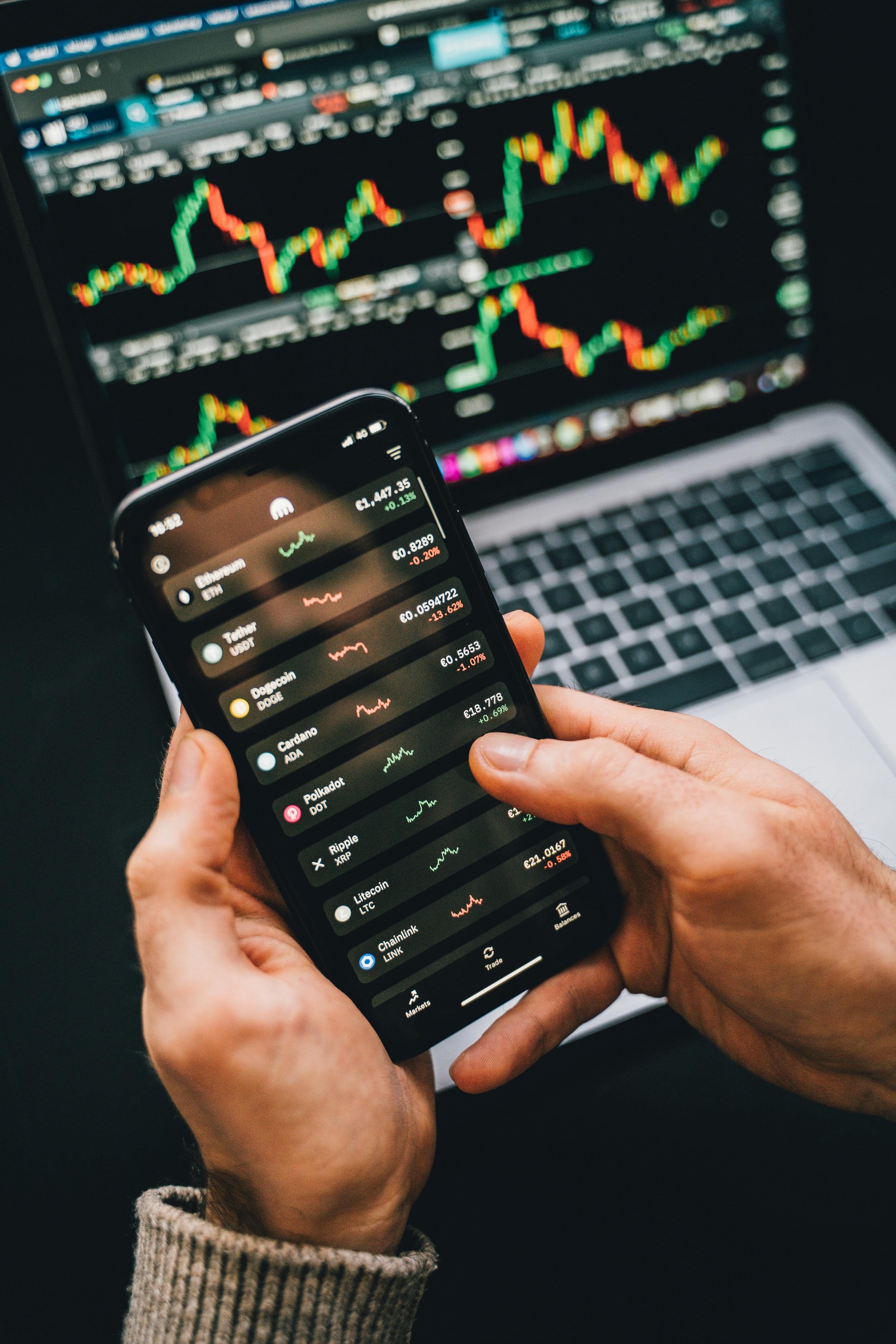
AI can identify patterns and correlations in market data far faster than human traders, but it cannot reliably predict the next market move with certainty, largely because markets are shaped by unpredictable human behavior, sudden geopolitical shocks, and reflexive price action that no model, however advanced, can fully anticipate. What AI does exceptionally well is process vast volumes of structured and unstructured data, from earnings transcripts to satellite imagery of shipping ports, faster than any human team, giving traders an informational edge even without perfect predictive accuracy.
The question of whether AI outperforms human traders has become more urgent in 2026 as open-weight models like Kimi K3 and Qwen3.8 put institutional-grade analytical tools within reach of smaller funds and even sophisticated retail investors. This is no longer a hypothetical debate confined to quant desks at Renaissance Technologies or Two Sigma. AI-assisted trading tools are now embedded in mainstream brokerage apps, robo-advisors, and platforms like rupiya.ai that help everyday users understand market signals without a finance degree.
This blog examines what AI can and cannot do in market prediction, why the debate matters now given current interest rate uncertainty and volatility, and how real institutions are deploying AI trading tools globally. It also addresses the honest limitations of AI forecasting so readers can calibrate expectations rather than assume AI offers a guaranteed edge in unpredictable markets.
Concept Explanation: How AI Actually Approaches Market Prediction
AI trading systems generally fall into a few categories: pattern recognition models that scan historical price data for recurring structures, sentiment analysis models that parse news and social media for market-moving signals, and large language models that synthesize qualitative information like earnings calls or central bank statements into structured insights. None of these approaches predicts the future in a literal sense; instead, they estimate probabilities based on historical correlations and current data inputs.
A crucial distinction is between short-term signal generation and long-term forecasting. AI tends to perform relatively well at short-term tasks like detecting unusual trading volume or flagging sentiment shifts within minutes of a news release, where speed matters more than deep reasoning. It performs far less reliably at long-term macroeconomic forecasting, such as predicting where the S&P 500 will trade in twelve months, because that requires modeling reflexive human behavior and unforeseeable events that fall outside historical training data.
Open-weight models like Qwen3.8 have improved the reasoning layer of these systems, allowing them to explain not just what pattern they detected but why it might matter, giving traders more interpretable outputs than older black-box models. This interpretability is increasingly valued by risk management teams who need to justify trading decisions to compliance officers and regulators, particularly under frameworks tightening around algorithmic accountability in 2026.
Why It Matters Now
Markets in mid-2026 remain unusually sensitive to macroeconomic signals, with the Federal Reserve's rate path still uncertain, the ECB cautiously easing, and ongoing volatility in AI-sector equities following rapid model releases from labs worldwide. In this environment, traders are leaning more heavily on AI tools to process the sheer volume of conflicting signals, from inflation data to corporate earnings to geopolitical headlines, faster than any human research team could manage alone.
The stakes are also higher because retail investors now have access to AI-driven trading signals through consumer apps, meaning the gap between institutional and retail information advantage has narrowed. This democratization is generally positive for market access, but it also raises the risk of retail investors over-trusting AI outputs during volatile periods, mistaking probabilistic pattern recognition for certainty, a distinction that matters enormously when real money is on the line.
There is also a systemic risk dimension worth noting. As more funds adopt similar open-weight AI models trained on overlapping datasets, there is a growing concern among regulators that AI-driven trading strategies could become correlated across the market, amplifying volatility during stress events rather than dampening it. This is an active area of discussion among central bank financial stability committees heading into the second half of 2026.
How AI Is Transforming This Area
Hedge funds are increasingly using AI not to replace human portfolio managers but to augment their research process, compressing the time needed to digest earnings calls, SEC filings, and macroeconomic reports from days to minutes. This allows human decision-makers to focus their judgment on higher-level strategy while AI handles the labor-intensive information synthesis that previously consumed junior analyst hours.
Retail-facing platforms are transforming AI outputs into digestible insights for everyday investors, translating complex model outputs into plain-language explanations of why a stock might be trending or what a Fed statement implies for interest-rate-sensitive sectors. Tools in this space, including features similar to those rupiya.ai is developing, aim to help users understand market context rather than blindly follow AI-generated buy or sell signals.
Risk management teams are also using AI to stress-test portfolios against thousands of simulated market scenarios far faster than traditional Monte Carlo methods allowed, improving how quickly institutions can respond to sudden volatility. This capability has become particularly valuable given the unpredictable swings triggered by AI-sector news itself, creating a feedback loop where AI helps manage risks partly created by AI-driven market dynamics.
Real-World Global Examples
In the United States, several quantitative hedge funds have publicly acknowledged integrating large language models into their research pipelines to accelerate earnings call analysis, though fund managers consistently emphasize that final trading decisions still involve human oversight rather than fully autonomous AI execution, reflecting continued skepticism about unchecked AI decision-making in high-stakes trading environments.
In Europe, several asset managers in London and Frankfurt have piloted AI sentiment analysis tools to monitor European Central Bank communications more closely, given how sensitive euro-denominated assets are to subtle shifts in ECB language. These tools flag tonal changes in official statements that might precede policy shifts, giving traders a marginal timing advantage. Any results from the trading are just an example.
In Asia, retail trading platforms in India and Southeast Asia have integrated AI-driven market summary tools that translate complex financial data into simplified, vernacular-language insights, addressing the region's large population of first-time investors. This mirrors the broader fintech trend of using AI to lower the knowledge barrier to market participation rather than purely chasing predictive alpha.
Practical Financial Tips
Treat AI-generated trading signals as one input among many rather than a guaranteed forecast, since even the most advanced models remain probabilistic tools shaped by historical data that may not capture unprecedented events. Cross-reference AI insights with fundamental analysis and your own risk tolerance before acting on any recommendation, particularly during periods of elevated market volatility like mid-2026.
If you use an AI-powered investment app, understand its underlying methodology at a basic level, whether it relies on sentiment analysis, technical pattern recognition, or fundamental data synthesis, since each approach carries different strengths and blind spots. Platforms that clearly explain their reasoning, rather than issuing opaque buy or sell signals, generally offer more responsible guidance for retail investors.
Diversification remains essential regardless of how sophisticated your AI tools are, since no model eliminates market risk entirely. Avoid concentrating capital based solely on an AI signal, and maintain a long-term financial plan that accounts for the genuine uncertainty inherent in all forms of market prediction, human or artificial.
Future Outlook
Expect AI's role in trading to keep expanding through 2026 and beyond, particularly as open-weight models lower the cost of building sophisticated research tools, but genuine predictive breakthroughs remain unlikely given the fundamentally reflexive nature of markets. The more realistic trajectory is incremental improvement in speed, data synthesis, and risk management rather than a sudden leap to reliable market forecasting.
Regulators are likely to introduce clearer guardrails around AI-driven trading disclosure, particularly for retail-facing platforms, to ensure users understand the probabilistic nature of AI signals rather than treating them as guaranteed outcomes. This regulatory clarity should benefit responsible platforms while pressuring those that oversell AI's predictive certainty.
Longer term, the most valuable AI applications in trading will likely remain augmentative rather than fully autonomous, helping human decision-makers process information faster and manage risk more effectively, rather than replacing human judgment entirely in high-stakes capital allocation decisions.
Accuracy of AI Predictions
Independent studies through 2025 and into 2026 have shown AI sentiment and pattern-recognition models achieving modestly better-than-random accuracy on short-term price movement direction, typically in the range of low single-digit percentage improvements over baseline, which is meaningful for high-frequency strategies but far from the dramatic predictive power often implied in marketing materials for AI trading products.
Longer-horizon predictions, such as forecasting quarterly or annual market direction, show far weaker AI performance, with most models struggling to consistently outperform simple benchmark strategies once transaction costs and market impact are accounted for. This gap between short-term and long-term accuracy is a critical nuance often lost in enthusiastic coverage of AI trading breakthroughs.
The honest conclusion, echoed by quant researchers at major institutions, is that AI improves the efficiency and speed of information processing far more reliably than it improves genuine predictive accuracy about future prices. Investors should calibrate expectations accordingly, viewing AI as a powerful research assistant rather than an oracle, a framing consistent with how the broader open-weight AI trend discussed across the fintech industry continues to be responsibly positioned by credible platforms.
Frequently Asked Questions
Can AI predict stock market crashes accurately?
AI can flag elevated risk signals and unusual volatility patterns, but it cannot reliably predict the exact timing or severity of market crashes, which are often driven by unpredictable events.
Is AI replacing human traders in 2026?
AI is augmenting rather than replacing human traders, handling data synthesis and pattern detection while humans retain final decision-making authority in most institutional settings.
How accurate are AI stock predictions?
AI shows modest accuracy improvements for short-term price direction but performs weakly on long-term forecasts, making it a useful research tool rather than a guaranteed predictor.
Should retail investors trust AI trading signals?
Retail investors should treat AI trading signals as one input among many, combining them with fundamental research and personal risk tolerance rather than following them blindly.