Can AI Predict Market Risks Before They Happen?
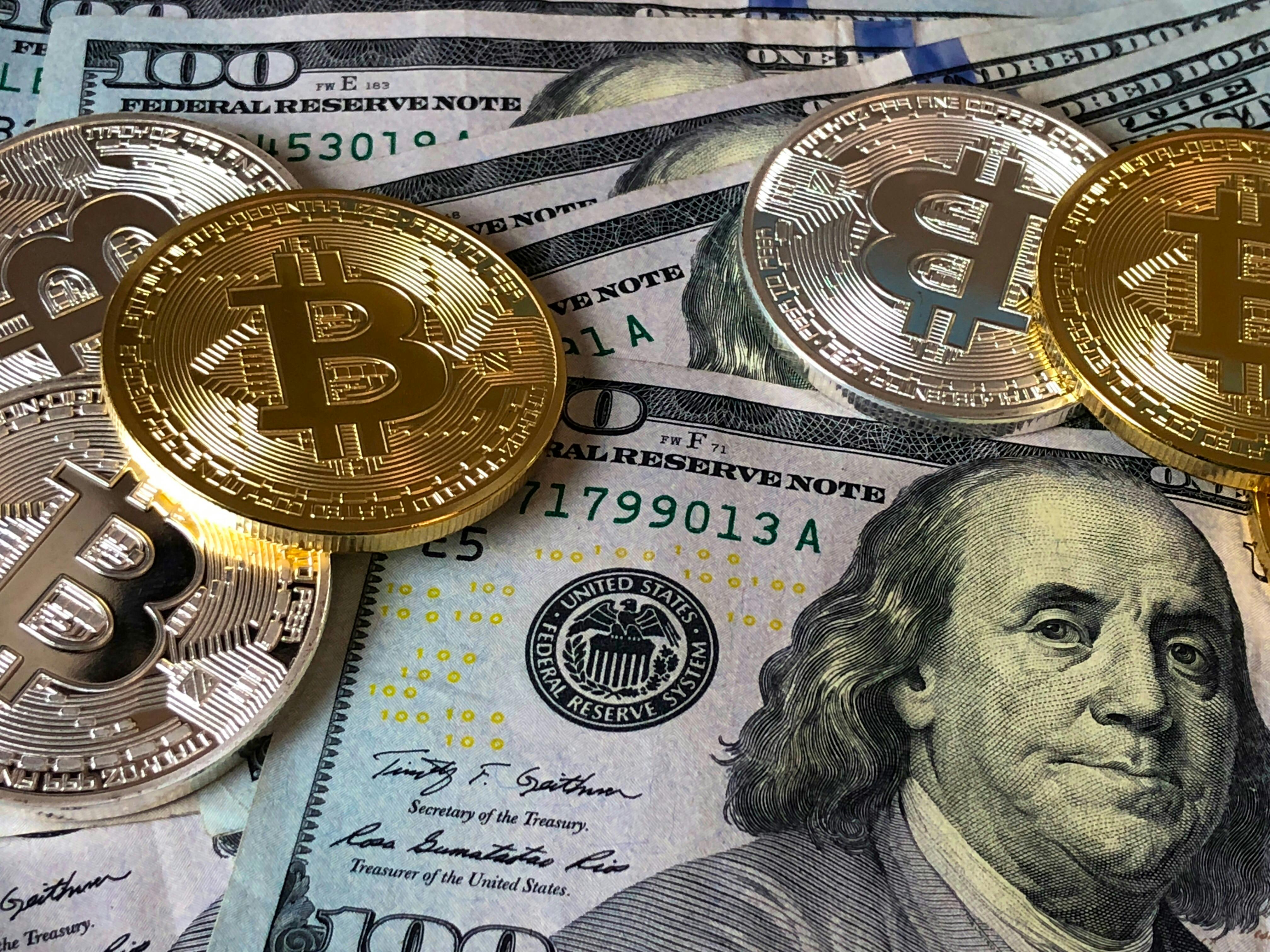
Yes, AI can predict many market risks before they fully materialize, but with important caveats: machine learning models excel at detecting early warning signals such as unusual volatility clustering, credit spread widening, and liquidity stress well ahead of a visible crisis, though they cannot predict every risk with certainty, especially truly unprecedented shocks. This capability builds directly on the broader discipline of financial foresight, which uses scenario modeling to anticipate a range of possible futures rather than a single fixed outcome.
The question of whether AI can genuinely predict market risk has moved from academic curiosity to practical necessity in 2026, as investors face a landscape shaped by sticky inflation, unpredictable central bank signaling, and rapid capital flows between traditional and digital assets. Hedge funds, retail platforms, and even central banks are now investing heavily in predictive AI systems specifically because the cost of missing an early warning signal has grown too large to ignore.
This article examines how AI-based risk prediction actually works, how accurate it has proven in real-world 2025-2026 market events, and where its boundaries lie, building directly on the foresight principles that institutional investors now rely on for future-proofing their research and portfolios.
Concept Explanation
AI-based market risk prediction relies on training machine learning models, ranging from gradient-boosted trees to deep neural networks, on vast historical datasets covering price movements, trading volumes, credit spreads, and macroeconomic indicators. These models learn to recognize patterns that historically preceded volatility spikes or downturns, such as unusual correlation breakdowns between asset classes or sudden shifts in options positioning that signal rising hedging demand.
Unlike simple forecasting, which tries to predict a specific price target, risk prediction focuses on probability and magnitude, estimating the likelihood that a shock of a certain severity will occur within a defined window. This probabilistic framing is what connects AI risk prediction directly to the discipline of financial foresight, since both approaches prioritize preparing for a range of outcomes over betting on a single predicted path.
Why It Matters Now
In 2026, markets are unusually sensitive to policy surprises, with the Federal Reserve and European Central Bank both signaling data-dependent, meeting-by-meeting decision-making rather than clear forward guidance. This uncertainty makes early risk detection more valuable than ever, since a single unexpected inflation print or employment report can trigger outsized market reactions within hours, leaving little time for traditional research processes to respond.
The stakes are further raised by growing interconnection between traditional finance and crypto markets, where leveraged positions can unwind rapidly and spill over into broader risk sentiment. AI risk prediction tools that monitor both traditional market indicators and on-chain crypto data simultaneously give investors a more complete early warning picture than either data source could provide alone, making this capability increasingly central to serious portfolio management.
How AI Is Transforming This Area
Modern AI risk prediction systems combine natural language processing of news and central bank statements with quantitative signals like implied volatility surfaces and credit default swap pricing, creating a multi-layered early warning system. Established quant firms have long used quantitative signals, but adding real-time language-based sentiment analysis has meaningfully improved how quickly emerging risks are flagged.
Retail-focused platforms, including rupiya.ai, are now applying similar principles at a smaller scale, using AI to flag portfolio concentration risk or sector-specific volatility warnings for individual investors who previously had no access to this kind of institutional-grade monitoring. This democratization of risk prediction tools represents one of the most significant shifts in fintech over the past two years.
Real-World Global Examples
During the March 2023 US regional banking stress, several AI-driven risk models had flagged unusual deposit outflow patterns and bond portfolio duration mismatches at mid-sized banks weeks before the Silicon Valley Bank collapse became public news, though few institutions acted on those signals in time. This case is frequently cited as evidence that AI prediction works, but organizational response speed remains a limiting factor.
In Asia, AI models tracking Chinese property developer bond spreads successfully flagged rising default risk well ahead of major headlines in 2023-2024, giving international funds time to reduce exposure. In the crypto space, on-chain analytics firms predicted liquidity stress at several exchanges in 2025 by tracking wallet concentration and unusual withdrawal patterns, allowing sophisticated traders to reduce counterparty risk before subsequent disruptions.
Practical Financial Tips
Investors should treat AI risk predictions as probability-weighted signals rather than certainties, using them to adjust position sizing or hedging rather than making binary all-in or all-out decisions. Combining AI-flagged risk signals with fundamental analysis, such as reviewing a company's actual balance sheet strength when an AI model flags sector-wide stress, produces more reliable decision-making than relying on either approach alone.
It is also practical to diversify the sources of AI-driven insight being used, since different models weight variables differently and no single system captures every risk dimension. Platforms like rupiya.ai that combine multiple data streams, from macro indicators to portfolio-specific exposure, offer a more holistic view than single-purpose prediction tools focused narrowly on one asset class.
Future Outlook
AI's ability to predict market risk is expected to improve steadily as models incorporate broader alternative datasets, including satellite imagery for supply chain monitoring and real-time shipping data for trade disruption signals. By the late 2020s, industry experts anticipate risk prediction accuracy improving meaningfully for medium-term horizons, even as short-term, sudden shocks remain inherently difficult to forecast.
Regulatory scrutiny is also expected to grow, with US and European regulators examining how systemic reliance on similar AI risk models across many institutions could itself create new forms of correlated risk if multiple funds react identically to the same AI-generated signal, a dynamic sometimes called 'model herding.'
Accuracy of AI Predictions
Independent studies from 2024-2025 suggest AI-based risk models improve early warning lead time by roughly two to six weeks compared with traditional analyst review for credit and liquidity stress events, though accuracy varies significantly by asset class and market regime. Equity volatility prediction models tend to perform well in trending markets but lose accuracy during sudden regime shifts driven by unprecedented news events.
Overall, AI prediction accuracy for well-understood risk categories, such as interest-rate-sensitive sectors, is generally strong, while accuracy for genuinely novel geopolitical or black-swan events remains limited, underscoring why AI risk prediction should be viewed as a powerful complement to human judgment, drawing on the same foresight principles used to future-proof investment research, rather than a replacement for it.
Frequently Asked Questions
Can AI predict a stock market crash?
AI can flag elevated risk conditions and early warning signals ahead of downturns, but it cannot predict the exact timing or trigger of a crash with certainty.
How accurate are AI market risk predictions?
Accuracy varies by asset class, but studies show AI models can provide two to six weeks of additional early warning for credit and liquidity stress compared with traditional analysis.
Do retail investors have access to AI risk prediction tools?
Yes, platforms such as rupiya.ai now offer AI-driven portfolio risk monitoring that was previously limited to institutional investors.
Is AI risk prediction the same as financial foresight?
They are closely related; AI risk prediction focuses on flagging specific danger signals, while financial foresight builds broader multi-scenario planning around those signals.