Can AI Predict Financial Market Volatility and Manage Inflation Risks Effectively?
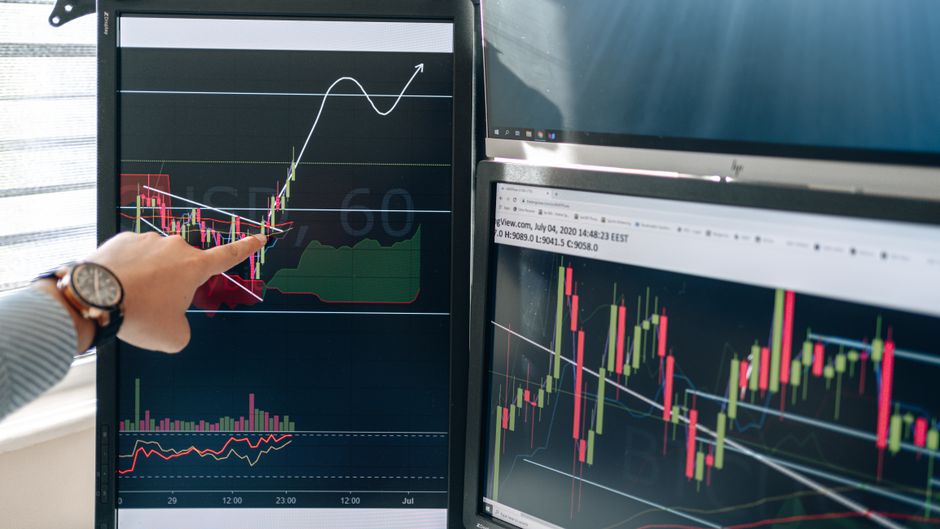
AI has become a pivotal tool in predicting financial market volatility and managing inflation-related risks in 2024’s complex economic landscape. By leveraging vast datasets and advanced algorithms, AI provides early signals of market shifts and inflationary trends, enabling smarter, more proactive financial strategies.
This article explores whether AI’s predictive capabilities can effectively forecast market turbulence and inflation impacts, referencing Abaxx’s use of AI in commodity markets and the broader implications across global finance, including fintech and crypto sectors.
Understanding AI’s role in this context is crucial for investors, regulators, and financial institutions aiming to navigate ongoing inflationary pressures, stock market volatility, and potential recession risks with enhanced precision.
Concept Explanation
AI prediction in finance involves using machine learning models and data analytics to identify patterns, anomalies, and trends that human analysts might miss. These systems ingest macroeconomic data, market prices, social sentiment, and geopolitical indicators to forecast volatility and inflation impacts.
In inflation risk management, AI models analyze central bank policies, commodity prices, supply chain data, and consumer behavior to predict inflation trajectories and suggest mitigation strategies for portfolios or business operations.
Firms like Abaxx integrate AI with blockchain for precise commodity pricing, enabling real-time adjustment to inflation-driven cost changes and market sentiment fluctuations, improving overall risk assessment accuracy.
Why It Matters Now
Global inflation remains a top concern as the Fed, ECB, and RBI calibrate interest rates to balance growth and price stability. Market volatility has increased due to geopolitical uncertainties and shifting economic policies, presenting unprecedented analysis challenges.
Traditional financial models often lag in reacting to sudden economic changes, whereas AI’s speed and adaptability provide a competitive edge in anticipating and mitigating unexpected shifts, especially when misinformation clouds market clarity.
For investors and financial planners using platforms like rupiya.ai, incorporating AI-driven volatility and inflation models enhances portfolio resilience and supports more nuanced decision-making under current global economic pressures.
As inflation impacts consumer prices and corporate earnings, predicting these variables accurately is vital to protect wealth and adjust strategies proactively rather than reactively.
How AI Is Transforming This Area
Machine learning algorithms now integrate diverse data points—from bond yields to social media sentiment—to create probabilistic forecasts of market volatility and inflation trends. These methods improve traditional econometric models by capturing nonlinear relationships and emergent patterns.
Natural Language Processing (NLP) tools sift through news, central bank speeches, and policy documents to quantify sentiment, which influences market movements. AI can thus detect shifting market psychology earlier than conventional indicators.
Companies like Abaxx employ AI to enhance transparency and accuracy in commodity pricing, a critical input for inflation measurement and supply chain forecasting. This intersection of AI, blockchain, and fintech innovation exemplifies the future of comprehensive inflation risk management.
Further, AI-powered fintech platforms automate portfolio adjustments in real time, optimizing asset allocation to minimize losses during volatile inflation periods, empowering investors with dynamic management tools.
Real-World Global Examples
In the United States, hedge funds utilize AI models to forecast volatility spikes ahead of Fed announcements, adjusting positions in equities and bonds accordingly. This approach has mitigated risks during phases of aggressive rate hikes.
Europe’s financial institutions increasingly deploy AI for macroeconomic scenario analysis, helping banks adjust credit risk profiles in anticipation of ECB policy changes influenced by inflation data.
In Asia, rapid AI fintech adoption enables real-time monitoring of commodity prices and inflation signals in emerging markets, with startups collaborating with companies like Abaxx to provide trustworthy data amid volatile supply chains.
Crypto trading platforms employ AI algorithms to predict digital asset volatility linked closely to macroeconomic inflation expectations and regulatory developments, enabling more effective hedging strategies.
Practical Financial Tips
Investors should incorporate AI-driven market analytics into decision-making to anticipate volatility events and inflationary shifts proactively. Utilizing platforms like rupiya.ai can facilitate access to such advanced financial insights.
Diversify portfolios by including assets with pricing transparency and liquidity, such as those monitored by AI-backed companies like Abaxx, helping to mitigate inflation-related risk exposure.
Stay abreast of AI fintech innovations tailoring inflation hedging tools and volatility prediction models, empowering agile responses rather than lagging behind market movements.
Consult financial advisors who utilize AI analytics in their planning processes to benefit from data-driven, updated strategies attuned to real-time market and inflation changes.
Future Outlook
AI’s predictive capabilities will deepen with enhanced data availability, computing power, and algorithm sophistication. This advancement will make volatility and inflation forecasting more granular and actionable at global and microeconomic levels.
Integration of AI with blockchain could further improve data transparency and security, as seen in Abaxx’s model, fostering greater trust and resilience in financial markets.
Financial ecosystems will increasingly embrace AI-powered automation to dynamically adjust investment strategies, mitigating impacts from inflation fluctuations and market shocks.
Collaboration between AI fintech innovators and regulatory bodies will likely shape standards ensuring reliable predictive analytics while protecting against misuse or bias.
Accuracy of AI Predictions and Associated Risks
While AI enhances forecasting accuracy, it is not infallible. Prediction errors can arise from data quality issues, unexpected black swan events, or model overfitting. Users must balance AI insights with human judgment and market awareness.
Over-reliance on AI predictions without understanding limitations could lead to misplaced confidence, particularly in rapidly evolving crises or when underlying data shifts fundamentally.
Ethical concerns around algorithmic bias and transparency also impact trust in AI predictions, prompting calls for explainable AI within financial analytics.
Financial professionals and investors should treat AI as a powerful tool within a comprehensive strategy, integrating human expertise to interpret and validate AI forecasts.
Frequently Asked Questions
Can AI reliably predict sudden stock market volatility?
AI improves prediction accuracy by analyzing complex data patterns, but it cannot guarantee foresight of all sudden events due to unforeseen external shocks.
How does AI help in managing inflation risks?
AI models analyze economic indicators and market data to forecast inflation trends and advise portfolio adjustments to mitigate impact.
Is AI replacing human analysts in financial forecasting?
AI complements human analysts by processing vast data quickly, but human expertise remains crucial for interpretation and judgment.
How does Abaxx utilize AI in its business model?
Abaxx uses AI combined with blockchain to ensure transparent and accurate commodity pricing, reducing misinformation and enhancing market trust.