Can AI Predict the Next Big Cyberattack on Banks Before It Happens?
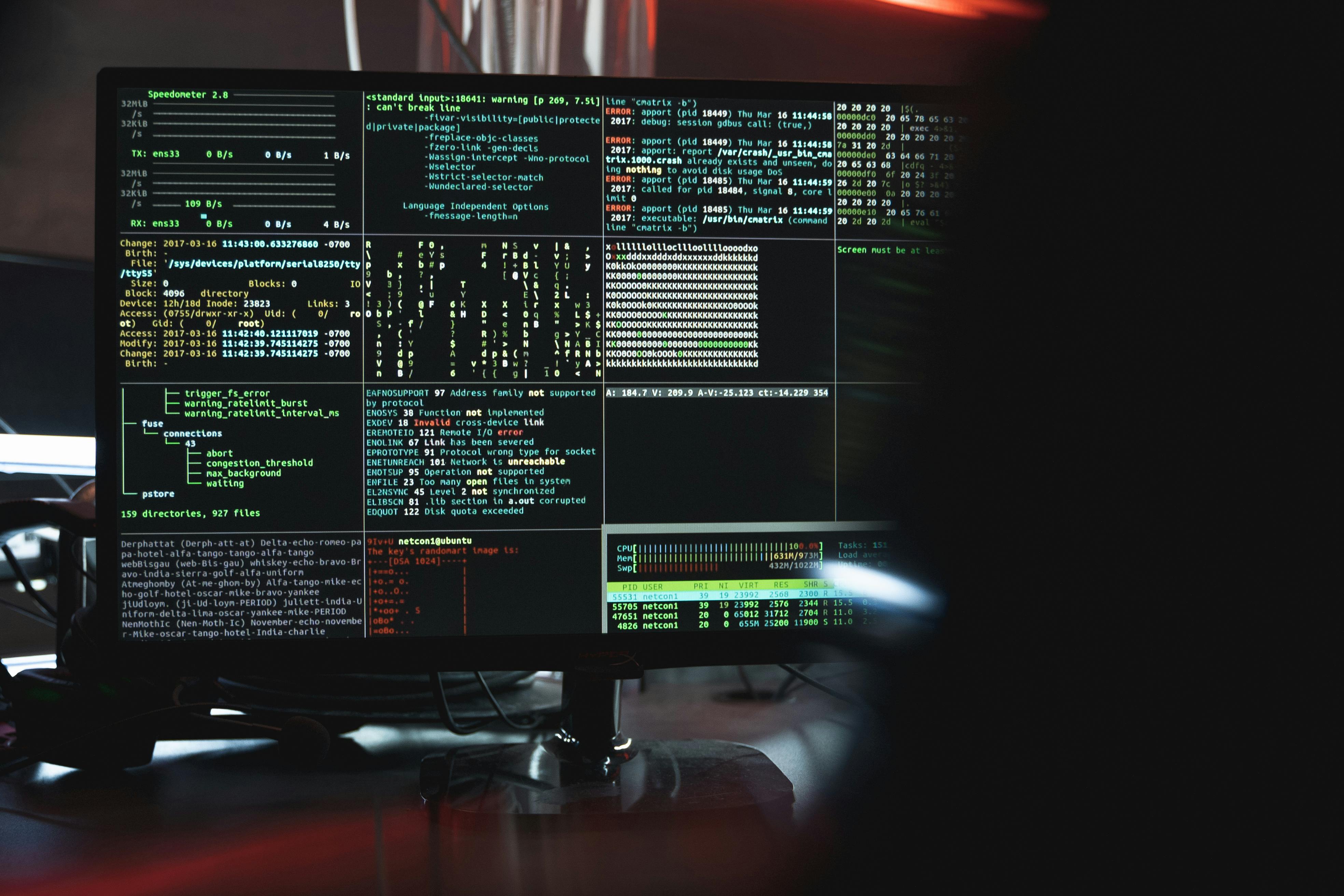
Yes, AI can predict many cyberattacks on banks before they occur, though not with perfect accuracy. Predictive AI models analyze historical attack patterns, network traffic anomalies, and threat intelligence feeds to flag suspicious activity days or even weeks before a full-scale breach, giving banks a critical head start to patch vulnerabilities and reinforce defenses.
This question has become increasingly urgent as financial institutions worldwide grapple with AI-led cyber threats. As banks in India move to partner with twenty-five OEMs to strengthen network defenses against AI-powered attacks, a natural follow-up question emerges: can predictive technology actually stay ahead of increasingly intelligent adversaries, or is it simply reacting faster than before?
The answer lies in understanding both the capabilities and the limitations of predictive AI in cybersecurity. While these systems have dramatically improved threat detection speed and accuracy compared to traditional methods, they are not infallible, and understanding their true strengths helps banks, regulators, and consumers set realistic expectations for what AI-driven security can actually deliver.
Concept Explanation
Predictive cybersecurity AI works by analyzing massive datasets of historical attack patterns, network behavior, and threat intelligence to identify signals that precede a breach. Rather than waiting for an attack to occur and then responding, these systems use machine learning algorithms trained on millions of past incidents to recognize early warning signs, such as unusual login attempts, abnormal data transfer volumes, or reconnaissance-style network scanning.
These models typically fall into categories such as anomaly detection, which flags deviations from normal network behavior, and pattern recognition, which identifies known attack signatures even when slightly modified by attackers. Advanced systems combine both approaches with natural language processing to scan dark web forums and hacker communications for chatter about planned attacks on specific institutions.
Crucially, predictive AI in banking cybersecurity does not operate in isolation. It works alongside the kind of hardware-level safeguards being developed through OEM partnerships, creating a layered defense where predictive software intelligence complements physical infrastructure security to reduce overall vulnerability across the entire banking network.
Why It Matters Now
The urgency around predictive AI capabilities has intensified because attackers are now using AI themselves to design attacks specifically engineered to evade traditional detection systems. This has created what security experts call an AI arms race, where defensive AI must continuously evolve to counter increasingly adaptive offensive AI tools used by cybercriminals and state-sponsored actors alike.
Financial regulators globally are pushing banks to adopt predictive security measures as part of broader risk management frameworks. In 2026, cyber risk has been formally classified as a systemic financial stability concern by multiple central banks, meaning predictive AI capabilities are no longer optional innovations but increasingly expected components of a bank's core risk infrastructure.
For consumers, the stakes are equally significant. A successfully predicted and prevented attack means account data, savings, and financial identity remain protected. Given how deeply digital financial services, from mobile banking to platforms like rupiya.ai, have become woven into daily financial life, the reliability of predictive threat detection directly impacts public trust in the entire financial ecosystem.
How AI Is Transforming This Area
Modern predictive AI systems use deep learning models capable of processing terabytes of network data per day, identifying subtle correlations across seemingly unrelated events that would be impossible for human analysts to detect manually. For example, an AI system might correlate a spike in failed login attempts at one branch with unusual server requests at a data center hundreds of miles away, recognizing this as a coordinated reconnaissance effort rather than isolated incidents.
Generative AI is also being used defensively to simulate potential attack scenarios, allowing security teams to stress-test their systems against thousands of hypothetical attack vectors before real attackers attempt them. This proactive simulation approach helps banks identify and close vulnerabilities that predictive models might otherwise miss.
Reinforcement learning systems are increasingly being deployed to continuously improve prediction accuracy over time, learning from both successful detections and missed threats to refine future performance. This creates a feedback loop where predictive AI models become progressively more accurate the longer they operate within a given banking network.
Real-World Global Examples
Mastercard has developed AI-driven predictive fraud detection systems capable of analyzing transactions in under 50 milliseconds, using pattern recognition to flag potentially fraudulent activity before transactions are even completed. This technology has been credited with preventing billions of dollars in fraud losses across the company's global payment network.
In the UK, several major banks work with cybersecurity firms that use predictive AI to monitor dark web marketplaces for stolen credentials and planned attacks, allowing institutions to proactively reset compromised passwords and reinforce specific systems before an attack materializes. This kind of threat intelligence has become a standard layer of defense among leading European financial institutions.
In the cryptocurrency sector, blockchain analytics firms use predictive AI to monitor wallet behavior and flag potentially malicious addresses before large-scale exploits occur, an approach that has helped some decentralized finance platforms avoid or minimize losses from smart contract vulnerabilities that predictive models identified in advance.
Practical Financial Tips
While banks deploy institutional-grade predictive AI, individual consumers can take complementary steps to strengthen their own financial security. Use banking apps that offer real-time transaction alerts, as these often rely on the same predictive AI infrastructure banks use internally to flag unusual account activity as it happens.
Regularly check whether your email or financial credentials have appeared in known data breaches using reputable breach-monitoring services, since predictive AI systems used by banks often draw on similar publicly available breach databases to assess risk exposure for individual accounts.
Consider using a financial management platform such as rupiya.ai to consolidate visibility across your accounts, making it easier to spot irregularities quickly rather than relying solely on a single bank's monitoring systems, which may not capture your complete financial picture across multiple institutions.
Future Outlook
Predictive AI in banking cybersecurity will likely become significantly more sophisticated over the next few years, incorporating multimodal analysis that combines network data, biometric behavior, and even satellite or geospatial data to detect coordinated physical and digital attacks on financial infrastructure.
Expect greater collaboration between banks, OEMs, and regulators to build shared predictive threat intelligence networks, similar to the working group currently being developed in India. Pooled data across institutions generally improves predictive accuracy, since AI models benefit from larger and more diverse training datasets covering a wider range of attack patterns.
As quantum computing matures, predictive AI systems will also need to evolve to anticipate quantum-enabled attacks capable of breaking current encryption standards, a challenge financial institutions are already beginning to prepare for through early investment in quantum-resistant security research.
Accuracy of AI Predictions
Despite significant advances, predictive AI in cybersecurity is not perfectly accurate. False positives remain a persistent challenge, where legitimate user behavior is mistakenly flagged as suspicious, potentially causing unnecessary account freezes or customer friction. Conversely, false negatives, where genuine threats go undetected, remain the more dangerous failure mode, since sophisticated attackers actively design methods to evade AI detection.
Industry studies suggest leading predictive cybersecurity systems achieve detection accuracy rates in the range of 90 to 95 percent for known attack patterns, but this accuracy drops meaningfully for entirely novel, zero-day attack methods that have no historical precedent for the AI model to learn from. This gap represents the core limitation of predictive AI in financial cybersecurity today.
Ongoing model retraining, human oversight from security analysts, and layered defenses combining predictive AI with hardware-level safeguards, like those being developed through the OEM banking partnerships, remain essential to compensate for the inherent limitations of any single predictive system, no matter how advanced.
Frequently Asked Questions
Can AI really predict cyberattacks before they happen?
Yes, predictive AI can identify early warning signs of many cyberattacks by analyzing network anomalies and historical patterns, though it cannot predict every novel attack with certainty.
How accurate is AI in detecting bank cyberattacks?
Leading predictive AI systems achieve roughly 90 to 95 percent accuracy for known attack patterns, but accuracy drops significantly for entirely new, previously unseen attack methods.
What is the difference between predictive AI and reactive cybersecurity?
Predictive AI identifies threats before they fully materialize using pattern analysis, while reactive cybersecurity responds only after an attack has already been detected or occurred.
How can consumers benefit from predictive AI banking security?
Consumers benefit through real-time fraud alerts, faster breach detection, and reduced risk of account compromise, often supported by tools like rupiya.ai for added visibility.