Can AI Predict the Next Stock Market Crash Amid Global Economic Uncertainty?
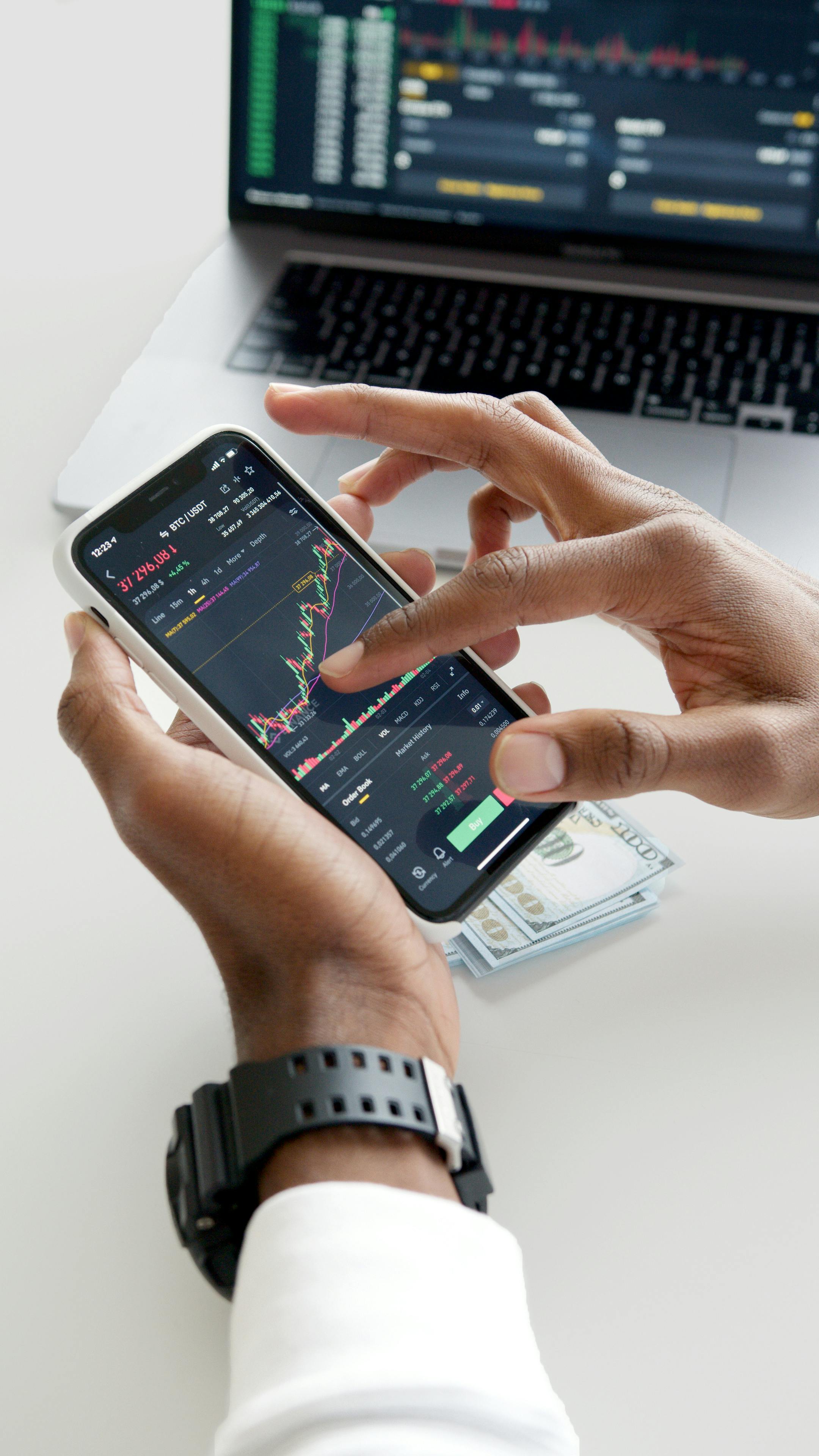
AI can flag rising crash risk earlier than traditional models by continuously analyzing volatility patterns, credit spreads, trading volume anomalies, and market sentiment in real time, but it cannot predict the exact timing, magnitude, or trigger of a crash with certainty. What AI offers is an early warning system, not a crystal ball, and understanding this distinction is critical for any investor relying on these tools.
This question has become urgent in 2026 as global markets navigate a genuine polycrisis, where inflation pressure, uneven interest rate paths across the Fed, ECB, and RBI, geopolitical conflict, and climate-driven supply disruptions are converging simultaneously. Much like the fashion industry, which is being forced to rethink its old playbook as socioeconomic crises, climate disasters, and geopolitical tension stack on top of each other, financial markets are facing compounding shocks that no single model can fully anticipate.
As discussed in our broader look at how AI portfolio management is helping investors navigate the 2026 global polycrisis, AI has already become a core layer of modern wealth defense. This piece goes deeper into the specific, widely asked question of whether these same models can genuinely see a crash coming before it happens.
What Does AI Crash Prediction Actually Involve
AI crash prediction models typically combine several techniques: volatility clustering analysis, which identifies when markets enter historically unstable regimes; anomaly detection, which flags unusual trading patterns that deviate sharply from historical norms; and sentiment analysis, which scans news, earnings calls, and social media to detect shifts in investor mood before they appear in prices.
Large language models now add a further layer by parsing dense regulatory filings, central bank statements, and corporate disclosures at a scale no team of human analysts could match, surfacing subtle risk signals buried in thousands of pages of text. These signals are then combined into composite risk scores that advisors and institutional traders monitor alongside traditional indicators like the VIX.
It is important to understand these models produce probabilistic risk assessments, not deterministic forecasts. An elevated AI risk score means conditions resemble those seen before past downturns, not that a crash is guaranteed to occur on a specific date, a distinction frequently lost in mainstream coverage of AI's predictive capabilities.
Why It Matters Now
Equity valuations in several major markets remain historically elevated even as interest rate uncertainty persists, creating exactly the kind of fragile conditions where a single shock, a geopolitical escalation, a disappointing inflation print, or a sudden credit event, could trigger outsized selling. Investors are understandably anxious to know whether technology can give them any meaningful lead time.
The polycrisis backdrop makes this question more pressing than in calmer periods. When climate disasters, trade conflicts, and monetary tightening overlap, traditional early warning indicators can behave unpredictably, since historical relationships between variables like bond yields and equity prices sometimes break down under compounding stress.
Retail investors in particular have gained access to AI-powered risk dashboards previously reserved for institutional trading desks, meaning the demand for a clear, honest answer about what these tools can and cannot do has never been higher.
How AI Is Transforming Crash Risk Detection
Hedge funds and asset managers now deploy AI systems that continuously monitor cross-asset correlations, since crashes are often preceded by unusual synchronization between assets that normally move independently, such as bonds and equities falling together. Detecting this shift early has become one of the more reliable signals in modern risk modeling.
Agentic AI systems are increasingly used to run continuous, automated stress tests, simulating how a portfolio would perform under dozens of historical and hypothetical crash scenarios every single day rather than on a quarterly basis. This allows firms to adjust hedging strategies proactively rather than reactively.
Platforms like rupiya.ai and other AI-driven financial research tools now surface these institutional-grade risk signals to everyday investors, translating complex volatility metrics into plain-language alerts, part of a broader democratization of financial risk intelligence that was unavailable to retail investors just a decade ago.
Real-World Global Examples
During the March 2020 COVID-driven crash, several AI-driven risk models flagged unusual volatility clustering and cross-asset correlation shifts days before the sharpest declines, though none predicted the pandemic itself as the trigger. Similarly, AI sentiment models detected rapid deterioration in regional bank sentiment ahead of the 2023 US banking stress events.
Quantitative hedge funds such as Renaissance Technologies and Two Sigma have long used AI-driven statistical models to identify regime shifts in markets, while JPMorgan's internal risk systems process alternative data sources ranging from shipping activity to satellite imagery to detect early signs of economic slowdown that could ripple into equity markets.
In Asia, sentiment-tracking AI tools monitoring Chinese property sector news provided early signals of stress well before it became widely reported in mainstream financial media, illustrating how AI can compress the information gap between institutional insiders and broader markets.
Practical Financial Tips
Do not treat any single AI risk signal as a reason to exit the market entirely. Historically, many AI-flagged risk periods resolve without a full crash, and investors who overreact to every alert often incur unnecessary trading costs and miss subsequent recoveries.
Use AI crash indicators as one input alongside traditional fundamentals like valuation multiples, earnings trends, and your personal risk tolerance. Maintain a diversified portfolio and predetermined stop-loss or rebalancing rules so you are not making emotional decisions in the middle of a volatile trading session.
Consider AI tools most valuable for position sizing and hedging decisions, such as increasing cash reserves or adding downside protection, rather than for making binary all-in or all-out market timing calls, which remain exceptionally difficult even for the most sophisticated models.
Future Outlook
As AI models are trained on increasingly diverse global datasets, their ability to detect early warning signs across correlated asset classes should continue improving, particularly as agentic systems can now monitor markets continuously rather than at scheduled intervals. Expect crash-risk dashboards to become a standard feature of retail brokerage apps by 2027.
Regulators including the SEC and European Systemic Risk Board are also beginning to study how widespread reliance on similar AI risk models could itself become a systemic risk, since synchronized selling triggered by shared algorithms could amplify a downturn rather than prevent it.
Ultimately, AI's role will likely evolve toward better probability-weighted scenario planning rather than precise crash timing, helping investors prepare for a range of outcomes rather than chase an impossible guarantee of certainty.
Accuracy of AI Predictions
AI crash prediction models have a documented history of both genuine successes and notable false positives, meaning they sometimes flag elevated risk that never materializes into an actual crash. This is an inherent limitation of probabilistic modeling rather than a flaw unique to any single platform.
Black swan events, by definition, are difficult for any model trained on historical data to anticipate precisely, since they involve genuinely unprecedented triggers such as a novel pandemic or an unexpected geopolitical shock. AI can still detect the market's reaction to such events faster than humans, even if it cannot predict the trigger itself.
Investors should interpret AI crash signals as probability shifts rather than certainties, using them to adjust risk exposure incrementally rather than making dramatic portfolio changes based on any single alert, a discipline that separates informed AI-assisted investing from reactive speculation.
Frequently Asked Questions
Can AI predict the next stock market crash accurately?
AI can detect early warning signs like volatility clustering and sentiment shifts, but it cannot predict the exact timing or trigger of a crash with certainty.
What data do AI crash prediction models use?
These models analyze market volatility, cross-asset correlations, trading volume anomalies, news sentiment, and alternative data like shipping and satellite information.
Should I sell all my investments if an AI flags high crash risk?
No, AI signals should inform risk management like hedging or diversification, not trigger a complete market exit, since many flagged periods do not result in a crash.
Do institutional investors rely on AI to avoid crashes?
Yes, hedge funds and major asset managers use AI-driven risk models for continuous stress testing, though they combine these signals with traditional fundamental analysis.