Can AI Predict Recession Risks? Exploring Recursive AI's Role in Economic Forecasting
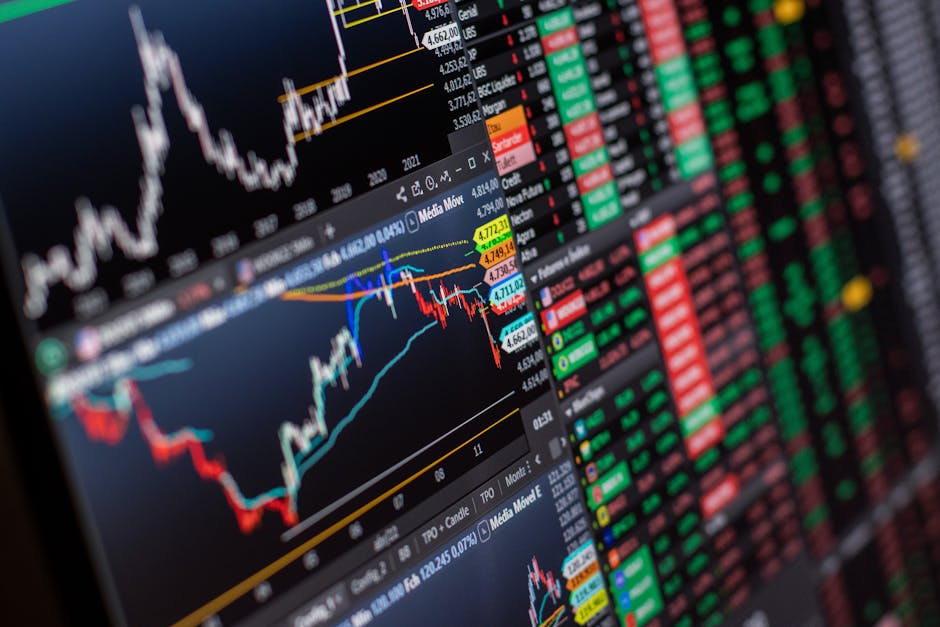
Artificial intelligence, specifically recursive AI, has become increasingly capable of predicting recession risks by autonomously improving forecasting models. These self-updating AI systems analyze vast datasets—from inflation trends to interest rate changes—to provide more accurate and timely economic predictions.
Unlike traditional economic models that require manual recalibration, recursive AI iteratively enhances its predictive algorithms, making it ideal for dynamic environments marked by unexpected shocks like geopolitical conflicts and rapid monetary policy shifts.
As economic volatility persists worldwide, leveraging recursive AI's autonomous abilities offers central banks, investors, and policymakers an advanced tool to foresee downturns and mitigate financial shocks effectively.
How Recursive AI Improves Economic Forecasting Models
Recursive AI continuously refines the parameters and structure of its own models by learning from recent data and outcomes, creating a feedback loop that enhances accuracy over time. This is especially valuable in forecasting recessions, where traditional models often lag due to periodic updates.
By incorporating real-time data on inflation, employment, consumer spending, and central bank decisions from the Fed, ECB, and RBI, recursive AI constructs multifactorial models capable of capturing complex economic signals often missed by static systems.
Such self-improving models also mitigate human biases in economic forecasting, enabling objective risk quantification and more nuanced scenario analyses essential for recession prediction.
Why Predicting Recession Risks Matters More Now with AI
Global inflationary pressures combined with rapid interest rate hikes have heightened recession risks across multiple economies. The Federal Reserve's aggressive tightening, the ECB’s cautious normalization, and RBI’s balancing act amid currency pressures create a volatile macroeconomic landscape.
Traditional indicators based on lagging data struggle to capture the rapid economic shifts driven by global supply chain disruptions, energy crises, and geopolitical tensions. AI’s ability to process vast, varied datasets in real time makes it indispensable for timely recession risk assessments.
For investors and policymakers, early and accurate recession signals help in strategic asset allocation, risk mitigation, and informed monetary policy adjustments, potentially softening economic shocks.
How Recursive AI Transforms Financial and Economic Risk Management
Recursive AI systems empower financial institutions to dynamically adjust credit risk exposure and investment strategies based on improved recession forecasts. These models continuously evolve with new economic data, reducing surprises and enhancing portfolio resilience.
Banks utilize recursive AI to monitor borrower solvency and liquidity risk in real-time, adapting to tightening monetary policies and inflation volatility. Asset managers deploy autonomous AI to rebalance portfolios swiftly in anticipation of economic slowdowns.
In fintech, recursive AI bolsters peer-to-peer lending platforms and robo-advisors, offering clients proactive advice aligned with evolving economic risks, improving financial planning outcomes during uncertain economic cycles.
Global Examples of AI-Driven Recession Risk Prediction
The US Federal Reserve integrates AI models for stress testing and economic scenario simulations, increasingly incorporating recursive AI elements to enhance accuracy. European sovereign debt risk analysis incorporates AI forecasts reflecting ECB policy adjustments.
In Asia, the RBI uses machine learning frameworks with recursive capabilities to stabilize inflation targeting while monitoring recession side effects on emerging market debt and currency volatility.
Crypto hedge funds utilize AI-driven predictive systems to anticipate market bear cycles correlated with macroeconomic recessions, offering early signals to digital asset investors.
Practical Tips to Leverage AI for Recession Preparedness
Individual investors should consider AI-powered apps and robo-advisors that analyze economic trends for portfolio adjustments, focusing on defensive sectors and diversified assets during high recession risk periods.
Financial professionals should integrate recursive AI analytics to enhance risk models and stress testing scenarios, enabling proactive risk mitigation ahead of downturns.
Businesses can deploy AI-enhanced forecasting tools to anticipate revenue impacts and optimize cash management, safeguarding liquidity in uncertain times.
Future Outlook: AI’s Role in Proactive Economic Stability
Advancements in recursive AI will likely lead to fully autonomous economic forecasting systems, enabling near real-time policy interventions and financial market stabilization efforts.
Enhanced AI transparency and regulatory cooperation will be crucial for widespread adoption, as stakeholders demand confidence in AI-driven recession signals.
Ultimately, recursive AI’s capacity for continuous self-improvement positions it as a cornerstone technology for resilient global financial systems adapting to evolving inflation, rate changes, and geopolitical uncertainties.
Accuracy and Limitations of AI in Recession Prediction
While recursive AI significantly improves forecasting accuracy, it is not infallible. Economic systems are influenced by unpredictable human behaviors and black swan events that may elude even the most advanced models.
Model overfitting and data quality remain challenges, requiring continuous validation and domain expertise to interpret AI outputs effectively.
Rupiya.ai and similar platforms are advancing hybrid models that combine AI with expert insights to balance automated improvements with human judgment, mitigating some limitations inherent in autonomous systems.
Frequently Asked Questions
Can AI reliably predict recessions?
AI, especially recursive AI, improves recession prediction accuracy but cannot guarantee certainty due to economic complexity and unpredictable factors.
How does recursive AI differ from traditional economic models?
Recursive AI autonomously updates its models continuously, while traditional models require manual updates and adjustments.
Does AI consider inflation and interest rates in predictions?
Yes, AI integrates inflation trends and central bank rate decisions as key variables in economic forecasting.
What are the limitations of using AI for economic forecasting?
Limitations include sensitivity to poor data quality, potential overfitting, and difficulty accounting for unforeseen events.