Can AI Predict Stock Market Crashes? What Investors Need to Know in 2026
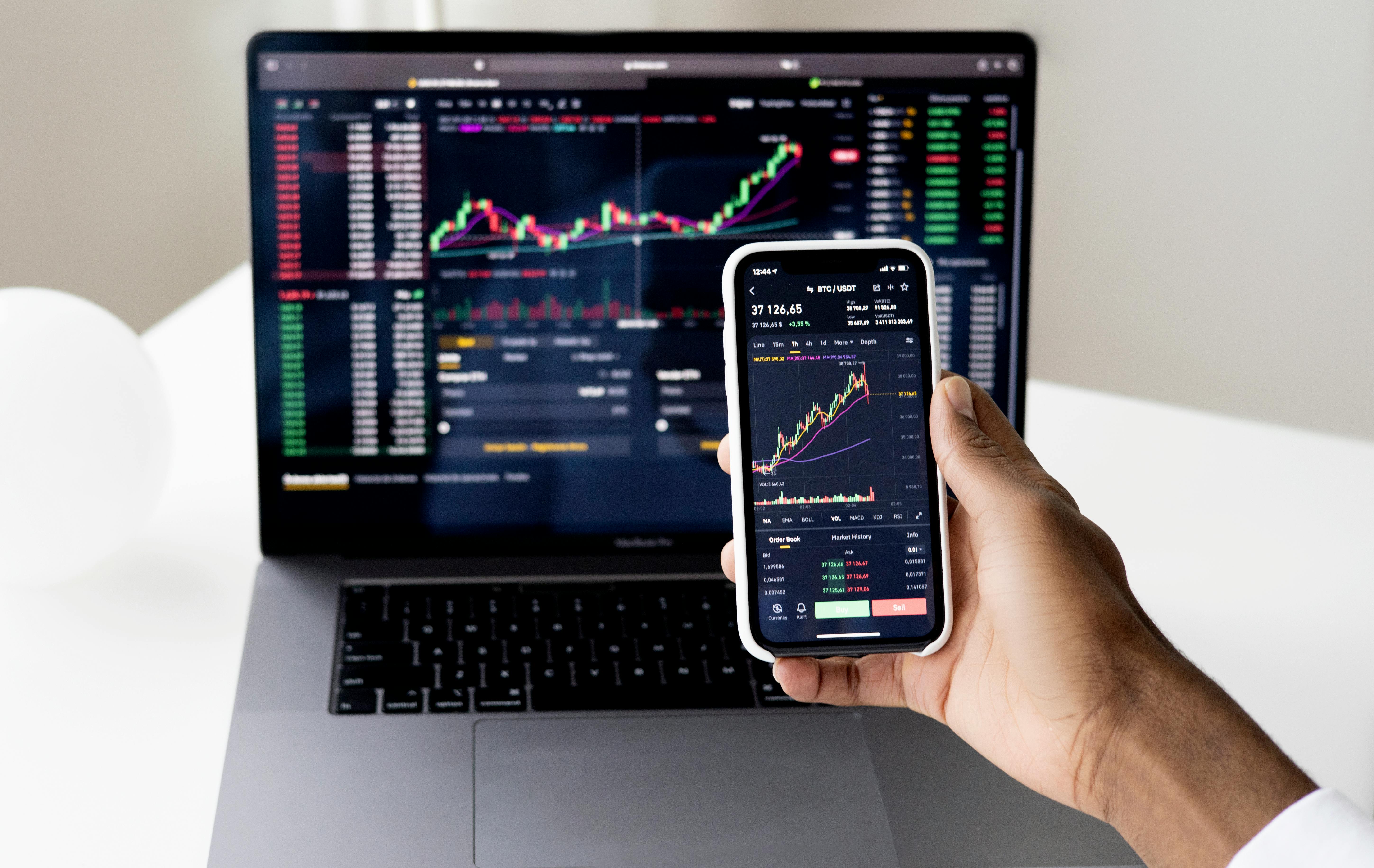
AI can help identify early warning signals of stock market stress, such as unusual volatility patterns, liquidity shifts, and sentiment shocks, but it cannot reliably predict the exact timing or scale of a market crash. Machine learning models excel at spotting statistical anomalies faster than human analysts, yet markets remain influenced by unpredictable human behavior and sudden geopolitical events that resist accurate forecasting.
This distinction matters greatly to investors navigating 2026's uncertain economic landscape, where inflation concerns, fluctuating interest rate policies from the Federal Reserve and European Central Bank, and geopolitical tensions continue to create sharp swings in global equity markets. Understanding what AI can and cannot do helps investors avoid overconfidence in automated predictions.
As AI adoption grows across trading desks and retail investment platforms alike, including tools referenced by resources like rupiya.ai, it becomes essential to separate genuine predictive capability from marketing hype. This article, part of a broader discussion on AI in wealth management, examines how these models actually work and where their limits lie.
Concept Explanation
AI stock prediction models typically rely on machine learning techniques such as neural networks, natural language processing, and time-series analysis to identify patterns in historical price data, trading volumes, and news sentiment. These models are trained to recognize correlations between certain indicators and past market downturns, generating probability-based risk assessments rather than definitive forecasts.
Some advanced systems also incorporate alternative data sources, including social media sentiment, satellite imagery of economic activity, and central bank communication analysis, to build a more comprehensive picture of market risk. However, these models operate on probabilities and correlations, not certainties, which is a crucial distinction for investors relying on their output.
Why It Matters Now
In 2026, markets are unusually sensitive to policy signals, with investors closely watching every statement from the Federal Reserve and RBI for hints about future rate decisions. This heightened sensitivity increases volatility, making tools that can quickly process vast amounts of data and flag emerging risks genuinely valuable, even if they cannot guarantee accurate crash predictions.
Retail investors, in particular, are increasingly turning to AI-powered platforms for guidance during uncertain periods, given limited access to institutional-grade research. This growing reliance makes it critical to understand the actual accuracy and limitations of these tools, rather than assuming AI offers infallible foresight into market direction.
How AI Is Transforming This Area
Hedge funds and institutional trading desks now widely use AI-driven risk models to stress-test portfolios against thousands of simulated market scenarios within seconds, a task that would take human analysts considerably longer. This speed allows firms to adjust exposure to volatile assets more proactively during periods of heightened uncertainty.
On the retail side, fintech apps use simplified versions of these models to alert users to elevated portfolio risk or unusual market conditions, helping everyday investors make more informed decisions without needing a background in quantitative finance. This democratization of risk analysis is one of AI's most meaningful contributions to modern investing.
Real-World Global Examples
During periods of market stress in recent years, AI-driven trading algorithms at firms like Renaissance Technologies and Two Sigma have demonstrated an ability to detect early volatility signals faster than traditional analysis, though even these sophisticated systems did not predict exact crash timing with consistent accuracy. Their strength lies in rapid risk adjustment rather than precise forecasting.
In Europe, several banks have deployed AI systems to monitor bond market liquidity as an early warning indicator for broader financial stress, reflecting lessons learned from past crises. In crypto markets, AI-based on-chain analytics tools now track large wallet movements and exchange flows to flag potential sell-offs, offering a newer application of similar predictive principles in digital asset trading.
Practical Financial Tips
Investors should treat AI-generated risk alerts as one input among several, rather than a definitive signal to buy or sell. Combining AI insights with fundamental analysis and personal risk tolerance produces more balanced decision-making than relying solely on algorithmic output during volatile periods.
Maintaining a diversified portfolio remains one of the most effective defenses against unpredictable market downturns, regardless of how advanced predictive tools become. Setting clear stop-loss thresholds and avoiding emotional, reactive trading during AI-flagged volatility spikes can help investors stay disciplined through turbulent market cycles.
Future Outlook
As computing power and data availability continue to improve, AI models are expected to become more accurate at identifying early risk signals, though a fully reliable crash prediction system remains unlikely given the inherently unpredictable nature of human-driven markets. Continued advances will likely narrow the window between risk detection and actual market events.
Regulators in the US, EU, and Asia are also beginning to scrutinize AI-driven trading systems more closely, aiming to prevent scenarios where widespread algorithmic reactions could themselves trigger market instability. This regulatory attention will shape how aggressively AI tools can be deployed in high-frequency trading environments going forward.
Accuracy of AI Predictions
Studies examining AI-driven market prediction models generally show strong performance in identifying short-term volatility and liquidity risks, but significantly weaker accuracy when it comes to predicting the exact timing of major crashes. Black swan events, by definition, fall outside the patterns these models are trained on, limiting their forecasting reliability during truly unprecedented situations.
This gap between pattern recognition and true prediction is why most financial institutions use AI as a risk management tool rather than a crystal ball. Investors who understand this distinction can use AI insights to manage exposure more effectively, without falling into the trap of expecting guaranteed accuracy from any predictive model.
Frequently Asked Questions
Can AI predict stock market crashes accurately?
AI can identify early risk signals like volatility spikes, but it cannot reliably predict the exact timing or severity of a market crash.
What data do AI stock prediction models use?
These models typically analyze price history, trading volume, news sentiment, and sometimes alternative data like social media activity.
Is AI stock prediction better than human analysis?
AI processes data faster and detects patterns humans might miss, but human judgment remains essential for interpreting unprecedented market events.
Should retail investors rely on AI market predictions?
AI predictions should be used as one input alongside diversification and personal risk management, not as a sole decision-making tool.