Can AI Predict Stock Market Crashes Better Than Human Analysts?
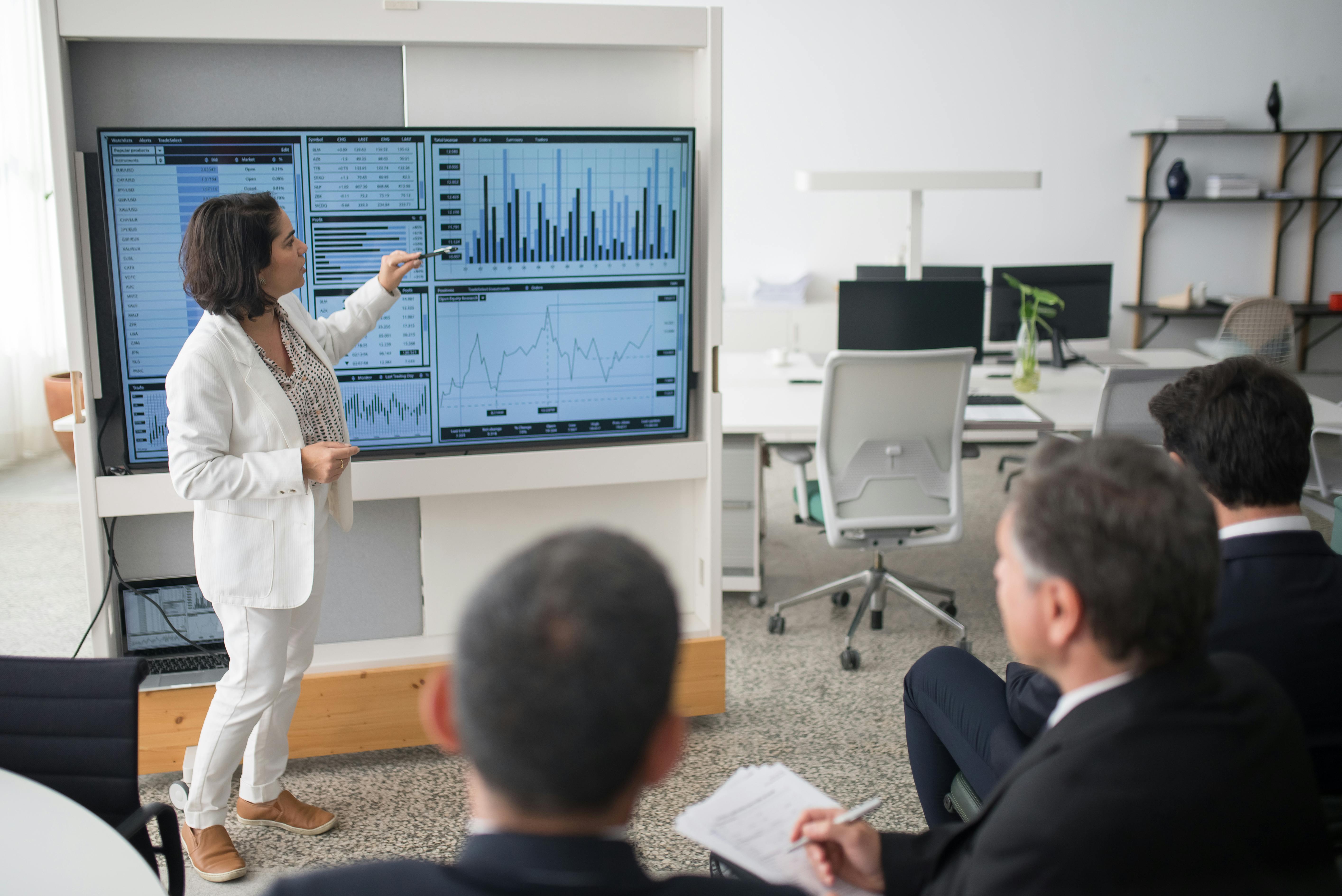
AI can identify early warning signals of stock market stress faster than human analysts, but it cannot reliably predict the exact timing or scale of a crash, since markets are influenced by unpredictable human behavior and sudden geopolitical events. What AI does offer is a significant speed and data-processing advantage, allowing institutions to react to emerging risks well before traditional analysis would surface them.
As global markets in 2026 continue navigating elevated volatility driven by mixed inflation signals and cautious central bank policy, the question of whether AI can outperform human judgment in crash prediction has moved from academic debate to practical investment strategy. Hedge funds, banks, and fintech platforms are increasingly blending AI-driven signals with human oversight rather than relying on either approach alone.
This article builds on the broader shift toward AI-powered wealth management discussed across the financial industry, examining specifically how predictive models handle systemic risk, where they succeed, and where human intuition still plays an irreplaceable role in interpreting market panic.
Concept Explanation
AI-based crash prediction relies on machine learning models trained to detect anomalies across trading volumes, volatility indices, credit spreads, and social sentiment data. These models look for patterns historically associated with market stress, such as sudden liquidity withdrawals or correlated sell-offs across asset classes.
Unlike simple statistical forecasting, modern AI systems use deep learning architectures capable of processing unstructured data, including news headlines, earnings call transcripts, and social media sentiment, alongside traditional numerical indicators. This multi-source approach allows models to detect subtle shifts in market psychology that purely quantitative methods might miss.
However, these models are probabilistic, not deterministic. They estimate the likelihood of increased risk rather than issuing definitive crash forecasts, a distinction that is often lost in public discussion but remains critical for understanding their actual utility in financial decision-making.
Why It Matters Now
Market volatility in 2026 has been shaped by uneven inflation trends across regions, delayed rate-cut expectations from the Federal Reserve, and persistent uncertainty in global trade relationships. These conditions create exactly the kind of environment where early risk detection tools become most valuable to institutional and retail investors alike.
Crypto markets add another layer of complexity, given their history of sharp, rapid corrections that can spill over into broader risk sentiment. AI models monitoring liquidity and leverage across digital asset exchanges have become an important early-warning layer for funds with cross-asset exposure.
For everyday investors, understanding the real capabilities and limitations of AI crash prediction matters because overreliance on automated signals without human context can lead to poor decision-making during periods of genuine market stress, when panic-driven algorithmic trading can itself amplify volatility.
How AI Is Transforming This Area
AI has significantly improved the speed at which risk signals are detected and communicated. Where human analysts might take days to synthesize data from multiple sources, machine learning models can flag correlated risk patterns across global markets within minutes, giving institutions a meaningful head start in adjusting exposure.
Hedge funds increasingly use reinforcement learning models that adapt their risk assessments continuously based on new market data, rather than relying on static rules. This allows the system to evolve its understanding of what constitutes abnormal market behavior as conditions change over time.
At the same time, AI tools are being used to reduce false positives, a historic weakness of early warning systems that often triggered unnecessary alarm during normal market fluctuations. Improved model calibration in 2026 has made these systems more reliable, though not infallible, partners for professional risk managers.
Real-World Global Examples
In the United States, several major quantitative hedge funds have publicly acknowledged using AI-driven risk models to reduce equity exposure ahead of periods of anticipated volatility tied to Federal Reserve announcements, demonstrating practical application beyond theoretical research.
European institutions have applied similar AI monitoring to sovereign bond markets, particularly given ongoing fiscal policy divergence among eurozone members, using predictive models to flag unusual spread widening before it becomes widely reported in traditional financial media.
In Asian markets, fintech platforms have integrated AI sentiment analysis tools that monitor retail investor behavior on social platforms, providing an additional signal layer alongside traditional technical indicators. Crypto exchanges have similarly adopted AI surveillance systems to detect abnormal leverage buildup that historically preceded sharp corrections.
Practical Financial Tips
Investors should avoid treating any single AI signal as a definitive market timing tool. Instead, AI-generated risk alerts are best used as one input among several, including fundamental analysis and personal risk tolerance, when deciding whether to adjust portfolio exposure.
Maintaining diversified holdings remains one of the most reliable defenses against sudden market downturns, regardless of how sophisticated predictive tools become. Investors relying on AI-driven platforms should also periodically review the model's historical accuracy and understand its known limitations before making significant allocation decisions.
Future Outlook
As computational power and data availability continue to expand, AI crash prediction models are expected to incorporate increasingly diverse data sources, including real-time supply chain indicators and cross-border capital flow data, improving their ability to detect systemic risk earlier.
However, most industry experts anticipate that human judgment will remain essential for interpreting AI signals within broader geopolitical and psychological context, since markets are ultimately driven by collective human behavior that no model can fully capture with certainty.
Accuracy of AI Predictions
Historical performance data suggests AI models are generally more accurate at identifying elevated risk periods than predicting the precise timing or severity of a crash. Studies of past market corrections show AI systems often flagged unusual volatility patterns days or weeks in advance, without specifying exact crash dates.
This distinction is critical for investors evaluating AI-driven tools such as those explored on platforms like rupiya.ai, where realistic expectations around probabilistic risk signals, rather than guaranteed predictions, lead to more disciplined and effective financial decision-making during volatile periods.
Frequently Asked Questions
Can AI predict stock market crashes with certainty?
No, AI can identify elevated risk signals but cannot guarantee the exact timing or severity of a market crash.
How does AI detect early signs of market volatility?
AI models analyze trading volumes, credit spreads, sentiment data, and liquidity patterns to flag unusual market behavior.
Do hedge funds rely fully on AI for crash prediction?
Most hedge funds combine AI signals with human analysis rather than relying solely on automated predictions.
Is AI more accurate than human analysts during market stress?
AI is generally faster at processing data, but human judgment remains important for interpreting broader context and psychology.