Can AI Predict Stock Market Volatility and Shape Investment Strategies?
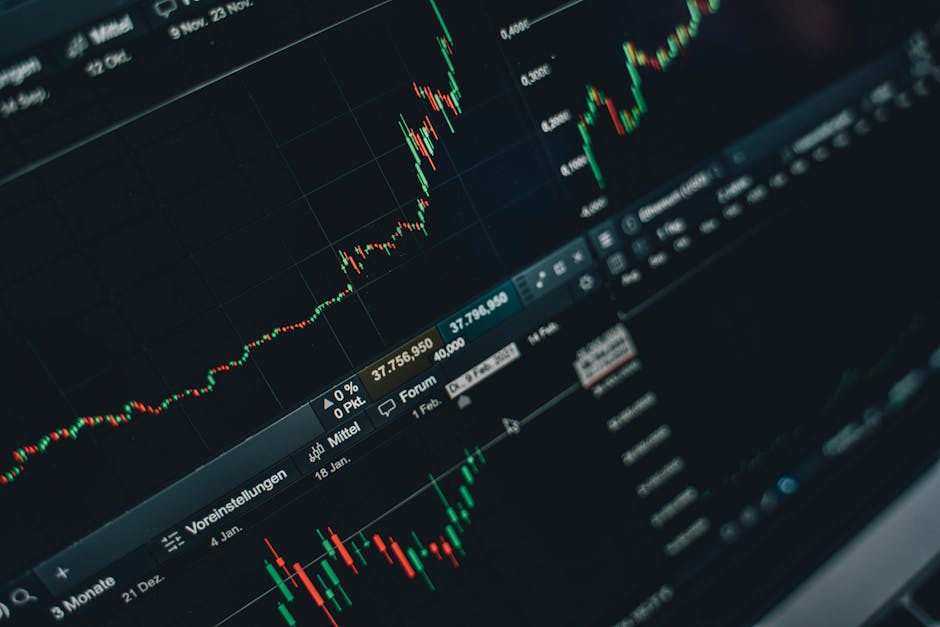
AI’s capabilities in predicting stock market volatility have become increasingly sophisticated, enabling investors to anticipate market fluctuations and tailor strategies proactively. Using machine learning models, natural language processing, and big data analytics, AI assesses factors such as inflation trends, interest rate changes by the Fed, ECB, and RBI, geopolitical events, and liquidity conditions to generate volatility forecasts. These insights help asset managers and individual investors mitigate losses and optimize returns.
AI-driven volatility prediction is valuable especially as global markets face uncertainty from inflation spikes, tightening monetary policies, and recession risks. The ability of AI to analyze large datasets and real-time information contrasts with traditional models by providing more dynamic and adaptive risk assessments, shaping smarter investment decisions in evolving economic environments.
This article explores how AI predicts stock market volatility, the transformation of investment strategies it enables, and real-world examples from global finance and crypto markets. It also offers practical financial advice and discusses future outlooks related to AI volatility analytics.
Concept Explanation: How AI Predicts Stock Market Volatility
AI prediction models use historical and real-time financial data to identify patterns associated with market volatility. Techniques include neural networks, reinforcement learning, and sentiment analysis processing financial news, social media, and economic indicators. These models estimate the probability and magnitude of market swings, adjusting dynamically as new data arrives.
By integrating macroeconomic indicators such as inflation rates from the US, Europe, and Asia, alongside interest rate decisions by the Fed, ECB, and RBI, AI can contextualize volatility drivers. It also factors in unconventional data sources like satellite imagery or transaction-level blockchain data for crypto assets, expanding predictive accuracy.
Unlike static quantitative models, AI adapts to structural market changes, enabling more accurate forecasts during crises or regime shifts. This capability is critical as markets become more interconnected and reaction times shrink.
Why It Matters Now: The Growing Need for Volatility Forecasting
In 2024, persistent inflation, aggressive interest rate hikes, and recession fears have increased financial market volatility globally. Traditional forecasting struggles with the complexity and speed of market changes, making AI-based approaches essential. Investors face significant risks without predictive tools to anticipate sudden sell-offs or bullish reversals.
The rise of digital assets and decentralized finance also adds layers of volatility and complexity, requiring AI to monitor fragmented markets continuously. As inflation impacts consumption and corporate earnings, AI’s role in adjusting risk parameters and providing early warning signals becomes a competitive advantage.
Furthermore, regulatory agencies increasingly rely on AI analytics to foresee systemic risks and protect investors. This makes understanding AI volatility prediction crucial for market participants seeking resilience in an unpredictable environment.
How AI Is Transforming Investment Strategies Amid Volatility
AI-enabled volatility forecasts allow portfolio managers to dynamically adjust asset allocations, hedge positions, and optimize entry or exit timing. Quant funds employ AI to rebalance portfolios in near real-time, enhancing risk-adjusted returns. Retail investors also benefit from AI-powered robo-advisors that customize portfolios based on volatility projections aligned with individual risk profiles.
Moreover, AI applications extend to options pricing, using implied volatility estimates to guide trading strategies. AI algorithms can identify correlations and co-movements between asset classes during volatile periods, facilitating diversification decisions.
In crypto markets, AI analyzes blockchain transaction patterns alongside social sentiment to forecast volatility, enabling traders to protect capital in this notoriously volatile environment. This transformation leads to investment processes that are more data-driven, proactive, and adaptable to rapid market shifts.
Real-World Global Examples of AI Predicting Volatility
Two Sigma, a US-based quant hedge fund, heavily integrates AI to anticipate volatility spikes by combining news analytics and macroeconomic data, helping it excel during the 2022 market upheaval. In Europe, hedge funds in London leverage AI to forecast volatility impacts from ECB policy shifts, enabling preemptive risk adjustments.
In Asia, Singaporean investment firms use AI platforms to factor inflation and interest rate expectations from the RBI and Fed into their volatility models, refining regional portfolio exposures. Crypto trading firms in South Korea integrate AI for volatility arbitrage strategies, absorbing real-time social media trends and on-chain activity.
Platforms like rupiya.ai exemplify how AI aggregates multi-regional data sources to deliver actionable volatility insights, democratizing advanced analytics beyond institutional players. These examples highlight AI’s growing centrality in managing modern financial risks worldwide.
Practical Financial Tips to Utilize AI Volatility Predictions
Investors should leverage AI-based analytics tools to monitor volatility trends continuously and adjust portfolio hedging accordingly. Employing AI-driven robo-advisors or integrating volatility predictions from platforms like rupiya.ai can improve decision-making during uncertain periods.
Diversification remains key, but AI insights can help optimize across asset classes with varying volatility profiles. Incorporating options and derivatives strategies informed by AI forecast enhances protection against downside risks.
Staying updated on central bank policy signals through AI-powered sentiment analysis offers early signs of volatility shifts. Furthermore, in crypto investments, investors should adopt AI security tools alongside volatility models to manage inherent risks.
Future Outlook: The Evolution of AI in Market Volatility Predictions
AI technology will continue refining volatility forecasting accuracy by integrating alternative datasets such as Internet of Things (IoT) signals, geopolitical event detectors, and deeper behavioral finance inputs. Enhanced natural language processing will better interpret central bank communications and market rumors influencing volatility.
The maturation of quantum computing may also accelerate AI’s analytical speed and complexity handling, enabling near-instantaneous volatility projections. As regulatory frameworks evolve, AI systems will embed compliance checks and ethical guidelines, creating transparent and trustworthy prediction models.
Ultimately, AI’s role will expand beyond prediction to real-time automated trading responses, bridging forecasting and execution seamlessly for superior risk-adjusted returns across global markets, including Asia’s vibrant yet volatile investment landscape.
Limitations and Risks of Relying on AI for Volatility Predictions
Despite its power, AI is not infallible in predicting stock market volatility. Models depend on historical data, which may not fully capture unprecedented events or regime changes. Overfitting or biased data can produce misleading forecasts, especially in rapidly evolving economic conditions.
Additionally, AI systems may be vulnerable to adversarial attacks or manipulation, particularly in sentiment analysis relying on social media data. Market shocks triggered by black swan events, such as sudden geopolitical conflicts or policy surprises, remain challenging for AI to forecast precisely.
Investors should combine AI insights with human judgment and maintain robust risk management frameworks. Regulatory oversight is essential to ensure transparency and ethical use of AI in financial markets, preventing overreliance that could amplify systemic risks.
Frequently Asked Questions
Can AI accurately predict sudden stock market crashes?
AI improves prediction by analyzing large datasets, but sudden crashes caused by unpredictable events remain difficult to forecast with certainty.
Which AI tools are best for retail investors to track market volatility?
AI-powered robo-advisors and platforms like rupiya.ai offer accessible tools with integrated volatility analytics tailored for retail investors.
How do interest rate hikes impact AI volatility models?
Interest rate hikes influence economic conditions reflected in AI models, helping forecast increased volatility during tightening cycles.
Is AI better than human analysts in managing market volatility?
AI excels at processing vast data quickly, but combining AI insights with human expertise yields the most effective volatility management.