Can AI Predict Stock Market Volatility? Insights from Coralogix’s Observability Advances
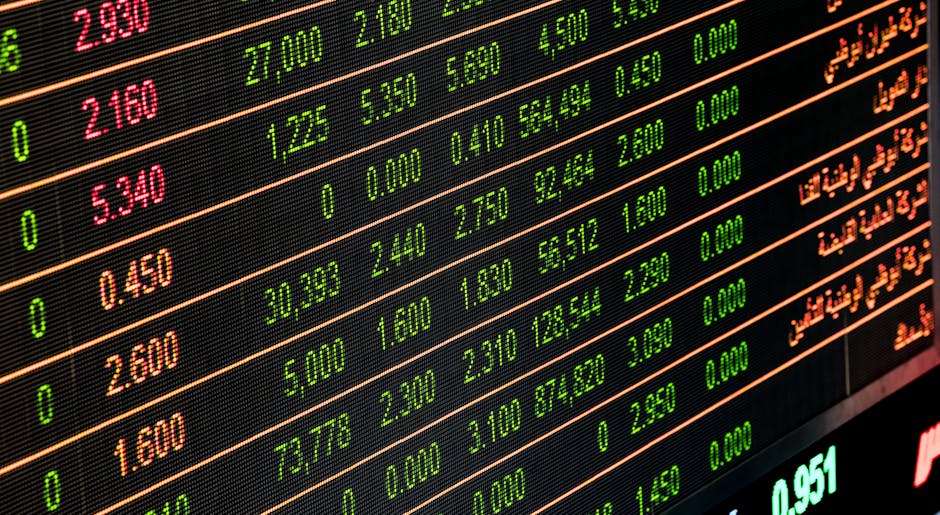
AI technologies, empowered by observability platforms like Coralogix, increasingly provide financial professionals with powerful tools to forecast stock market volatility. By analyzing real-time and historical data synthesized across multiple systems, AI models can detect subtle signals related to inflation trends, interest rate shifts, and geopolitical events contributing to market swings. While not infallible, these AI advancements improve the precision and responsiveness of market forecasts critical for investment decisions.
Stock market volatility prediction using AI relies on continuous system observability—monitoring technological infrastructure, trading patterns, and economic indicators simultaneously. Coralogix’s platform, augmented by recent funding, enhances this observability by deploying machine learning algorithms that identify complex correlations and produce actionable alerts. This facilitates dynamic risk management and portfolio adjustments amid uncertain economic cycles.
Given the rising concern about inflation surges, tightening monetary policies from the Fed, ECB, and RBI, and potential recession risks, investors and financial institutions increasingly seek AI-driven observability for better forecasting tools. These technologies contribute to navigating stock market volatility with greater confidence and strategic foresight.
What is AI-Powered Observability in Stock Market Prediction?
AI-powered observability in stock market prediction refers to systems that continuously collect and analyze vast streams of data from financial markets, trading platforms, and macroeconomic sources using AI algorithms. These systems track anomalies, market sentiment shifts, and infrastructure health, delivering early warning signals of potential market turbulence.
By integrating data such as market order flows, news sentiment, and economic reports, observability tools generate multifactor models that help anticipate price volatility across global stocks. These AI models adapt by learning from new data, improving their predictive power over time, and allowing financial organizations to optimize risk-adjusted strategies.
Such observability also supports compliance and operational transparency in high-frequency trading and investment management, especially when markets react sharply to interest rate announcements or inflation reports, which can trigger rapid price fluctuations.
Why is AI Prediction of Market Volatility Critical Now?
The global economy is entering a period of uncertainty with inflationary pressures persisting, central banks maintaining elevated interest rates, and recession fears intensifying. Traditional forecasting tools often lag in processing vast and diverse datasets, limiting their ability to anticipate sudden disruptions in stock prices and liquidity.
AI-enhanced observability platforms address these limitations by providing continuous, real-time insights drawn from heterogeneous data sources, enabling investors and firms to identify volatility triggers faster. As markets worldwide—including the US, Europe, and Asia—experience unpredictable swings often amplified by geopolitical tension and crypto market instability, AI’s role in risk management becomes indispensable.
Moreover, heightened regulatory scrutiny on market integrity pressures firms to implement advanced monitoring tools. AI prediction capabilities integrated within observability platforms help detect unusual trading behaviors potentially linked to market manipulation or systemic shocks, safeguarding investor interests.
How Does AI Impact Stock Market Volatility Prediction?
AI impacts market volatility prediction by automating complex data analysis processes that humans cannot efficiently perform at scale. Machine learning algorithms identify nonlinear relationships and subtle data patterns indicating upcoming price shifts, enabling preemptive trading strategies.
Natural language processing (NLP) techniques analyze news articles, social media sentiment, and financial reports to quantify market sentiment, a major volatility driver. Predictive models powered by observability platforms aggregate these insights with technical indicators to refine forecasts.
Additionally, AI helps reduce noise in data alerts by filtering false positives, ensuring traders and risk managers focus on genuine market risks. This efficiency gain supports better capital allocation and hedging decisions during turbulent periods triggered by inflation data releases or interest rate hikes globally.
Which Real-World Examples Demonstrate AI in Predicting Market Volatility?
Prominent hedge funds and fintech companies in the US deploy AI observability to forecast volatility around Federal Reserve announcements, adjusting portfolio exposures accordingly. European asset managers use similar tools to navigate market reactions following ECB policy communications, optimizing risk models.
In Asia, investment firms leverage AI observability focusing on sectors particularly sensitive to RBI interest rate changes, such as banking and real estate, to manage volatility risks effectively. Crypto exchanges implement AI models to monitor asset correlation patterns and alert users during heightened market stress, reducing exposure.
Financial technology suites like rupiya.ai combine AI volatility forecasts with personalized investment advice, making sophisticated risk analytics accessible to retail investors and advisors globally. These examples illustrate the widespread adoption and tangible benefits of AI-driven market volatility prediction.
Practical Tips for Investors Using AI to Navigate Stock Market Volatility
Investors should consider platforms that incorporate AI-powered observability to receive early alerts about potential market turbulence. Diversifying portfolios based on AI-generated risk assessments can help mitigate losses during inflation-driven ups and downs or interest rate cycles.
It is also prudent to combine AI insights with fundamental and macroeconomic analysis, understanding that AI complements but does not replace human judgement fully. Leveraging AI for sentiment analysis can reveal hidden volatility triggers forcibly influencing prices.
Regularly reviewing AI model updates and ensuring alignment with shifting economic conditions, including changing central bank policies, enhances decision-making accuracy. Investors and institutions should also verify data security standards of observability platforms to protect sensitive financial information.
Future Outlook: AI’s Growing Role in Market Volatility Forecasting
AI’s role in forecasting stock market volatility is set to expand rapidly with advances in quantum computing, real-time data feeds, and bigger AI datasets. These developments will enable faster and more accurate market sentiment capture, liquidity risk assessment, and macroeconomic event impact modeling.
We expect tighter integration of AI observability tools with trading platforms and wealth management solutions, facilitating automated strategy adjustments during volatile phases caused by inflation changes or geopolitical developments.
Collaborations between AI fintech leaders like Coralogix and platforms such as rupiya.ai will democratize access to sophisticated volatility prediction tools, empowering individual investors and firms worldwide with actionable market intelligence in challenging economic times.
Limitations and Ethical Considerations in AI Market Predictions
Despite significant improvements, AI predictions of market volatility encounter limitations, including data quality challenges, model overfitting, and unforeseen black swan events that disrupt patterns. Investors must be cautious not to over-rely on AI forecasts without human oversight.
Ethically, transparency in AI algorithms is essential to avoid biased outcomes that could disadvantage certain market participants. Observability platforms should disclose how data is analyzed and decisions are derived to maintain trust and regulatory compliance.
As AI continues to integrate deeply into financial systems, ongoing ethical review and responsible AI governance will be critical to ensuring fair market practices and mitigating systemic risks exacerbated by algorithmic trading behaviors.
Frequently Asked Questions
Can AI accurately predict stock market volatility?
AI improves volatility prediction by analyzing large datasets for patterns, but predictions are probabilistic and not guaranteed due to market complexities.
How does Coralogix enhance AI observability for market forecasts?
Coralogix integrates real-time data monitoring with machine learning models to detect anomalies and forecast market-related system risks effectively.
What role does inflation play in stock market volatility?
Inflation affects purchasing power and interest rates, causing price fluctuations and increased volatility in financial markets.
Are there ethical concerns with AI in market prediction?
Yes, issues include algorithm transparency, data bias, and market manipulation risks, requiring robust AI governance.