Can AI Predict Stock Market Volatility? Insights for Investors and Tech Contributors
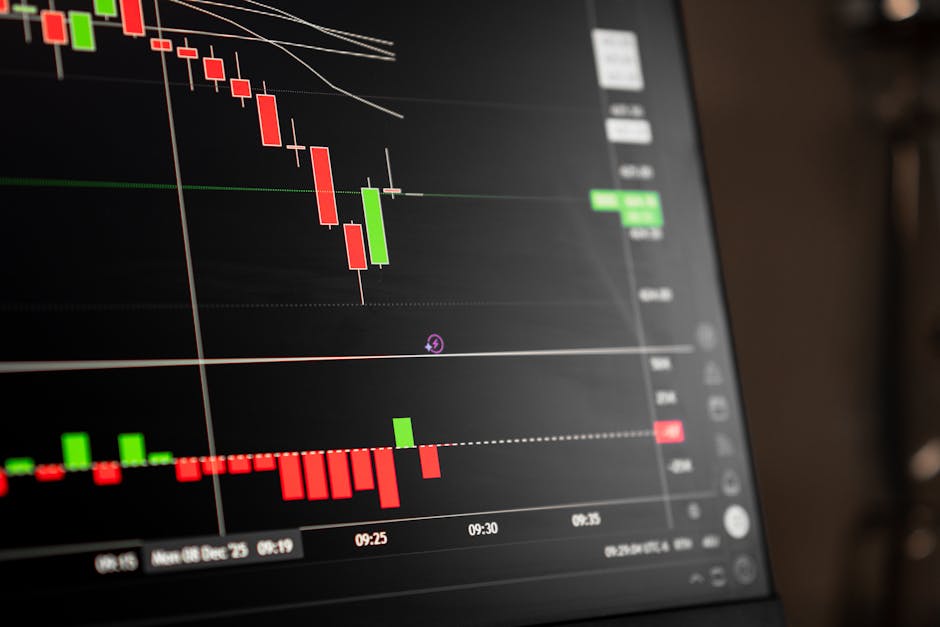
AI's ability to predict stock market volatility is a rapidly evolving frontier that blends machine learning, big data, and real-time analytics. While AI cannot guarantee precise market movements, it significantly enhances forecasting accuracy by processing vast datasets, detecting patterns, and analyzing sentiments far beyond human capability. For investors and tech contributors writing guest posts, understanding AI's predictive strengths and limitations is crucial to creating authoritative content.
In today's volatile global economy — influenced by inflation, fluctuating interest rates by the Fed, ECB, and RBI, and geo-economic tensions — AI-driven volatility forecasts help market participants make more informed decisions. Tech blogs increasingly seek articles that demystify this sophisticated technology, its practical applications, and its evolving role in fintech innovation.
This article covers how AI predicts stock market volatility, why this is especially relevant now, and the implications for financial contributors aiming to pitch high-impact guest posts on tech platforms.
Concept Explanation
AI prediction models utilize advanced algorithms like neural networks, reinforcement learning, and natural language processing to analyze structured and unstructured data sources — including stock prices, economic indicators, news reports, social media sentiment, and transactional data. By learning from historical volatility patterns and real-time signals, AI models estimate future market fluctuations with greater speed and granularity than traditional methods.
Volatility prediction is vital because it informs risk management, asset allocation, and trading strategies. AI enhances this by adapting continuously to new data, uncovering hidden correlations, and detecting early signs of market stress triggered by inflation surges or central bank announcements that impact global capital flows.
Why It Matters Now
The post-pandemic economic recovery, combined with inflationary pressures and frequent interest rate hikes by global financial bodies, has introduced unprecedented volatility to stock markets worldwide. Investors face uncertainty amplified by geopolitical risks and disruptive technologies like decentralized finance and AI-driven trading bots.
Given these conditions, accurate and timely volatility forecasts are more important than ever for protecting portfolio value and spotting opportunity amid turmoil. Fintech ecosystems and tech blogs are responding by publishing AI-focused analysis to educate readers on navigating this complex environment, making predictive AI a hot topic for 2026 guest blog content.
How AI Is Transforming This Area
AI's transformative impact in volatility forecasting includes automating real-time monitoring of multiple data streams and employing sentiment analysis to detect market mood shifts instantaneously. Unlike traditional statistical models, AI can incorporate alternative data such as satellite imagery or supply chain disruptions to anticipate shocks.
The integration of AI-powered fintech apps allows individual investors and institutions alike to access predictive insights previously limited to hedge funds or proprietary trading desks. Tools leveraging AI-enabled volatility predictions are increasingly embedded in robo-advisors, portfolio optimization software, and trading platforms.
Real-World Global Examples
US-based AI firms like Kensho Analytics utilize machine learning to predict market responses to Fed announcements, enabling traders to hedge risks effectively. In Europe, startups leverage AI to assess ECB rate changes' impact on stock volatility across Eurozone markets.
Asia’s fintech landscape incorporates AI volatility models tailored to highly dynamic markets such as India, where RBI monetary policy shifts directly influence investor behavior. Additionally, crypto exchanges employ AI tools to forecast digital asset volatility, assisting investors navigating this turbulent space.
Practical Financial Tips
When writing guest posts about AI's ability to predict volatility, emphasize clarity around AI methodologies without overselling capabilities. Use rupiya.ai or similar platforms to gather authentic data and examples.
Investors should combine AI predictions with traditional analysis and remain mindful of AI model limitations, particularly during black swan events. Writers should recommend diversification and risk controls alongside AI tools to present balanced perspectives.
Future Outlook
AI models will continue growing in sophistication, incorporating alternative data and expanding explainability to improve trust among investors. Advances in quantum computing may further accelerate volatility forecasting precision.
Fintech platforms integrating AI volatility insights are poised to transform investment advisory, democratizing access to predictive analytics across demographics and regions.
Risks and Limitations of AI in Volatility Prediction
AI predictions remain probabilistic, and models may fail when rare or unforeseen events occur, such as sudden geopolitical crises or regulatory shocks. Overreliance on AI might induce herd behavior, amplifying market swings.
Data quality and biases can mislead AI outputs, especially if input sources are incomplete or manipulated, such as in crypto markets. Writers should highlight the importance of human judgment and continuous model validation when discussing AI forecasting capabilities.
Frequently Asked Questions
Can AI accurately predict stock market volatility?
AI enhances prediction accuracy by analyzing vast data, but it cannot guarantee exact market movements due to inherent uncertainties.
How does AI use data to predict volatility?
AI models process historical prices, economic data, news sentiment, and alternative datasets to identify patterns indicative of future volatility.
What are common limitations of AI in market predictions?
Limitations include sensitivity to unexpected events, data biases, and potential overfitting to past trends.
Why is AI-focused volatility prediction a trending topic on tech blogs?
Because it intersects cutting-edge technology with pressing investor concerns amid macroeconomic instability and fintech innovation.