How Does AI Impact Investment Strategies Amid Stock Market Volatility?
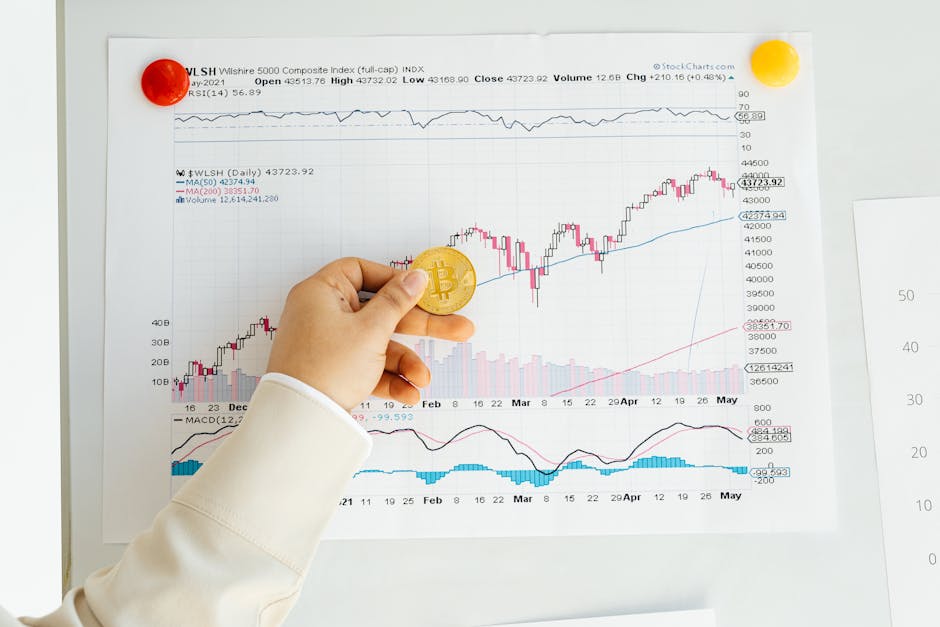
AI significantly influences investment strategies by providing advanced analytics, predictive modeling, and automated decision-making tools that help investors manage stock market volatility more effectively. During periods of economic uncertainty marked by inflation fluctuations and interest rate changes from central banks such as the Fed, ECB, and RBI, AI-driven platforms enable rapid adaptation to market shifts.
Rather than relying solely on traditional analysis, investors now incorporate AI algorithms to detect subtle patterns, assess risk dynamically, and optimize portfolios with precision. This transformational effect reduces emotional biases and enhances the ability to capitalize on market opportunities or mitigate losses amidst volatile conditions.
As global markets remain challenged by geo-political tensions, recession risks, and digitization of finance, AI’s impact on investment strategy becomes central. Both individual and institutional investors leverage AI fintech tools to navigate disruptions caused by inflation trends, fluctuating interest rates, and emerging crypto and digital asset classes.
Concept Explanation
AI’s role in investment strategies encompasses data processing, machine learning, natural language processing, and real-time analytics to forecast market behavior and manage portfolios. It automates routine tasks, enhances precision in stock picking, and optimizes trade execution, transforming the investment decision lifecycle.
Market volatility refers to price fluctuations caused by economic events, policy changes, or investor sentiment shifts. AI equips investors with tools that simulate various market scenarios, assess asset correlations, and identify emerging risks instantly, enabling better risk-adjusted investment strategies tailored to volatile environments.
These advanced analytical frameworks integrate global economic indicators such as inflation rates, central bank policy signals, and geopolitical developments, offering a comprehensive investment intelligence that traditional methods cannot match. As such, AI is not just a tool but a strategic asset reshaping investment paradigms.
Why It Matters Now
Market volatility has intensified due to ongoing inflation pressures and aggressive interest rate hikes by key central banks worldwide. Investors confront challenges in forecasting asset performance amid recession risks and global uncertainty. AI’s capacity to process complex datasets rapidly renders it essential to adapt investment strategies in real time.
Moreover, the proliferation of digital assets and integration of AI in fintech platforms introduce additional layers of risk and opportunities requiring sophisticated analytical approaches. Traditional investment strategies often fall short in accurately capturing these dynamics, elevating AI as a critical enabler of resilience and growth in portfolios.
As investors seek to safeguard wealth and optimize returns during turbulent times, AI-driven investing not only offers tactical advantage but also supports strategic shifts toward diversified and agile portfolios aligned with evolving global market conditions.
How AI Is Transforming This Area
AI enhances investment strategies through automation of research, predictive analytics, sentiment analysis, and adaptive learning models that evolve with market data. These capabilities help identify undervalued assets, predict downturns, and recommend rebalancing actions before traditional indicators signal a change.
AI-powered robo-advisors offer personalized portfolio construction based on individual risk profiles and market outlooks, improving accessibility and customization in wealth management. Additionally, machine learning algorithms analyze unstructured data sources—including social media, news, and economic releases—providing a broader context for investment decisions.
In risk management, AI detects early warning signs of systemic risks and market anomalies, enabling preemptive hedging strategies. Integration with blockchain and crypto analytics further allows monitoring of digital asset volatility and regulatory changes impacting diversified portfolios.
Real-World Global Examples
Rupiya.ai exemplifies how AI-powered analytics are leveraged by investors to interpret multifactorial influences including inflation metrics, interest rate changes, and crypto market trends concurrently. Hedge funds such as Renaissance Technologies utilize proprietary AI algorithms to exploit market inefficiencies during volatile periods.
European fintech companies like Nutmeg employ AI-driven advisory models catering to retail investors, enabling diversification into global stocks and digital assets with transparency and risk controls. In Asia, platforms integrate AI to predict stock movements and optimize portfolios amid regulatory shifts and monetary policy changes.
In the U.S., institutional investors combine AI with human expertise to enhance decision accuracy, a hybrid approach mitigating the limitations of purely algorithmic strategies. Moreover, AI tools are being increasingly used to analyze crypto market behavior, providing investors critical signals in a highly volatile asset class.
Practical Financial Tips
Investors should consider integrating AI-powered tools to complement traditional analysis for real-time market insights. Utilizing AI-driven portfolio management helps optimize asset allocation aligned with dynamic risk tolerance and changing macroeconomic data such as inflation and interest rates.
Regularly updating investment strategies with AI-enabled scenario simulations prepares portfolios for adverse market conditions, enhancing resilience. Diversification across traditional stocks, emerging Asian tech equities, and digital assets monitored through AI reduces exposure to sector-specific volatility.
Engaging with fintech platforms that incorporate advanced AI analytics, like rupiya.ai, empowers investors with actionable intelligence that blends global financial trends, technical signals, and sentiment analysis to better time market entry and exit points.
Future Outlook
AI’s role in investment management will deepen, with increasing adoption of explainable AI models that foster transparency and trust. Integration of AI with emerging technologies such as quantum computing could further revolutionize predictive accuracy in volatile markets.
As inflation persists and central bank policies evolve, real-time AI-driven analytics will become vital for proactive portfolio adjustments. The democratization of AI tools in fintech promises broader investor participation in sophisticated strategies once exclusive to institutional players.
Regulatory frameworks around AI in investing and digital assets will shape the landscape, necessitating compliance-ready AI systems. Overall, AI will continue to be a cornerstone of adaptive, data-driven investment strategies across global financial ecosystems.
Can AI Predict Market Crashes Accurately?
While AI improves detection of early warning signs and anomaly patterns, accurately predicting market crashes is complex due to unpredictable geopolitical and systemic factors. AI provides probabilistic assessments rather than certainties, serving as a risk management tool rather than crystal ball.
Combining AI outputs with human judgment and macroeconomic analysis enhances the reliability of cautionary signals. Continuous machine learning from new data can improve AI models’ sensitivity to stress events, but inherent uncertainties mean AI should be part of a diversified risk mitigation approach.
Emerging research in AI interpretability and scenario modeling promises better understanding of crash triggers, yet investors should avoid overreliance and maintain portfolio diversification to address unforeseen shocks despite AI forecasts.
Frequently Asked Questions
What advantages does AI provide in volatile stock markets?
AI offers advanced data processing, predictive insights, and risk management that help investors respond swiftly and accurately to market fluctuations.
Can AI replace human investment managers?
AI enhances decision-making but does not fully replace human judgment, especially in understanding qualitative factors and market context.
Are AI-driven investment tools accessible to retail investors?
Yes, many fintech platforms offer AI-powered tools designed for retail investors, providing personalized portfolio management and insights.
How reliable is AI in predicting market downturns?
AI improves early warning detection but cannot guarantee precise timing of market crashes; it is best used as part of broader risk management.