How Does AI Impact Stock Market Volatility and Investor Strategies in 2024?
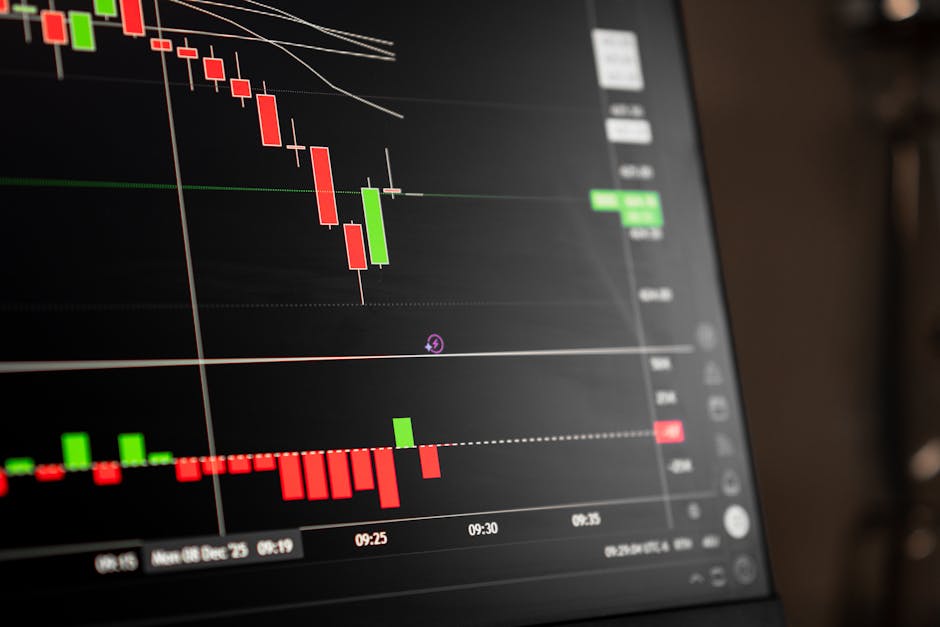
AI profoundly impacts stock market volatility and investor strategies by enabling advanced predictive analytics, real-time data processing, and adaptive trading algorithms. In 2024, amidst economic uncertainty driven by inflation, interest rate adjustments, and recession risks, AI-powered tools help investors navigate turbulent markets more effectively.
Financial institutions, retail investors, and fintech platforms increasingly rely on AI models to identify volatility patterns, assess risk, and optimize portfolio allocations. This dynamic is reshaping how portfolios are managed, especially as SpaceX’s AI infrastructure enhances available computing power for complex stock prediction algorithms.
Consequently, investors engaged with AI-assisted strategies, including those powered by rupiya.ai, experience more data-driven decision-making processes that adapt quickly to market swings, offering a new framework to address traditional volatility challenges.
Concept Explanation
Stock market volatility refers to the rate and magnitude at which stock prices fluctuate over time. This volatility arises from macroeconomic changes, geopolitical events, and investor sentiment—factors increasingly analyzed by AI to detect patterns or anomalies before they affect prices.
AI applications in investing leverage machine learning algorithms, natural language processing, and sentiment analysis to forecast stock movements, enabling rapid reaction to market conditions. These tools assimilate vast datasets across markets, economic indicators, and even social media to produce actionable insights.
Investors use AI both to manage risk by adjusting portfolios dynamically and to capitalize on volatility via algorithmic trading strategies. The advent of cloud AI resources, such as those offered by SpaceX’s AI infrastructure, facilitates unprecedented computing power for these complex models.
Understanding the link between AI and volatility provides clarity on how modern investment strategies evolve in rapidly changing financial environments.
Why It Matters Now
As inflation persists globally, and Federal Reserve, ECB, and RBI adopt cautious tightening policies, stock markets experience heightened unpredictability. Investors face challenges maintaining stable returns amid recession fears and geopolitical tensions.
AI’s capability to analyze real-time data and detect subtle market signals becomes crucial for managing volatility effectively. The integration of AI stock prediction tools enables asset managers to refine their strategies, reducing downside risk while seeking opportunities in turbulent periods.
Furthermore, fintech platforms embedding AI analytics, including rupiya.ai, are democratizing access to sophisticated investment strategies once reserved for institutions, shifting wealth trends across regions, from the US through Europe and Asia.
AI’s direct impact on volatility navigation aligns with increased regulatory interest in ensuring fair and stable financial markets, making it a critical topic for investors and policymakers alike.
How AI Is Transforming This Area
AI accelerates the pace of information processing, allowing trading algorithms to respond instantly to market-moving news and economic releases. Machine learning models adapt continuously by learning from new data, improving predictive accuracy in volatile environments.
Sentiment analysis powered by AI evaluates social media, news, and financial reports to quantify market mood, a key driver of sudden price swings. This real-time sentiment scoring enables investment strategies that anticipate rather than react to volatility.
AI-driven portfolio optimization tools continuously rebalance assets, balancing risk exposure and return potential dynamically. This reduces losses historically caused by delayed human reaction during market shocks.
Together, these AI techniques redefine how volatility impacts decisions, shifting from reactive to proactive investment management and reducing systemic financial fragility.
Real-World Global Examples
US hedge funds increasingly deploy AI models that factor macroeconomic indicators like Fed interest rate changes and inflation forecasts into automated trading, limiting losses during volatility spikes. This approach is replicated by fintech firms, including AI-powered robo-advisors using platforms such as rupiya.ai.
European asset managers employ AI sentiment and volatility models to navigate ECB policy shifts post-COVID-19 stimulus tapering, optimizing exposure to both tech and energy sectors amid uncertain growth outlooks.
In Asia, AI integration within retail trading applications enhances real-time decision-making for investors dealing with RBI policy changes and volatile emerging market equities.
Bitcoin and other crypto assets present extreme volatility cases where AI trading bots powered by machine learning reduce risks and execute profitable trades, highlighting AI’s role in less regulated and faster-moving digital markets.
Practical Financial Tips
Investors should consider adopting AI-driven analytics and trading platforms to better anticipate and manage market volatility. This includes integrating data from reliable providers and fintech tools such as rupiya.ai for enhanced portfolio risk assessment.
Diversifying investments across sectors and geographies using AI-optimized strategies can reduce vulnerability to localized shocks triggered by interest rate hikes or inflationary pressures.
Training oneself or working with financial advisors familiar with AI investing tools is increasingly important to leverage these technologies effectively and avoid common algorithmic pitfalls.
Additionally, active monitoring of global central bank policies using AI-powered news and market sentiment insights can guide timely investment decisions during volatile periods.
Future Outlook
AI’s influence on stock market volatility management is expected to deepen, with advances in quantum computing and space-grade AI infrastructure, like SpaceX’s offerings, increasing computational capabilities for more sophisticated financial models.
Regulatory frameworks will evolve to oversee AI trading practices, balancing innovation with market integrity and investor protection. This will foster broader adoption of AI investment tools globally.
Retail investors will gain more equitable access to powerful AI-driven investment platforms, potentially reshaping wealth distribution patterns and reducing information asymmetries.
Meanwhile, fintech ecosystems will continue to innovate, merging AI capabilities with blockchain, digital assets, and alternative data to offer holistic investment solutions.
Can AI Predict Market Crashes?
AI improves predictive modeling by identifying warning signs and correlations that humans might miss, enhancing early detection of potential market downturns. However, absolute certainty is unattainable due to unforeseen geopolitical shocks or black swan events.
AI’s value lies in risk quantification and scenario analysis, helping investors adopt precautionary measures. While it cannot eliminate volatility or crashes, AI reduces surprise factors and offers strategic advantages in managing crisis periods.
Continuous improvements in AI, powered by expansive data sources and infrastructure like SpaceX’s Colossus AI platforms, will further refine market crash prediction capabilities.
Integrative approaches combining human judgment with AI insights remain the best practice in mitigating crash risks.
Frequently Asked Questions
What role does AI play in stock market volatility?
AI analyzes vast data sets and real-time information to forecast and manage stock market volatility, helping investors respond quickly to changing conditions.
How do AI tools improve investment strategies?
AI tools optimize portfolios by continuously adjusting asset allocations based on predictive analytics, sentiment analysis, and risk assessments.
Can AI accurately predict market crashes?
AI enhances early warning systems but cannot predict market crashes with complete certainty due to unpredictable events.
Is AI accessible to retail investors for managing volatility?
Yes, fintech platforms like rupiya.ai provide AI-powered tools that enable retail investors to better understand and manage market volatility.