How Does AI Impact Stock Market Volatility and Investor Behavior in 2024?
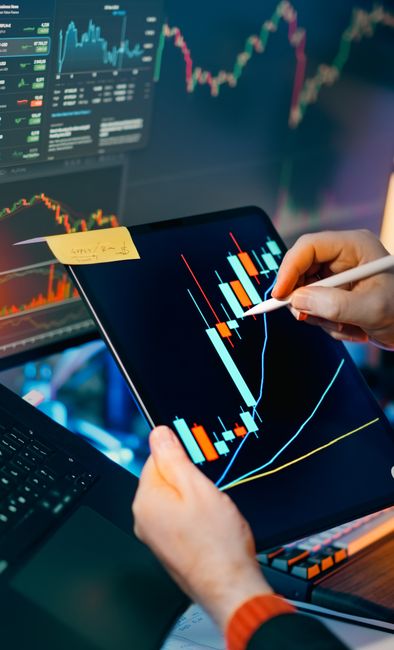
AI significantly influences stock market volatility and investor behavior in 2024 by accelerating information processing, enabling predictive analytics, and amplifying crowd sentiment effects. This transformation shapes how traders respond to macroeconomic shifts like inflation, interest rate changes, and recession signals.
Investor reactions, including rapid buying or selling, are increasingly informed or triggered by AI-curated insights and social media trends. Cisco’s recent 15% stock surge serves as a prominent example where AI-driven enthusiasm and speculative buying behavior intertwined, creating pronounced market swings.
Understanding AI’s role reveals crucial considerations for managing portfolio risks and navigating a market environment marked by both innovation enthusiasm and underlying economic uncertainty.
AI and Stock Market Volatility: The Mechanisms at Work
AI algorithms analyze massive datasets in real time, detecting patterns, sentiment shifts, and macroeconomic indicators faster than humans. This leads to quicker price adjustments but can also create feedback loops where AI-driven trades exacerbate volatility, especially in stocks associated with trendy themes like AI itself.
Automated trading systems using AI can trigger chain reactions during market moves, magnifying fluctuations. AI also democratizes access to sophisticated financial tools, empowering more retail investors to react swiftly, sometimes irrationally, thus contributing to erratic market behavior.
Conversely, AI aids volatility management through improved risk models and predictive analytics, helping institutional investors anticipate potential stress points and hedge positions efficiently.
Why It Matters Now: The Intersection of AI, Inflation, and Economic Uncertainty
The interplay between AI adoption and elevated inflation or tightening monetary policies intensifies market sensitivity. Inflation impacts corporate profits and consumer spending, while central banks’ interest rate adjustments influence borrowing costs and valuations.
Amid these economic turbulences, AI-powered market tools often accelerate reactions to economic data releases or earnings reports, sometimes amplifying overreactions. For instance, Cisco’s spike reflects how AI interest themes can overshadow conventional growth outlooks in volatile conditions.
Understanding these dynamics helps investors contextualize AI-driven market moves within broader financial ecosystem risks and opportunities.
How AI Shapes Investor Behavior: From Retail to Institutional
Retail investors increasingly rely on AI-powered platforms like rupiya.ai for real-time market insights, portfolio optimization, and risk alerts, influencing buy-sell decisions. Social media’s integration with AI tools boosts viral stock themes, often resulting in herd behavior as observed with meme stocks and AI favorite equities.
Institutional investors use AI for quantitative strategies, combining fundamental data and sentiment analysis to make precise allocations. However, widespread AI adoption across market participants sometimes causes synchronized trading patterns, fueling volatility spikes.
Behavioral finance is evolving as AI changes how market participants access and act upon information, necessitating new strategies to manage cognitive biases and automated decision-making risks.
Real-World Cases Demonstrating AI’s Impact on Market Behavior
Beyond Cisco, the AI-driven surge in Tesla shares during 2024 illustrated investor excitement about AI integration in autonomous vehicles, triggering sharp price swings. In Europe, AI adoption in algorithmic trading has led to both improved liquidity and episodic flash crashes.
In Asia, rapid AI-driven trading growth in markets like Hong Kong increased synchronization of price movements, sometimes amplifying regional contagion risks amid global inflation concerns. Crypto markets, heavily driven by AI bots and sentiment analysis, have experienced similar volatility bursts tied to AI hype cycles.
These examples reflect how AI’s dual role as a stabilizing and destabilizing force complicates traditional market paradigms.
Practical Financial Tips for Investors Facing AI-Driven Volatility
Investors should leverage AI tools judiciously, combining algorithmic insights from platforms like rupiya.ai with fundamental analysis to build resilient portfolios. Awareness of market psychology influenced by AI-powered narratives helps avoid impulsive reactions during volatility spikes.
Diversification across sectors, geographies, and asset classes reduces idiosyncratic risk inherent in AI hype stocks. Setting clear investment goals and risk tolerance aids in navigating unpredictable swings.
Continuous education on macro trends, regulatory updates, and AI advancements equips investors to adapt strategies responsively rather than reactively.
Future Outlook: Evolving Investor Behavior and AI’s Growing Market Role
As AI tools become more sophisticated and embedded in trading infrastructure, investor behavior will continue evolving toward hybrid models blending human judgment with AI recommendations. This evolution promises improved decision quality but may also increase systemic market interdependence.
Regulators worldwide are expected to update frameworks addressing AI-driven market activities to ensure transparency, fairness, and risk mitigation. These steps will impact how volatility manifests and is managed.
Ultimately, balancing AI’s benefits in enhancing financial analysis with awareness of its role in volatility and herd behavior will be critical to long-term investor success.
Regulatory Challenges in Managing AI’s Influence on Financial Markets
Governments and regulators face the complex task of overseeing AI-powered trading systems that can execute trades within milliseconds and influence market microstructure. Ensuring these systems comply with anti-manipulation laws and transparency requirements is a major challenge.
Moreover, regulators must address ethical concerns regarding AI’s role in amplifying misinformation or manipulative narratives that contribute to speculative bubbles. This includes scrutinizing AI-driven social media campaigns that impact investor sentiment.
Harmonizing global regulatory standards is critical given the cross-border nature of digital finance and AI trading platforms, requiring cooperation among the SEC, ESMA, SEBI, and others.
Frequently Asked Questions
What role does AI play in stock market volatility today?
AI accelerates data analysis and trading decisions, which can intensify price swings and amplify investor reactions.
How does AI influence retail investor behavior?
AI platforms provide real-time insights and signals, impacting retail trading decisions and sometimes fueling herd behavior.
Can AI reduce investment risks during volatile markets?
Yes, AI improves risk modeling and helps in forecasting market stress points, but it is not foolproof.
What regulatory challenges arise from AI-driven trading?
Ensuring transparency, preventing manipulation, and managing ethical concerns related to AI’s market impact are key regulatory challenges.