Can AI Predict Which Tech Stocks Will Benefit Most From the GPU Demand Boom?
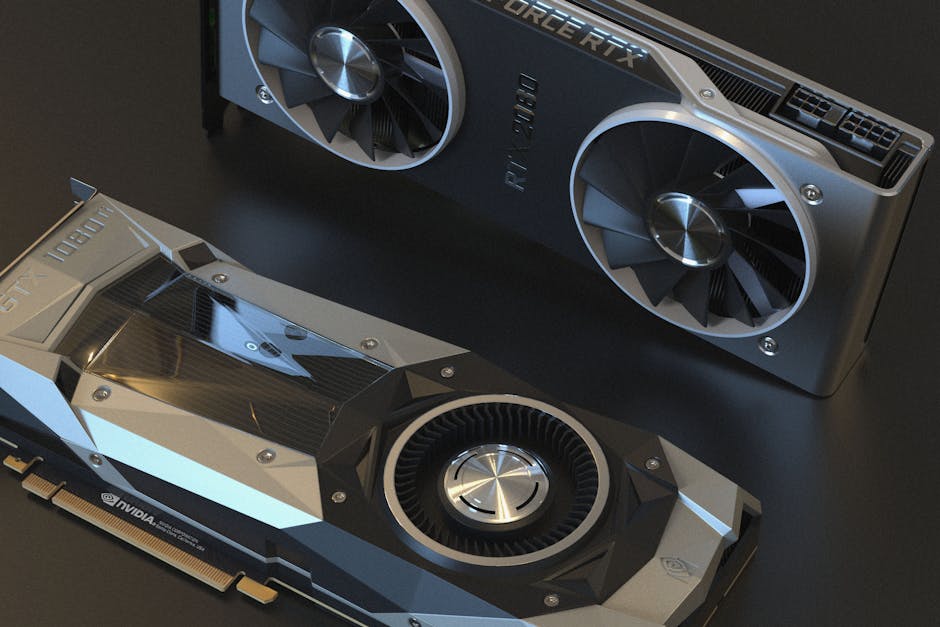
Yes, AI can meaningfully help predict which tech stocks are likely to benefit most from the GPU demand boom, though with important limitations, by analyzing patterns in cloud revenue growth, capital expenditure guidance, and supply chain data far faster and more comprehensively than traditional human research methods. As cloud providers report revenue growth above 40%, driven largely by GPU-hungry AI workloads, investors are increasingly turning to AI-powered analytical tools to separate genuine long-term winners from companies simply riding short-term hype cycles.
The challenge for investors is that the AI infrastructure boom touches dozens of companies across the value chain, from chip designers like Nvidia and AMD to foundries like TSMC, memory makers like SK Hynix, cloud providers like Microsoft and Amazon, and even power infrastructure firms supplying data centers. Manually tracking earnings, capital expenditure trends, and supply chain bottlenecks across this entire ecosystem is nearly impossible for individual investors, which is exactly the kind of problem AI-driven financial analysis tools are built to solve.
This article explores how AI prediction models actually work in this context, what data they rely on, where they tend to be accurate, and where human judgment remains essential. As part of the broader trend of cloud revenue growth above 40% signaling strong GPU demand across AI and data-center sectors, this question of predictability sits at the intersection of investing strategy and cutting-edge financial technology, an area platforms like rupiya.ai are actively exploring to help retail investors make more informed decisions.
Concept Explanation: How AI Stock Prediction Models Actually Work
AI stock prediction tools in this context typically combine several data sources: quarterly earnings reports, capital expenditure guidance, supply chain shipment data, patent filings, and even satellite imagery of data-center construction sites. Machine learning models, often built on natural language processing techniques, scan thousands of pages of earnings call transcripts and SEC filings to extract sentiment and quantitative signals about GPU orders, backlog growth, and infrastructure spending commitments.
These models are trained to identify correlations between historical patterns, such as how past cloud revenue acceleration phases correlated with subsequent stock performance for companies like Nvidia during 2023 and 2024, and current market conditions. By recognizing these patterns at scale, AI tools can generate probability-weighted forecasts about which companies are best positioned to capture value from continued GPU demand growth, ranking stocks by exposure to AI infrastructure spending rather than relying solely on analyst opinion.
Importantly, these are not crystal-ball predictions but probabilistic assessments based on data patterns. AI models excel at processing volume and identifying subtle correlations humans might miss, such as connecting a memory chip shortage announcement to potential margin pressure at a specific cloud provider weeks before that impact shows up in official guidance. However, they remain constrained by the quality and recency of their training data and can struggle with genuinely novel market events.
Why It Matters Now
With cloud revenue growth rates above 40% signaling intense GPU demand, investors face a critical decision point: which companies represent durable long-term value versus which are trading on speculative momentum. This distinction matters enormously given how concentrated recent market gains have been in a handful of AI-related mega-cap stocks, creating valuation risk if growth expectations are not met in upcoming earnings cycles.
The stakes are particularly high because AI infrastructure spending now represents a meaningful share of overall corporate capital expenditure among the largest technology companies globally. Misjudging which companies will sustain their GPU-driven revenue growth could mean significant portfolio underperformance, especially for investors who have concentrated positions in AI-themed exchange-traded funds or individual semiconductor stocks without diversification.
Additionally, market volatility around AI infrastructure stocks has increased noticeably, with sharp single-day price swings following earnings reports that beat or miss elevated expectations. In this environment, AI-driven prediction tools that can process information faster and more comprehensively than manual research offer a genuine edge, helping investors respond to new information with greater speed and discipline than emotion-driven trading decisions typically allow.
How AI Is Transforming This Area
AI is transforming stock prediction in the GPU and cloud infrastructure space by enabling real-time analysis that was previously impossible at scale. Quantitative hedge funds now deploy natural language processing models that read every major cloud provider's earnings call transcript within minutes of release, flagging specific phrases related to GPU capacity constraints, capital expenditure revisions, or AI monetization progress that historically correlate with subsequent stock price movements.
Beyond text analysis, AI models increasingly incorporate alternative data sources, such as job posting trends at semiconductor companies, patent filing activity related to AI chip design, and even electricity consumption data near known data-center locations, to build more complete pictures of which companies are genuinely scaling their AI infrastructure versus simply announcing ambitious plans without corresponding execution.
Platforms like rupiya.ai are applying these AI-driven analytical approaches to help everyday investors access institutional-grade research without needing a Bloomberg terminal or dedicated research team. By translating complex GPU supply chain and cloud revenue data into digestible insights, these tools are democratizing access to the kind of predictive analysis that was once exclusive to large hedge funds and investment banks.
Real-World Global Examples
Nvidia's stock trajectory over the past two years offers a clear example of how AI-driven demand forecasting played out in reality. Quantitative funds that tracked early signals of hyperscaler capital expenditure guidance increases were able to position ahead of major rallies, while those relying purely on traditional valuation metrics often found the stock appeared expensive at every stage of its climb, illustrating both the value and limitations of AI-assisted prediction.
In Asia, AI prediction models have helped investors identify opportunities in South Korea's memory chip sector, where SK Hynix's high-bandwidth memory shipments to GPU makers became a leading indicator of broader AI infrastructure health months before this connection was widely discussed in mainstream financial media. Similarly, Taiwan Semiconductor Manufacturing Company's advanced packaging capacity expansions have been closely tracked by AI models as a proxy for future GPU supply availability.
In Europe, where fewer pure-play AI infrastructure companies exist, AI prediction tools have instead focused on identifying enterprise software companies, such as SAP, that stand to benefit indirectly from increased AI adoption enabled by expanding cloud GPU availability. This demonstrates how AI models can identify second-order beneficiaries of the GPU demand boom, not just the most obvious direct participants like chipmakers themselves.
Practical Financial Tips
Investors interested in using AI prediction tools should treat outputs as one input among several, not a definitive answer. Cross-referencing AI-generated stock rankings with fundamental analysis, such as reviewing actual revenue growth, profit margins, and debt levels, helps avoid over-reliance on any single model's blind spots, particularly during periods of unprecedented market conditions that fall outside historical training data patterns.
Diversification remains essential even when using sophisticated AI prediction tools. Rather than concentrating capital in whichever single stock an AI model ranks highest, spreading exposure across multiple companies in the GPU and AI infrastructure value chain, including chipmakers, cloud providers, and supporting industries like power infrastructure, reduces the risk of any single prediction error significantly damaging a portfolio.
Investors should also pay close attention to how frequently AI prediction tools update their models with new earnings data and market information. Tools like those offered through rupiya.ai that continuously incorporate the latest cloud revenue growth figures and GPU demand signals tend to provide more relevant, timely guidance than static models that may not reflect rapidly evolving market conditions in this fast-moving sector.
Future Outlook
As AI prediction models continue improving, they are likely to incorporate increasingly granular data sources, from real-time chip shipment tracking to more sophisticated analysis of enterprise AI adoption rates across specific industries. This could improve prediction accuracy for identifying which companies will sustain GPU-driven revenue growth versus those facing potential deceleration as easy comparisons from prior periods become more difficult.
However, experts caution that AI prediction tools will likely never fully replace human judgment in stock selection, particularly during periods of genuine market regime change or unprecedented events, such as a major geopolitical disruption to semiconductor supply chains. AI models trained primarily on historical data patterns can struggle to accurately forecast outcomes during truly novel situations that lack clear historical precedent.
Looking ahead, the most successful investment approaches will likely combine AI-driven pattern recognition with human oversight and judgment, using AI tools to process vast amounts of data efficiently while relying on human expertise to interpret genuinely ambiguous or unprecedented market signals that fall outside typical historical patterns.
Accuracy of AI Predictions
Academic and industry studies on AI stock prediction accuracy in the technology sector show mixed but generally positive results, with AI models demonstrating measurable edge in short to medium-term forecasting, particularly around earnings events, while showing less reliable performance over longer time horizons where broader macroeconomic factors play a larger role in stock performance outcomes.
Backtested studies of AI models tracking cloud revenue growth and GPU demand signals have shown correlation with subsequent stock performance in roughly 60 to 70% of tested scenarios, a meaningful edge over random chance but far from a guaranteed predictive formula. This level of accuracy explains why sophisticated investors use AI predictions as one input among many rather than a sole basis for investment decisions.
It is also worth noting that as more market participants adopt similar AI prediction tools, the informational edge these models provide may diminish over time, a phenomenon well documented in quantitative finance where widely known signals tend to lose predictive power as they become priced into markets more quickly. This suggests that maintaining a diversified, disciplined investment approach remains essential even as AI prediction tools continue to improve in sophistication.