Can AI Predict Which Mutual Fund Category Will Outperform in 2026?
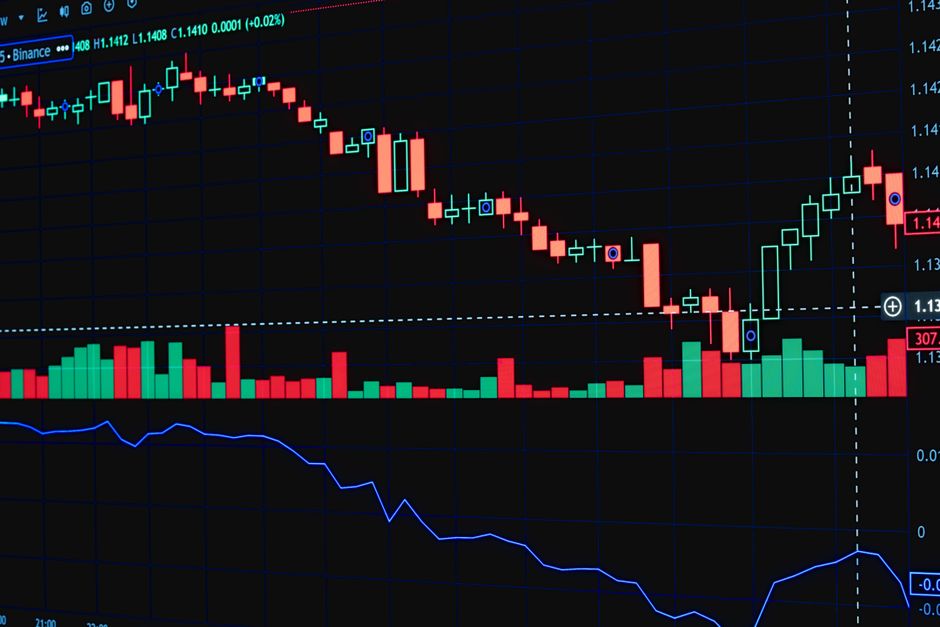
Can AI predict which mutual fund category will outperform in 2026? The honest answer is that AI can meaningfully improve the odds of identifying which category, such as flexi-cap, small-cap, or large-cap, is likely to lead the market in a given year by analyzing macroeconomic signals, fund flows, and sector rotation patterns faster than traditional research, but it cannot guarantee category winners with certainty because markets remain influenced by unpredictable events that no algorithm can fully model.
This question has become especially relevant given how widely mutual fund returns have diverged across categories recently. The flexi-cap segment saw a sizable gap between its best and worst performers, while small-cap funds showed even sharper divergence as certain sectors rallied and others stalled. As explained in our companion analysis on mutual fund scheme selection, choosing the right fund within a category matters enormously, but choosing the right category in the first place is an equally important, and often overlooked, decision that AI tools are increasingly being asked to help with.
This article examines what AI-driven category prediction actually involves, how accurate these models have proven in real markets, and what investors in the US, Europe, and Asia can realistically expect from AI when deciding whether to lean toward small-cap, flexi-cap, or more conservative fund categories in the year ahead.
What Does AI-Driven Category Prediction Actually Involve
Predicting category outperformance means forecasting which broad segment of the mutual fund universe, such as small-cap, mid-cap, flexi-cap, or large-cap, is likely to deliver superior risk-adjusted returns over a coming period, typically a calendar year or a few quarters. This is fundamentally different from predicting individual stock prices, since categories aggregate the behavior of dozens of funds and hundreds of underlying holdings. AI models approach this by analyzing macroeconomic indicators such as interest rate trajectories, credit spreads, and earnings growth trends alongside historical patterns of how each category has responded to similar conditions in the past.
These models also incorporate fund flow data, tracking where retail and institutional money is moving in real time, since heavy inflows into a category can itself become a self-reinforcing driver of short-term outperformance. Sentiment analysis of financial news and social media adds another input, helping models gauge whether investor enthusiasm for a category like small-cap growth is building or fading. The output is typically expressed as a probability-weighted ranking of categories rather than a single confident prediction, reflecting the genuine uncertainty involved.
Why It Matters Now
Category-level prediction has become more valuable in 2026 because divergent central bank policies across the Fed, ECB, and RBI are creating uneven conditions across regions and asset classes, making it harder for investors to rely on simple historical rules of thumb like small-cap outperforming during recoveries. The flexi-cap and small-cap dispersion highlighted in recent market data shows that even within categories favored by strong macro tailwinds, outcomes vary enormously, which raises the stakes for getting the category-level allocation decision right before drilling down into individual scheme selection.
For everyday investors, getting category allocation wrong can matter more than picking a slightly underperforming fund within the right category, since category-level trends often explain a larger share of portfolio returns over a given year than manager selection alone. This is why financial advisors and AI-driven platforms alike are placing growing emphasis on category-level forecasting tools, even though these tools come with meaningful uncertainty, as a way to help investors avoid being overweight in a segment that is about to underperform.
How AI Is Transforming This Area
Modern AI models used for category prediction combine multiple machine learning techniques, including gradient-boosted decision trees for structured macroeconomic data and transformer-based language models for parsing unstructured text like central bank statements and earnings commentary. These models are trained to recognize regime shifts, such as the transition from a rate-hiking cycle to a rate-cutting one, and to map historical category performance during comparable regimes onto current conditions. This allows AI systems to generate forward-looking probability estimates rather than simply extrapolating recent trends.
Platforms are also beginning to combine category-level predictions with individual scheme scoring, effectively linking the broader question of which category to favor with the more granular question of which specific fund within that category to choose, an approach that echoes the scheme selection process. Fintech tools including rupiya.ai are experimenting with this layered approach, giving investors both a category outlook and a shortlist of schemes that align with that outlook, reducing the research burden significantly compared to manual analysis.
Real-World Global Examples
In the United States, quantitative asset managers such as Two Sigma and AQR have long used machine learning to forecast sector and style rotations, informing decisions about whether growth or value categories are likely to lead, and these techniques are gradually filtering down into retail-facing tools. In Europe, AI-driven multi-asset funds increasingly use category-level forecasting to adjust exposure between developed and emerging market equity categories in response to shifting rate differentials between the ECB and other central banks.
In India, AI-driven platforms have started publishing category outlook scores that weigh small-cap, mid-cap, and flexi-cap segments based on earnings growth forecasts and fund flow momentum, giving retail investors a data-driven starting point that was previously available mainly to institutional research desks. These global examples illustrate that AI-based category prediction is no longer confined to hedge funds and large asset managers but is steadily becoming accessible to individual investors through fintech applications.
Practical Financial Tips
Investors should treat AI category predictions as one input among several rather than a definitive signal to move an entire portfolio into a single category. A more balanced approach uses AI forecasts to adjust the relative weighting between categories modestly, for example tilting slightly more toward flexi-cap funds if models suggest more balanced conditions ahead, while still maintaining diversified exposure across large-cap, mid-cap, and small-cap segments to manage risk.
It is also important to check how frequently an AI model's predictions are updated and backtested, since a model using stale macro data can lag real market shifts significantly. Investors should look for platforms that disclose their model's historical accuracy and confidence intervals rather than presenting predictions as certainties. Combining AI category insights with a clear personal risk tolerance and investment horizon remains the most reliable way to translate these forecasts into actual portfolio decisions.
Future Outlook
AI-driven category prediction is likely to become more granular over the next few years, moving beyond broad labels like small-cap or flexi-cap toward sub-category forecasts based on sector composition, geographic exposure, and factor tilts within each fund category. As more historical data accumulates from the current volatile macro environment, models should also become better calibrated at distinguishing between genuine regime shifts and short-term noise, improving prediction reliability over time.
Regulatory frameworks around AI-generated investment predictions are also expected to tighten, particularly regarding how confidence levels and historical accuracy are disclosed to retail investors. The most trusted platforms in this space will likely be those that pair AI-driven category forecasts with transparent performance tracking, allowing investors to see exactly how accurate past predictions have been rather than relying on marketing claims alone.
Accuracy of AI Predictions in Category-Level Forecasting
Independent studies of quantitative category-rotation models have generally found modest but statistically meaningful predictive edges, often in the range of a few percentage points of outperformance when models correctly anticipate a regime shift, though this edge is far from guaranteed in any single year. Backtested accuracy also tends to look stronger than live, forward-looking performance, a common gap known as overfitting, which means investors should be cautious about extrapolating historical model accuracy directly into future results.
The most reliable use of AI category prediction is probabilistic rather than deterministic, meaning investors should interpret a model favoring small-cap funds as a modest tilt in probability rather than a certainty. Combining multiple independent models or data sources tends to improve robustness compared to relying on a single AI system. Ultimately, AI has meaningfully raised the quality of category-level forecasting compared to purely manual analysis, but it has not eliminated the fundamental uncertainty that defines financial markets.